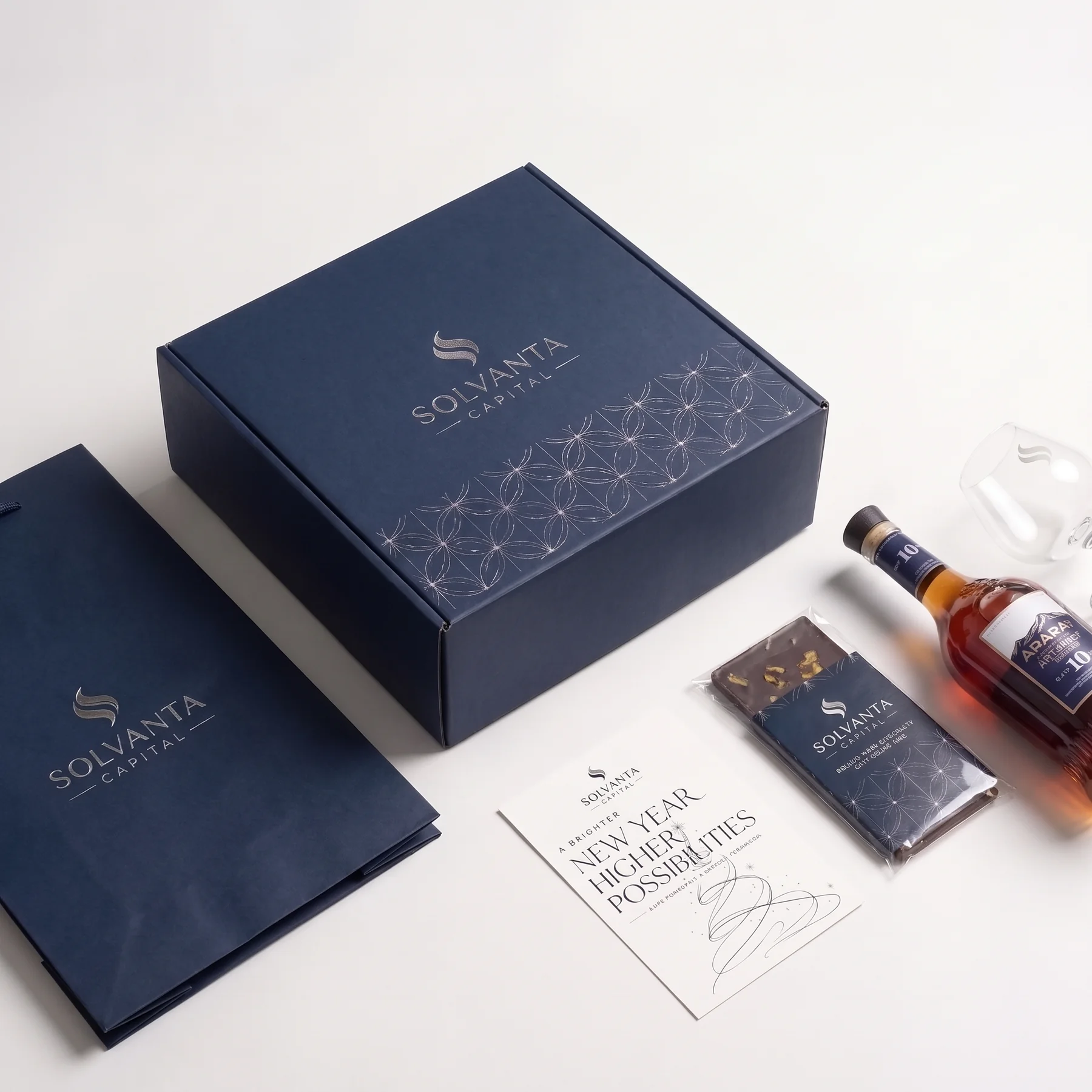
One corporate gift configuration rarely suits all partners equally well. Some people prefer tea, others are better suited to a home gift set, and an in-person handover may require a different format. The design task is to keep the different versions within one collection, so they do not look like gifts from separate purchases.
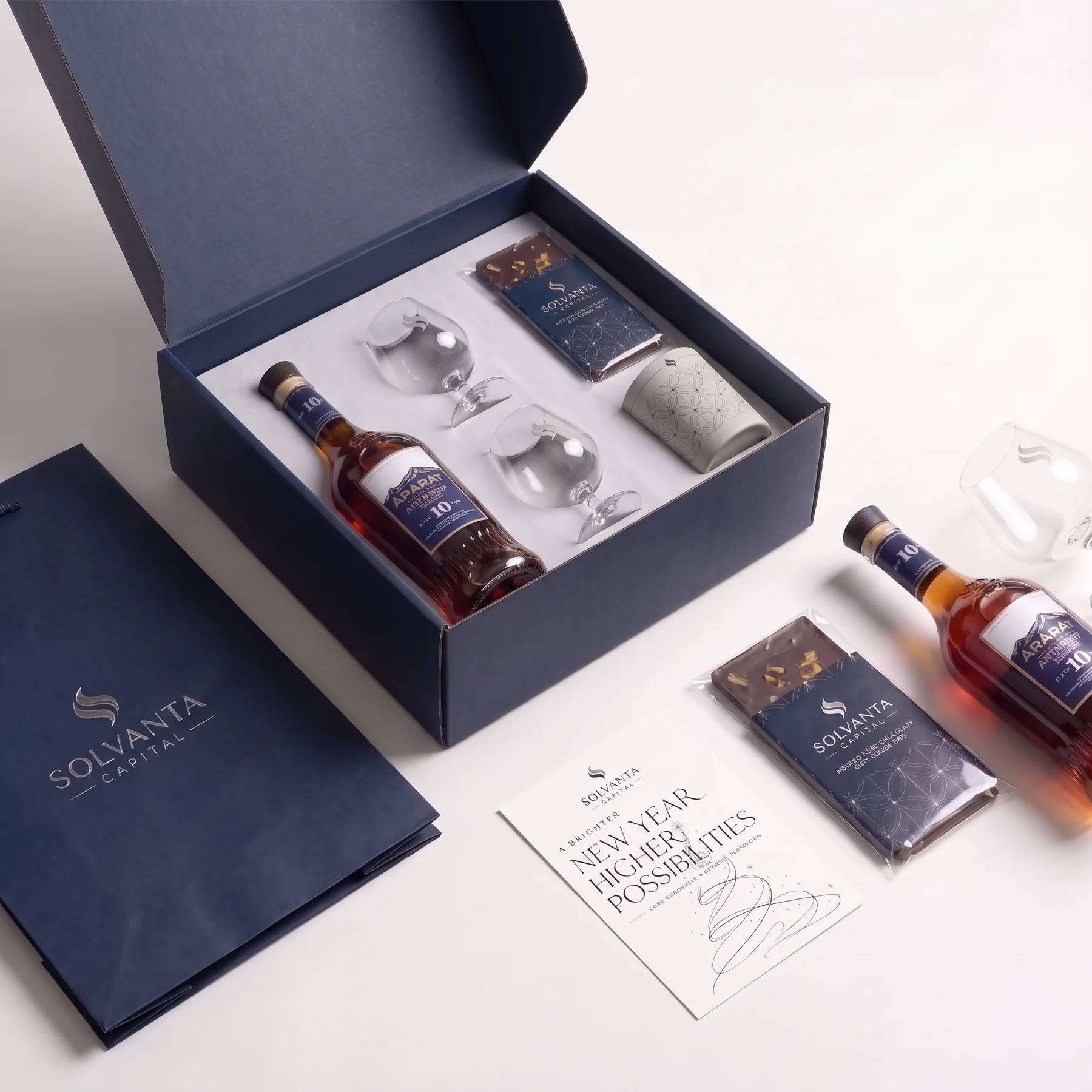
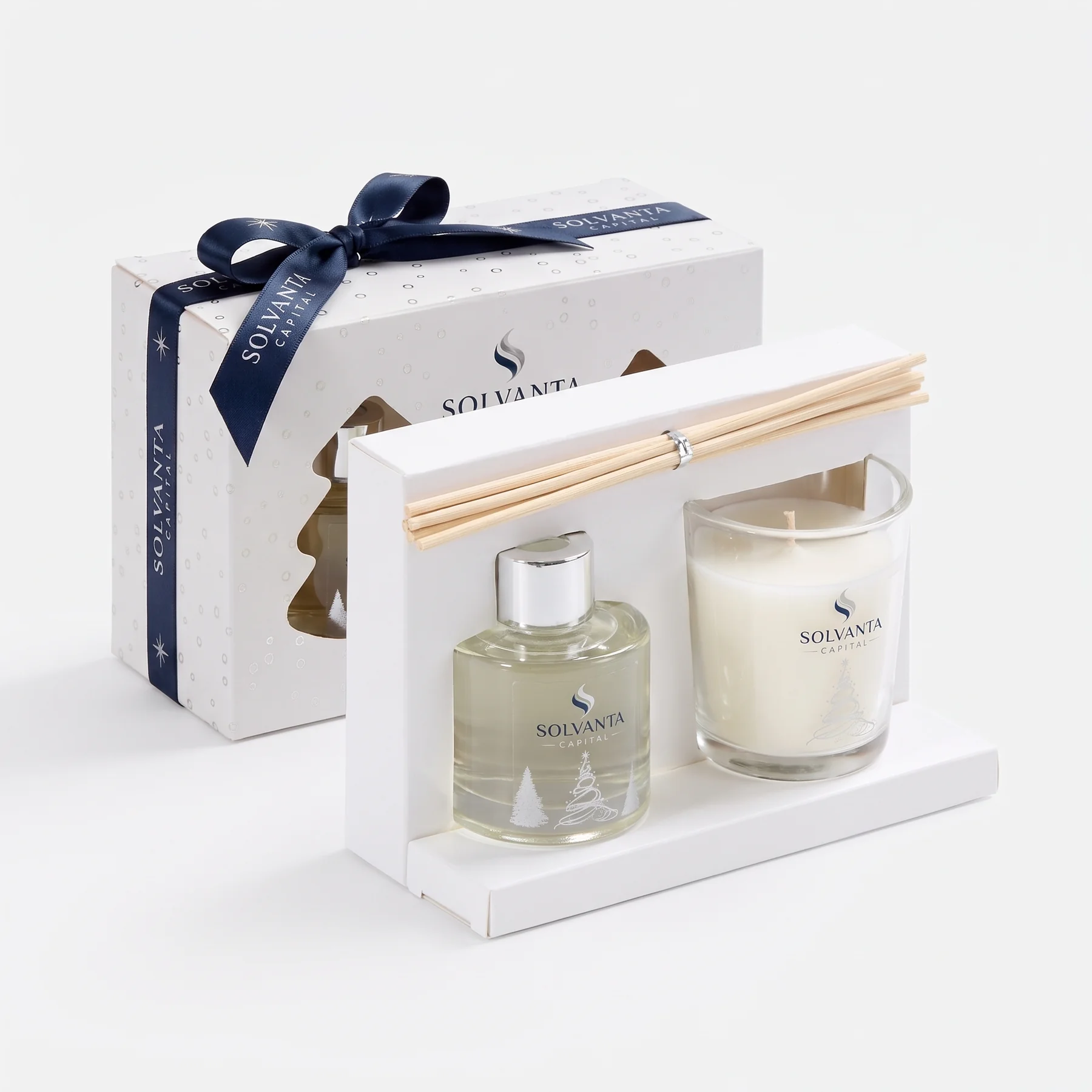
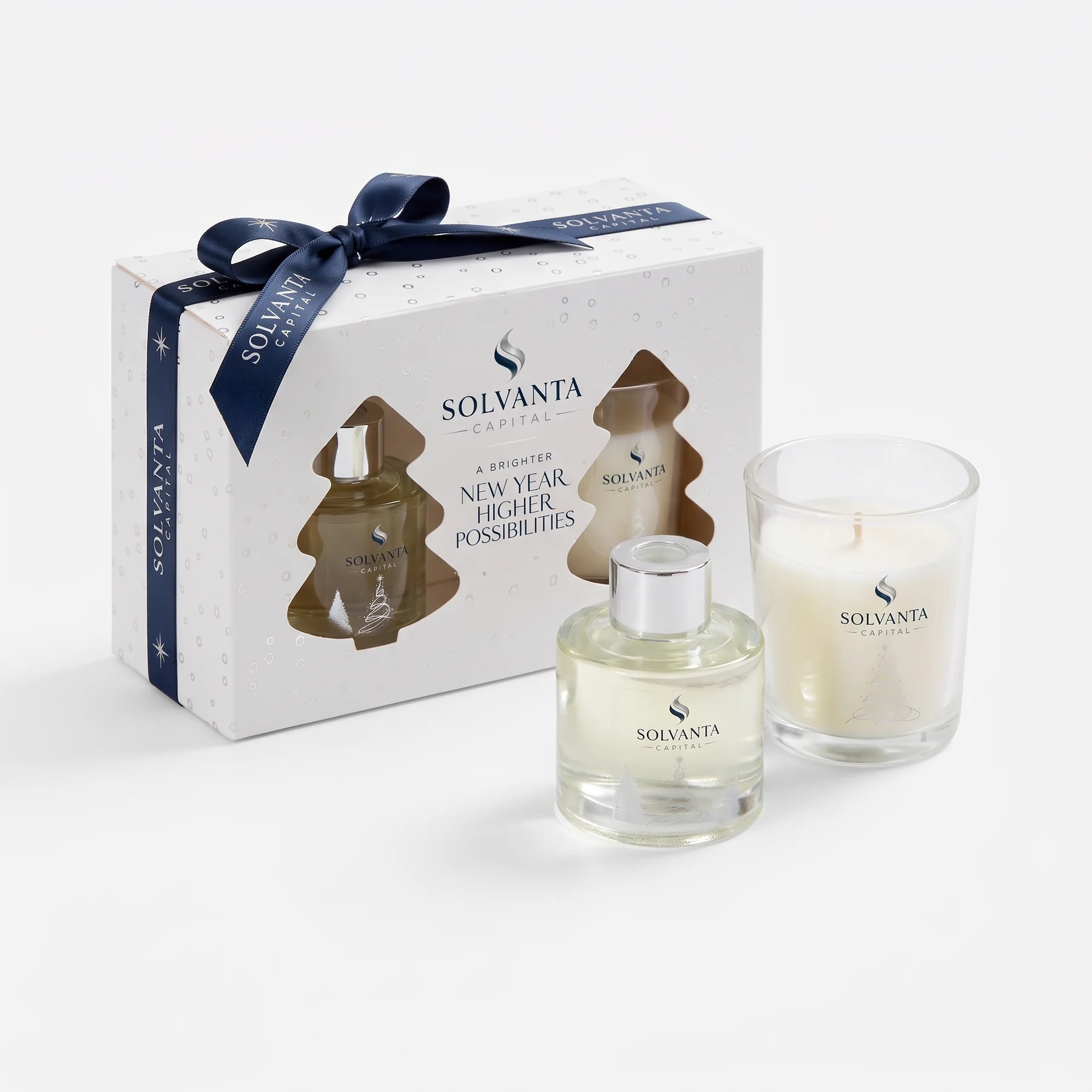
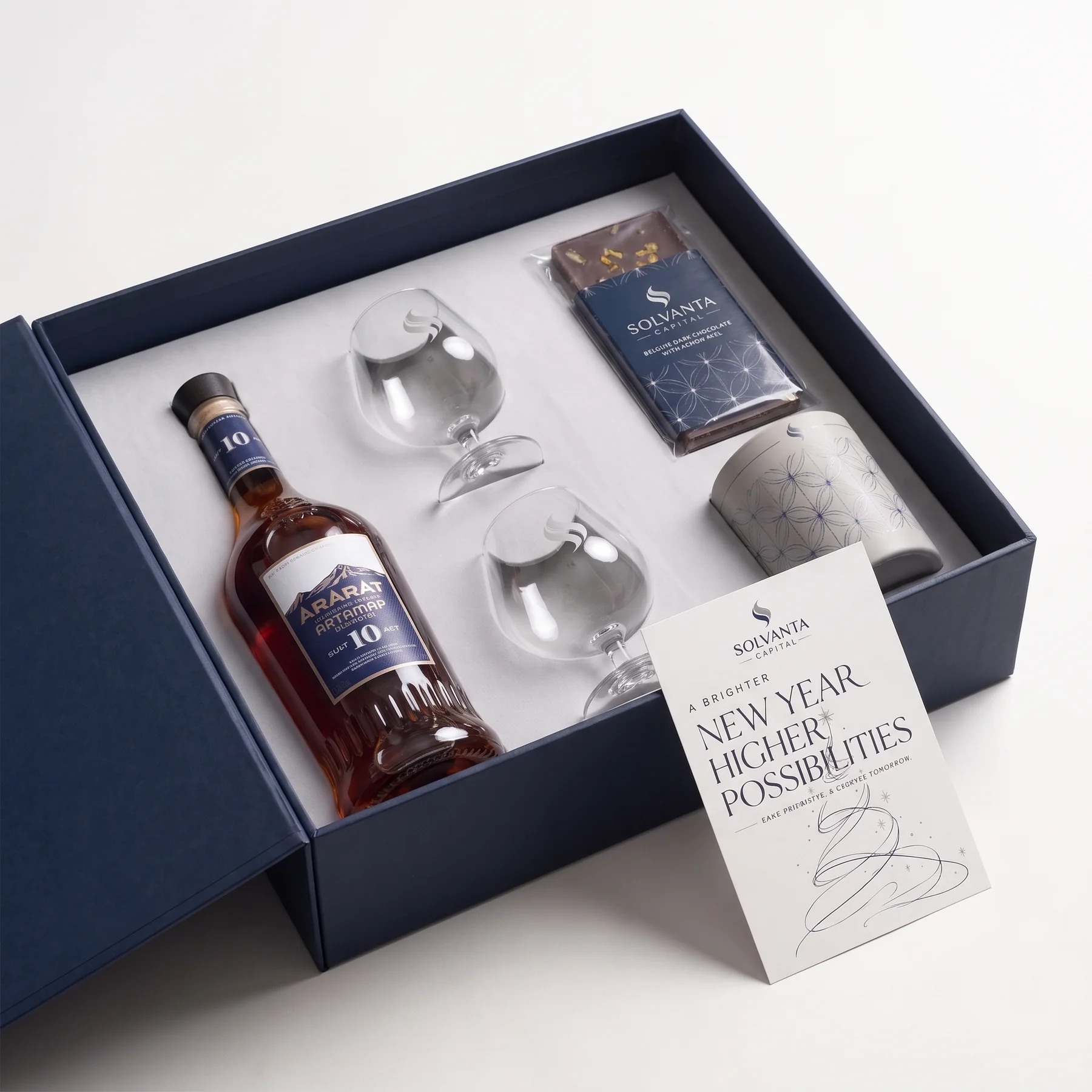
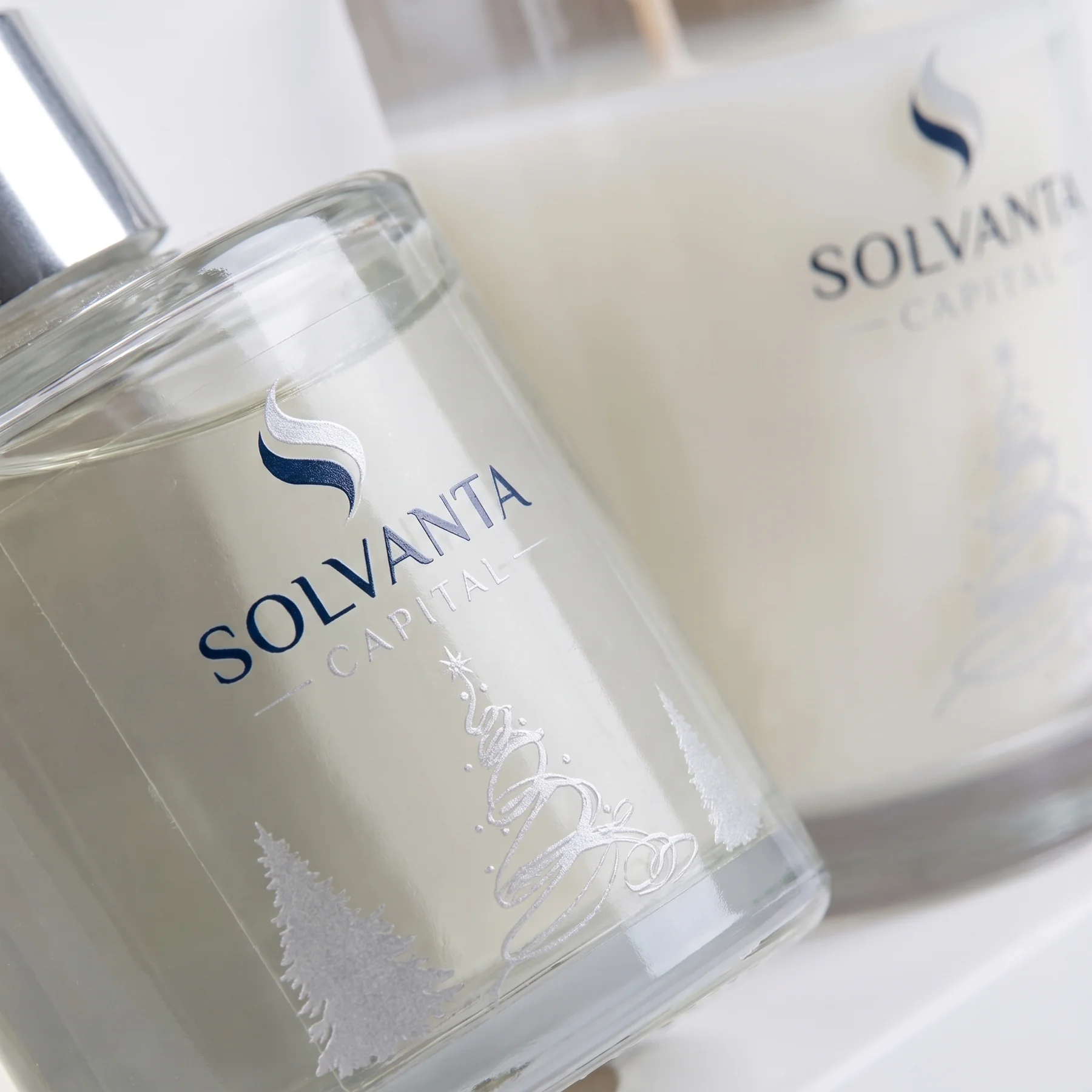
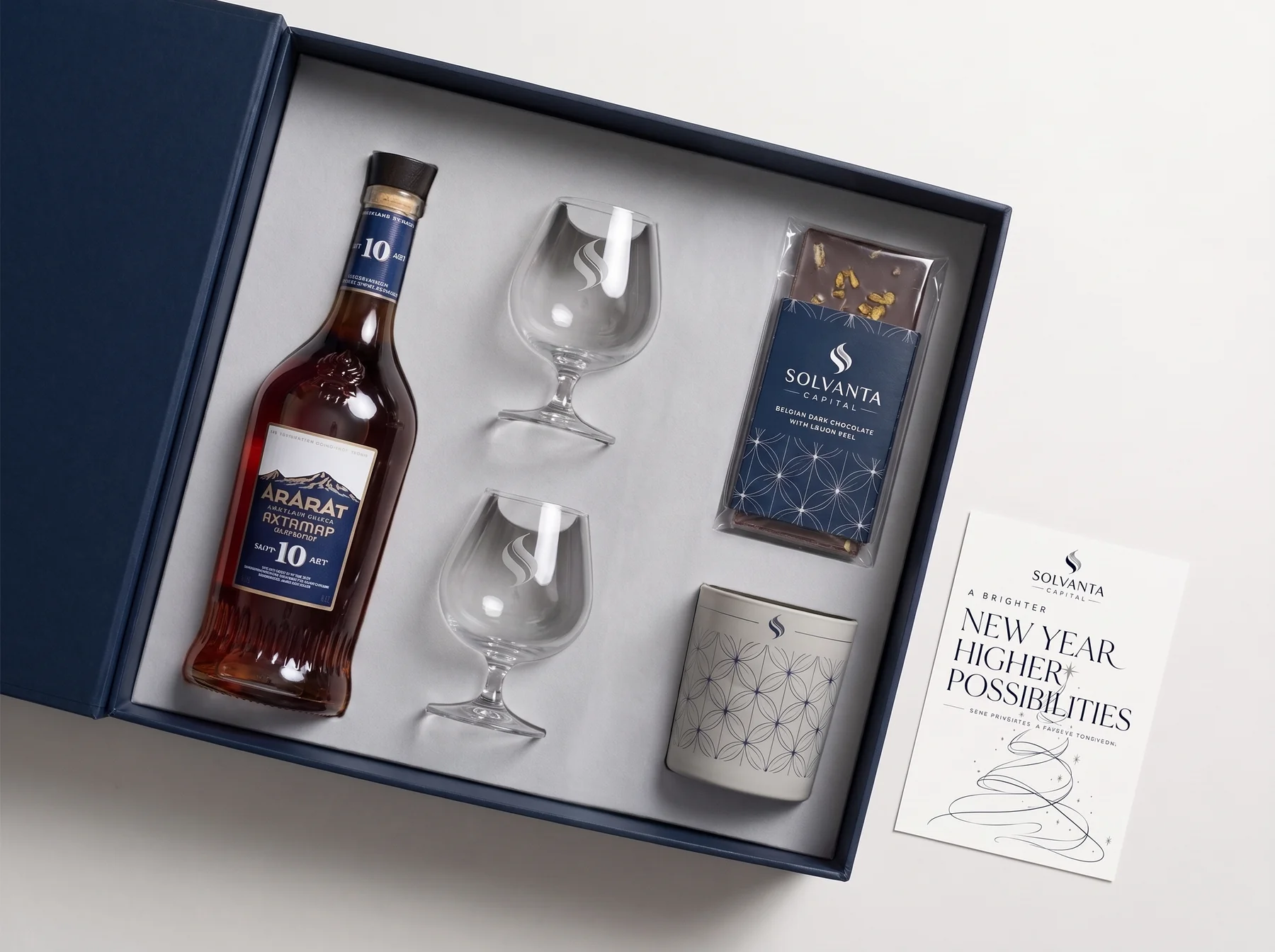
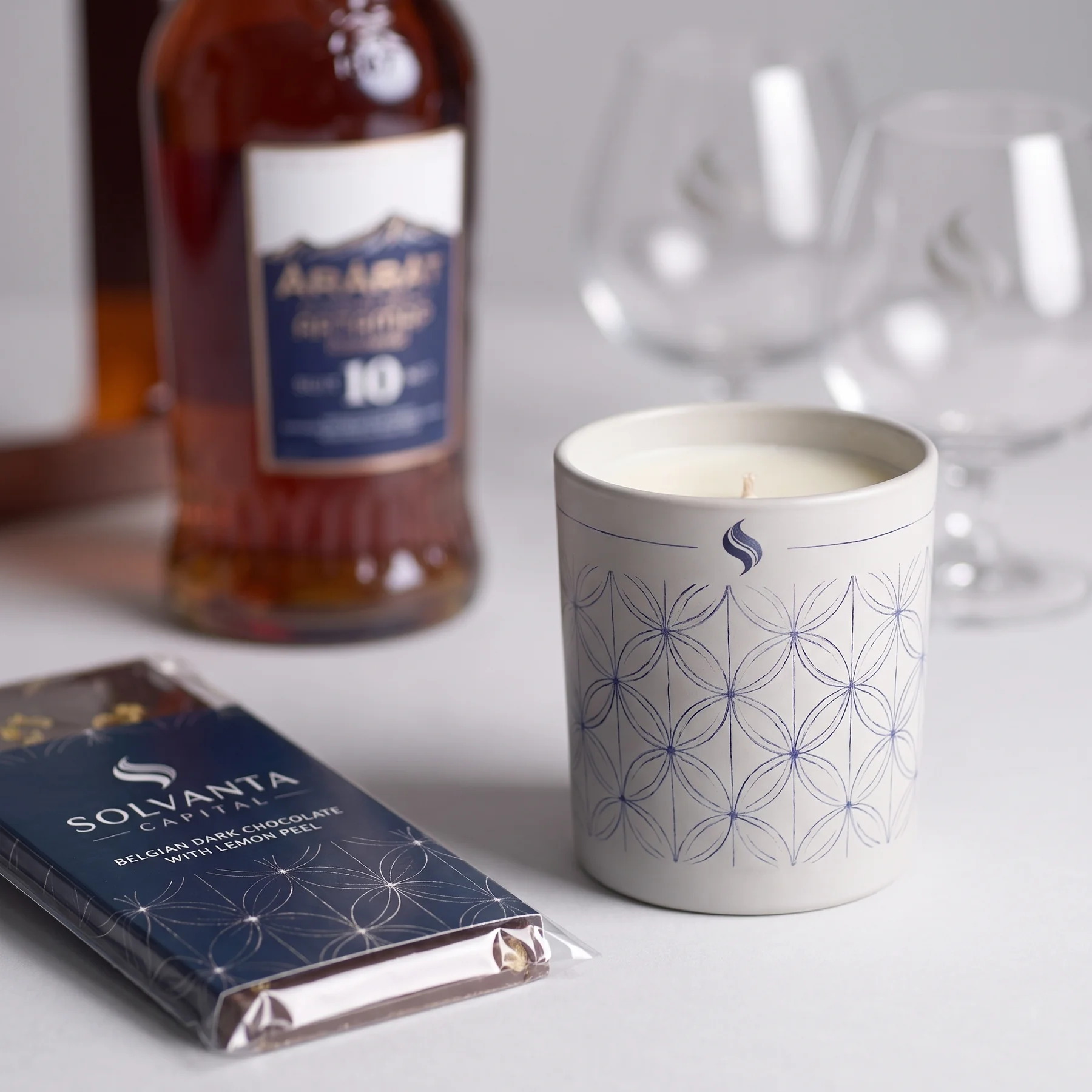
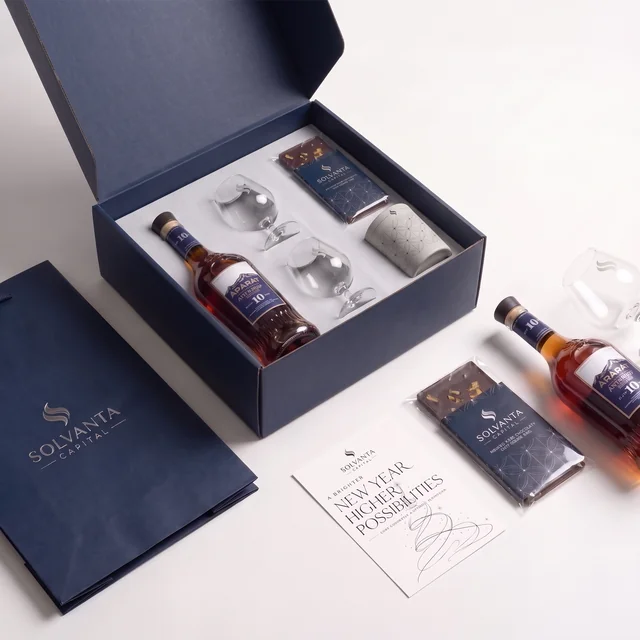
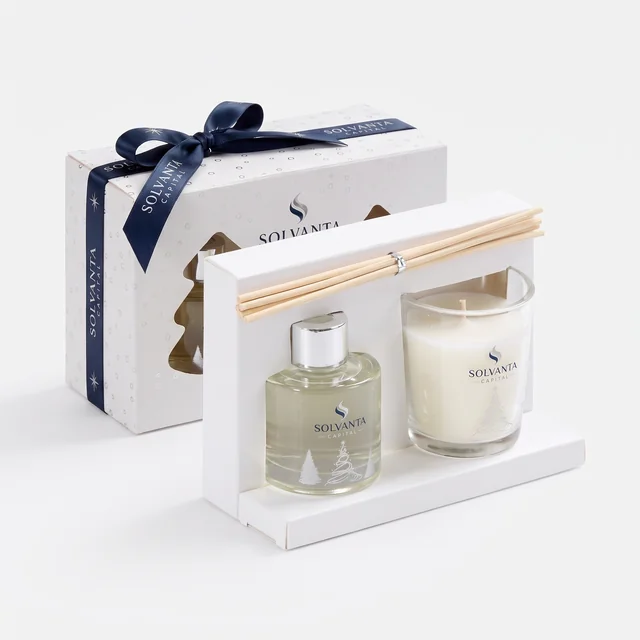
In the Solvanta Capital project, this task is addressed by a blue box with cognac and glasses and a white fragrance set with a candle and diffuser. Below, we explore what should stay consistent and what can vary freely.
Segment the audience by use case
Do not start with vague labels such as “economy” and “VIP.” They rarely help identify which gift is actually needed. It is more useful to separate the use cases: a personal meeting, greetings by courier, a gift for the team, or an item for the home. For each one, record constraints on contents, size, and handover.
Two versions can show equal thoughtfulness even if their costs differ. Each one should have its own logic. Cognac with glasses and a candle with a diffuser do not compete on item count: they are different ways to send greetings to the recipient. To choose a format, it helps to review a comparison of alternatives to familiar souvenirs.
Create a shared design foundation
Define the mark, type system, composition principle, and permitted palette. Then define the roles of the media: the box presents the brand, the card conveys the greeting, and the items receive more subtle branding. This allows the contents to change without losing recognizability.
At Solvanta Capital, the blue and white versions are connected by color and the mark, but use different festive graphics. Recognizability does not require copying the same pattern onto everything. Compatibility of scale, contrast, and negative space matters more. The general principles are also covered in the article on the visual system of a corporate set.
Adapt the construction to the contents
A bottle with glasses needs one fixing arrangement; two compact vessels and reeds need another. Trying to fit both versions into the same box for standardization can reduce protection or leave empty spaces. The design language should be shared, while the construction must suit the items.
Windows in the white fragrance version reveal the contents. In the blue set, the closed lid and open arrangement act as two stages of presenting the gift. Both constructions can support the same brand while differing in size, internal holder, and opening mechanism.
Prepare separate specifications for each version
For each configuration, specify the exact contents, quantities, artwork, branding locations, box, inner packaging, and card. If one item is used in both versions, check separately that its product code and decoration really match. Candles or bottles that look similar may have different dimensions.
A clear assembly plan is also needed: which recipient gets which set, how versions are marked on transport packaging, and who checks completeness. Use unambiguous names, such as “fragrance” and “with glasses,” rather than “white 1” and “new version.” This reduces the chance of mixing up the contents during assembly.
Approve the two samples side by side
Approving artwork separately does not show whether the sets are perceived as one collection. Place the samples side by side and assess color, logo scale, graphic character, packaging quality, and the tone of the greeting. Then open each box and check whether its use case works independently.
A physical sample is also needed to check tactile qualities, the fit of the items, and ease of removal. A visualization helps choose a direction, but does not replace these checks. Before production, define permitted substitutions and the reapproval process: a change in contents can affect both the box and the design.
Compare the total cost rather than the box price
Each version has its own estimate: contents, personalization, packaging, assembly, and delivery. Shared artwork can simplify preparation, but does not make different constructions cost the same. Plan the timeline around the most constrained component: product availability, packaging production, or sample approval.
The Impulse Media team can prepare several configurations within one system. To get started, provide the recipient groups, budget, quantity of each version, and handover date. Base products for selection are available in in the sets catalog and New Year collection, while the packaging is developed for the selected contents.
Questions and answers
Do the two boxes have to be the same size?
No. The size and internal construction are selected to suit the contents. A collection's unity can be maintained through its palette, mark, graphics, and greeting card.
Can alcoholic and nonalcoholic versions be equally valuable?
Yes. Equal value comes from attention to the use case, product quality, and design, rather than the same number of items. Each version needs its own carefully considered contents.
How do you avoid mixing up versions during assembly and delivery?
Use separate specifications, unambiguous names, and markings on the outer packaging. The process for checking completeness and allocating sets to recipients is agreed before assembly begins.
Explore related topics
We will create a gift for your needs
Tell us the number of recipients, your budget, and the gift presentation date. The Impulse Media team will suggest the contents, design, and packaging.
Build your project