An event kit should help people navigate the event, not simply increase the number of promotional gifts in their tote bag. A good kit supports wayfinding, identification, working tasks, comfort, and memories of the event. The contents depend on the recipient’s role: attendees need a compact practical kit, speakers a more personal one, and VIP guests a distinct level of materials and packaging.
Start with the attendee’s journey, not the products
It is useful to mentally walk through the conference day:
- The guest arrives and looks for the registration desk.
- Receives a badge, program, and kit.
- Moves between rooms.
- Takes notes and charges a phone.
- Drinks water or coffee.
- Meets partners.
- Takes some materials home or to the hotel.
Every item should help at one of these stages. If an item cannot be linked to a real action, it should be replaced or removed.
Three event-kit tiers
| Recipient | Core contents | An additional accent | Packaging |
|---|---|---|---|
| Attendee | Badge, lanyard, program, notebook, pen, tote bag | Bottle, fabric key tag, sticker pack | Tote bag, folder, or simple bag |
| Speaker | All event essentials, an insulated mug, charger, and personal card | Name engraving, a travel gift | Box or reusable pouch |
| VIP / partner | Premium stationery, a gadget, leather accessory, or award | Serial number, individual contents | Paper-wrapped rigid box with a fitted insert |
Different tiers do not mean the VIP kit must be ten times larger. It can contain two or three items, but with better materials and personalization.
The navigation essentials: badge, lanyard, and program
The badge is the conference’s main functional item. It should be readable from a distance, stay facing forward, and show only information that is genuinely needed. At large events, color-coding attendees, speakers, organizers, the press, and partners is useful.
Design the lanyard as part of the visual identity, rather than as a narrow ribbon with a repeating logo. Options include:
- printing along the entire length;
- jacquard;
- a paracord design;
- a detachable carabiner;
- a safety fastening;
- an additional fabric key tag or charm;
- an access card or NFC element.
The program can be printed, digital, or a combination of both. A compact folding map is sometimes more useful than a large booklet. The QR code should link to a mobile-friendly page, not a large PDF.
The working essentials: notebook and pen
A notebook remains useful when the program includes talks, workshops, and networking. A compact format is enough for a one-day event. For an educational conference, you can develop interior pages with checklists, contact pages, and session summaries.
Choose the pen for its reliable mechanism and plentiful stock. For a large event, it is better to use one model and add a small reserve. A metal pen with an engraved name can be used for speakers and partners.
Comfort: water, coffee, and carrying
A bottle or insulated mug is particularly useful during a long program. Decide in advance where attendees can refill it, whether drinks are allowed in the room, and whether the item is easy to wash after the event.
The tote bag should support the weight of all the materials without being too large. If an attendee receives only a notebook and a couple of accessories, a huge bag looks empty. For a business forum, use a folder, compact tote, or document bag.
The digital essentials: charger, cable, and NFC
For a technology event, suitable options include:
- a cable with several connectors;
- a compact power bank;
- a USB-C adapter;
- a charging station in the lounge area;
- smart tag;
- An NFC card linking to the program or contact details.
Before including electronics, check certification, capacity, power, connectors, and battery transport rules. A cheap gadget that works inconsistently creates a greater reputational risk than no gadget at all.
Remembering the event: one distinctive item
The kit does not have to contain only functional stationery. One collectible element helps keep the event memorable:
- an enamel pin;
- a 3D PVC keychain;
- fabric key tag;
- a patch;
- a mini poster;
- a numbered card;
- a bag charm;
- a small award trophy.
One specially designed item is better than five standard promotional gifts with large logos.
How to allocate products by role
Attendee kit
- a badge and lanyard;
- a program or map;
- a notebook and pen;
- tote bag;
- a bottle or small accessory;
- A QR code linking to post-event materials.
Speaker kit
- a personalized badge;
- insulated mug or bottle;
- a charger;
- a travel organizer;
- a card from the team;
- a gift connected to the city or event theme.
Partner or VIP kit
- a premium pen or planner;
- a leather accessory;
- a technology gift;
- a personalized award;
- a box with a fitted insert;
- a name card and serial number.
A real example: the CryptoGrab conference kit
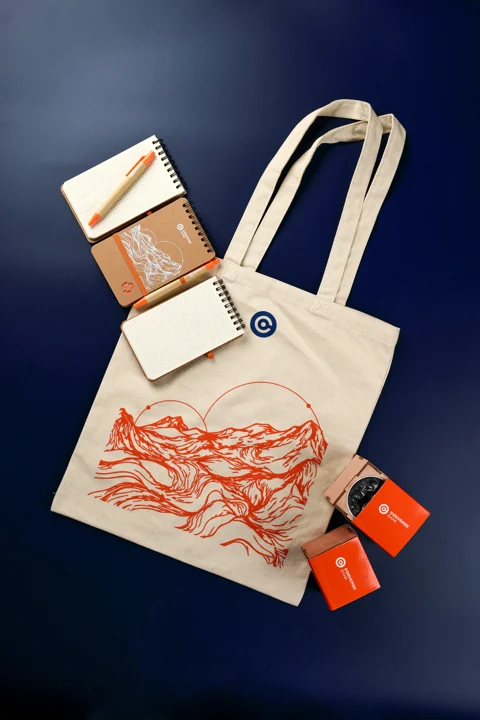
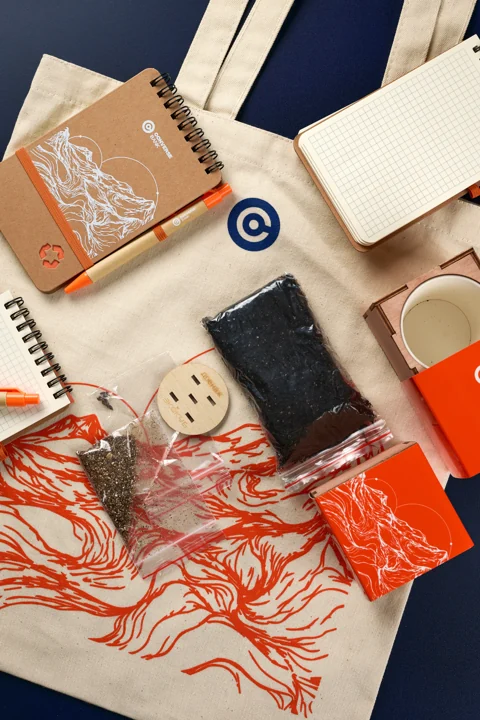
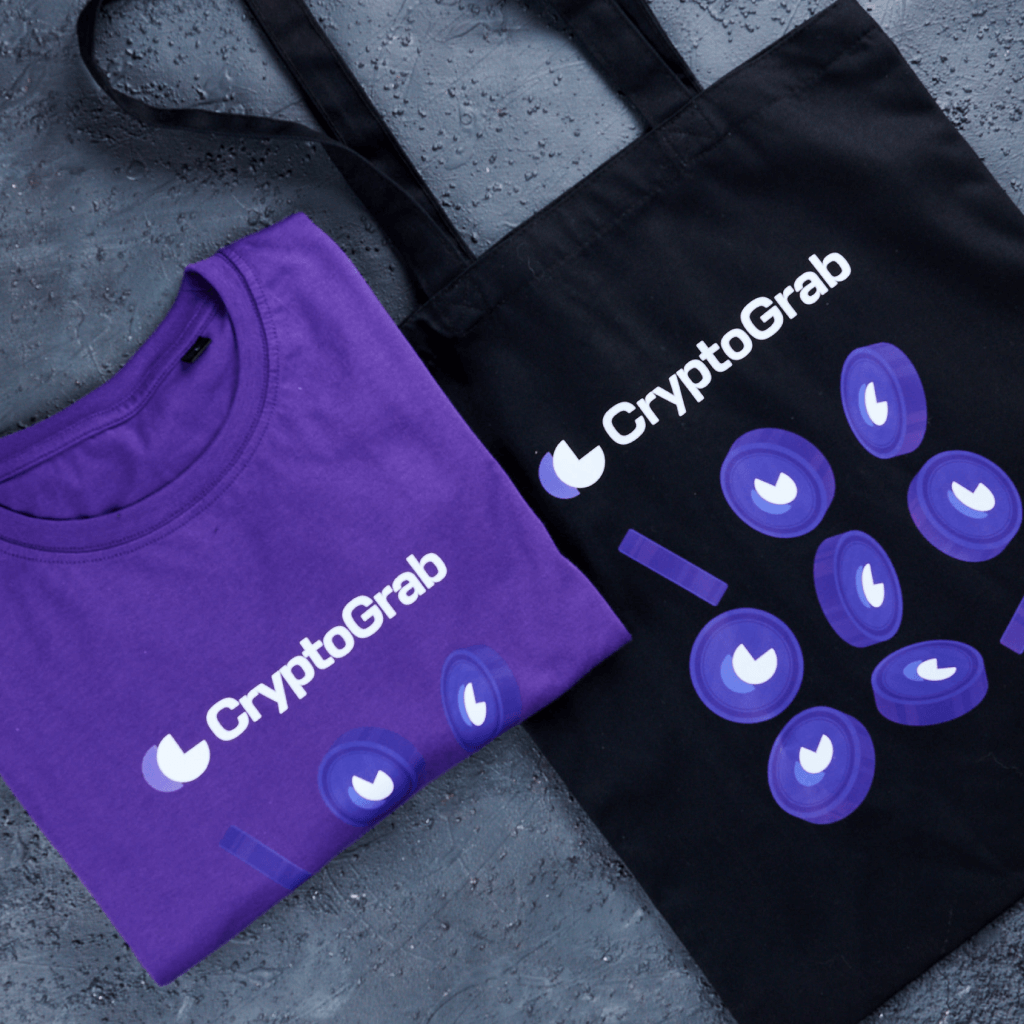
In the CryptoGrab case study, the task was not just to apply a logo but to create a cohesive visual identity for the conference. In projects like these, badge and lanyard compatibility, legible graphics, easy distribution, and a consistent product style are particularly important.
Showing this case study beside a product selection is useful: the user sees how the items work at a real event, not just individual products. The article should include photographs of the registration area, an overall view of the kit, and hardware close-ups.
Clothing for the organizing team
Organizers and volunteers need noticeable but comfortable clothing. T-shirts, polo shirts, hoodies, vests, or jackets are often used. Color helps guests find staff quickly, and large lettering on the back may be more useful than a chest logo.
When ordering, plan for:
- a size chart and reserve stock;
- the ability to wear the clothing all day;
- the venue’s climate;
- staff roles;
- quick size exchanges;
- branding that withstands washing after the event.
Packaging and distribution speed
At registration, one extra step multiplied by a thousand attendees creates a queue. The packaging should therefore open quickly and be easy to sort.
For large-scale distribution, suitable options include:
- a prepacked tote bag;
- a folder containing the complete kit;
- a color-coded bag;
- boxes only for speakers and VIPs;
- separate tables by alphabetical order or attendee type.
Label personalized kits so the name is visible before opening. If clothing is included, show the size on the outside or use a separate sorting system.
A preparation schedule counting back from the event
8-12 weeks before
Define audiences, budget, quantity, contents, visual concept, and products with long lead times.
6-8 weeks before
Approve the samples, clothing, custom accessories, and packaging.
3-5 weeks before
Start branding stock products, producing printed materials, and personalization.
1-2 weeks before
Carry out inspection, assembly, labeling, and delivery to the venue.
The lead times are indicative. Custom garment production, bespoke packaging, imports, and seasonal workloads require a larger buffer.
Pre-event checklist
- The contents are confirmed for each role.
- Product availability is secured.
- The badge is legible and does not flip over.
- The lanyard attachment has been tested.
- All links and QR codes work.
- The electronics have been spot-checked or fully inspected.
- Clothing is sorted by size.
- There is a 3-10% reserve, depending on the item.
- The boxes and tote bags can support the weight.
- Distribution and storage arrangements at the venue are clear.
Common mistakes
- One identical kit for attendees, speakers, and VIPs.
- Large quantities of unnecessary printed materials.
- A heavy kit that is uncomfortable to carry all day.
- Electronics without checked specifications.
- A badge with a small name and large logo.
- An oversized tote bag for a small selection of items.
- Personalization without a sorting system.
- Assembling kits on the eve of the event without a time buffer.
FAQ
What must an event kit include?
No products are mandatory, but attendees generally need identification, wayfinding, something for taking notes, and a convenient way to carry items. The remaining contents depend on the event’s length and format.
How many items are optimal?
For an attendee, 4-6 elements are often enough, including the badge and packaging. You can add 1-2 personal items for a speaker. Function matters more than quantity.
Does every attendee need an insulated mug?
Not always. It makes sense at a long conference with access to drinks and in a kit the attendee will take home. A bottle or cup may be enough for a short event.
How can the kit be made more eco-friendly?
Reduce unnecessary items and packaging, choose reusable products, avoid printing materials that quickly become outdated, and use a digital program. Environmental claims must be substantiated.
Can speaker kits be personalized?
Yes. Name engraving, a personal card, a special badge color, or separate contents are useful options. An accurate list of names must be obtained in advance.
What reserve should be planned?
Small items distributed in bulk usually need a modest reserve, clothing needs spare sizes, and personalization needs a few neutral kits. The percentage depends on registration accuracy.
How can merchandise effectiveness be assessed after the conference?
You can measure QR code use, NFC visits, attendee posts, stock remaining after distribution, feedback, and inquiries. For long-term impact, what matters more is which items continue to be used.
Discuss your project
Give Impulse Media the event date, number of attendees, roles, budget, city, and program format. We will develop event kits for attendees, speakers, and partners, prepare visualizations, check production, and plan practical assembly.