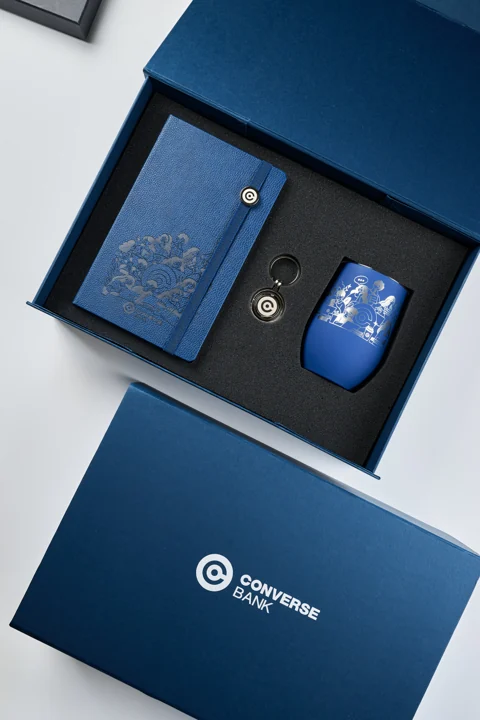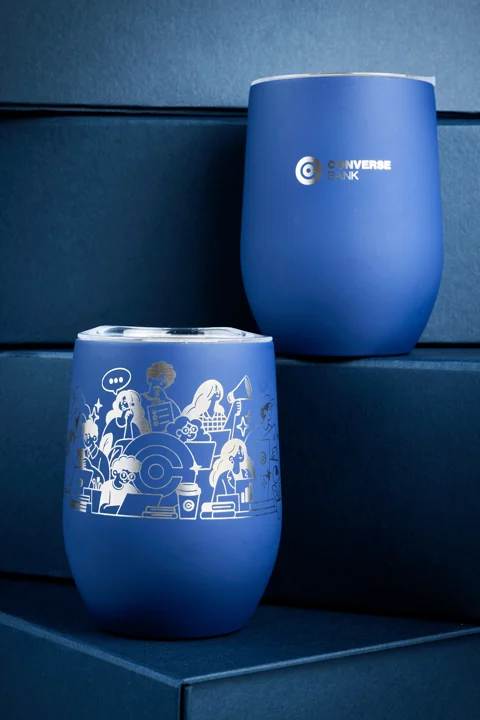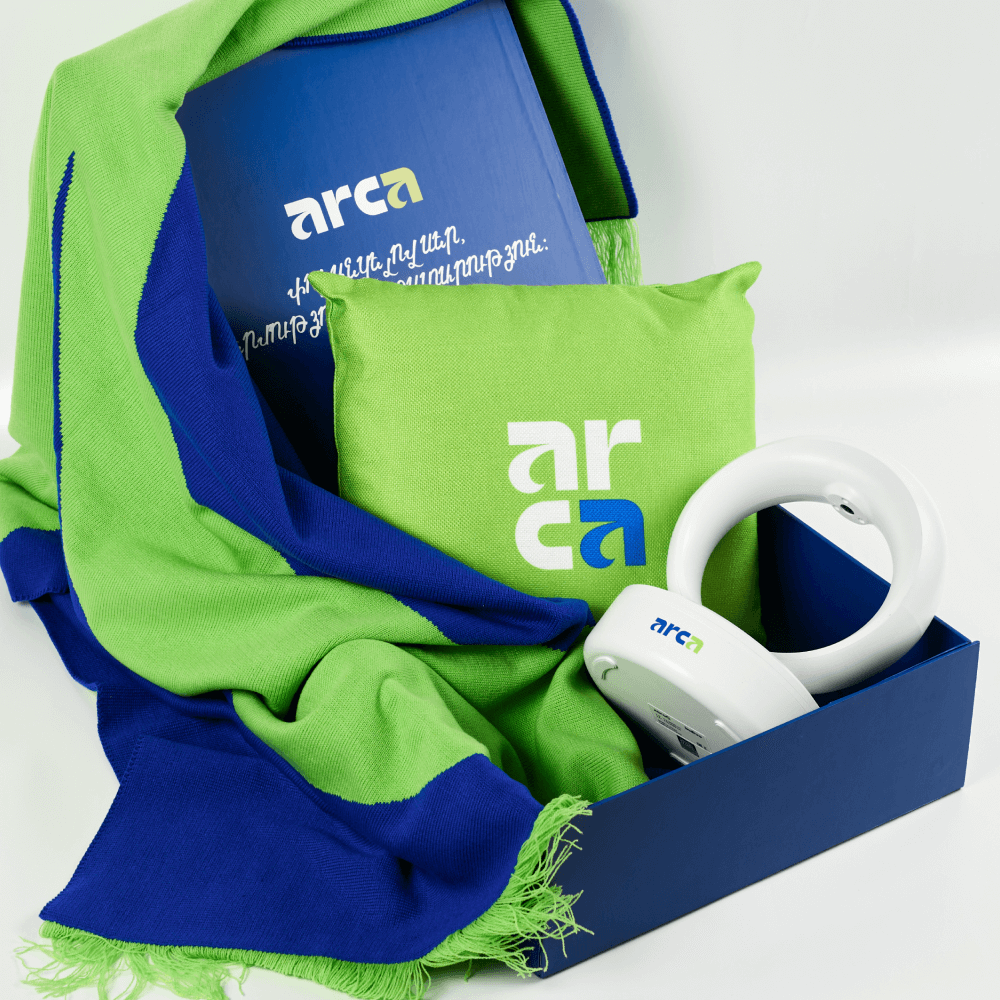
A strong gift set is built around one use case rather than the number of items. The user should have a clear action in mind: make a winter drink, enjoy a cozy evening, start the new working year, prepare for a trip, or spend time with family.
If the items are unrelated, the box feels like a store of leftovers. If every element supports one idea, even a small set feels well considered.
Set composition formula
A useful working model consists of five roles:
- Main item. Creates the core value.
- Functional addition. Helps the recipient use the main item.
- Emotional detail. Adds a seasonal mood.
- Printed materials. Explains the idea and personalizes the gift.
- Packaging. Protects, unifies, and establishes the opening sequence.
Not every role has to be fulfilled by a separate item. For example, tea can be both a functional and an emotional addition.
The use case first, then the products
Use case “Cozy evening”
Main item: a blanket or candle. Additions: tea, a sweet treat, and a card. Packaging: a large box with tissue paper or a divider.
Use case “Winter drink”
Main item: an insulated mug or mug. Additions: coffee, tea, spices, and chocolate. Printed materials: a recipe or ritual card.
Use case “New work cycle”
Main item: a planner. Additions: a pen, calendar, and stickers. Packaging: a slim case, book-style box, or sleeve.
Use case “Mobility”
Main item: a power bank or insulated bottle. Additions: a cable, travel pouch, and luggage tag. Packaging: a compact rigid box.
Use case “An evening together”
Main item: a game. Additions: tea and snacks. Packaging: a box with a simple divider.
Three budget levels
| Level | Contents | Packaging | What creates value |
|---|---|---|---|
| Base | 1 main item + 1 addition + card | Ready-made box, bag, or sleeve | Usefulness and neat graphics |
| Standard | 1 main item + 2–3 additions | Paper-wrapped rigid box or book-style box | A unified story and good assembly |
| Premium | Custom item + additions + personalization | Custom box and fitted insert | Materials, understated branding, unboxing |
How to choose the main item
The main item should suit the audience and be sufficiently prominent. For a large team, this could be an insulated mug, blanket, bottle, or planner. For a partner, choose a desk item, leather accessory, or collectible award.
Before choosing, check:
- actual size and weight;
- sample quality;
- ease of use;
- available branding area;
- color and finish;
- availability in the required quantity;
- the possibility of replacement with an equivalent.
How to choose additions
Additions should not duplicate the main item's function. It makes sense to add a drink to an insulated mug, rather than a second mug. Pair a blanket with a candle or tea, rather than another textile item of a similar size.
It is useful to limit the number of small items. Each one increases purchasing, acceptance work, the risk of shortages, and assembly time.
How to include edible products
Food items add emotion but require checks of:
- shelf life;
- ingredients and allergens;
- labeling;
- temperature requirements;
- packaging integrity;
- compatibility with the scents of other items;
- restrictions on international delivery.
Glass jars and bottles cannot simply be placed in paper filler. They require a compartment or rigid fixing.
Printed materials as a unifying layer
A card, sleeve, tag, sticker pack, or instruction card connects different items. Printed materials can explain the set's idea, product origins, how to use the items, and thanks for the year.
There is no need to add every element at once. One main message and one functional card are usually enough.
When to choose the packaging
The visual direction of the packaging can be discussed immediately, but the final dimensions are calculated after the products are approved. It is best to obtain physical samples, especially if the set includes a mug, bottle, jar, textile item, or gadget.
Workflow:
- Approve the contents.
- Specify acceptable substitutions.
- Obtain samples.
- Create the layout.
- Calculate the internal dimensions.
- Choose the construction.
- Design the fitted insert.
- Make a prototype.
- Carry out a transport test.
Substitution matrix
| Original item | Acceptable substitute | What to check |
|---|---|---|
| 450 ml insulated mug | 400–500 ml model | Height, diameter, lid, branding |
| Blanket | A blanket of similar size and weight | Color, volume when folded |
| Tea | Tea with the same flavor profile | Ingredients, shelf life, packaging weight |
| A5 planner | Undated A5 page block | Thickness, color, cover material |
| Box | Similar construction | Internal dimensions and strength |
How to check the set before production
Assemble one complete sample and follow the recipient's experience: lift the box, open it without instructions, remove each item, close it again, and take it on a short journey. This test often reveals more problems than viewing artwork on screen.
FAQ
How many items should a New Year set contain?
Three to five is usually enough. One main item, two additions, and printed materials look more cohesive than ten random promotional products.
Can you buy the boxes first and select the products afterward?
Only with a simple, versatile configuration. For a precise fitted insert and a premium set, finalize the items first.
What should you do when budgets differ?
Create a common design system and three tiers of contents. This retains a unified brand while changing the main item and personalization.
Is a fitted insert needed?
It is needed for heavy, fragile, and valuable items. For textiles and changing contents, use dividers, tissue paper, or filler.
How should product substitutions be handled?
For each item, specify the function, size, color, and acceptable price range in advance.
Can the box be made reusable?
Yes, if it has a clear function after handover. A rigid box or pouch can be used for storage.
Which element is easiest to personalize?
A card, sticker, sleeve, or tag. Personalizing the product itself requires more time and control.
| Impulse Media develops several directions for the contents, checks item compatibility, calculates the packaging, and organizes assembly of the run. |
|---|