A short lead time does not mean simple merchandise. By avoiding pattern development and sewing the entire order from scratch, you can direct the budget toward designing and customizing a ready-made model. For a team, event, or trial merchandise drop, this approach is often faster and more predictable.
Work starts with a stock check: suitable colors, sizes, and a branding surface are needed. The designer then builds the system—for example, a small chest mark, large back graphics, a chevron, a jacquard tag, and personalized packaging.
When a ready-made model is better than custom sewing
Choose a ready-made base when merchandise is needed for an exhibition, conference, product launch, or internal event; a small order is required; a contemporary fit matters; and developing a proprietary garment construction is outside the scope.
- There is no need to develop garment patterns and wait for the base to be sewn.
- Several sizes and colors can be combined from the stock matrix.
- The item's cost is known before branding is developed.
- DTF printing, embroidery, nameplates, labels, and patches are suitable.
- A trial collection is easier to repeat or expand.
- Supply and the size range still need to be confirmed before payment.
VersaSize: a ready-made item with a custom-made feel
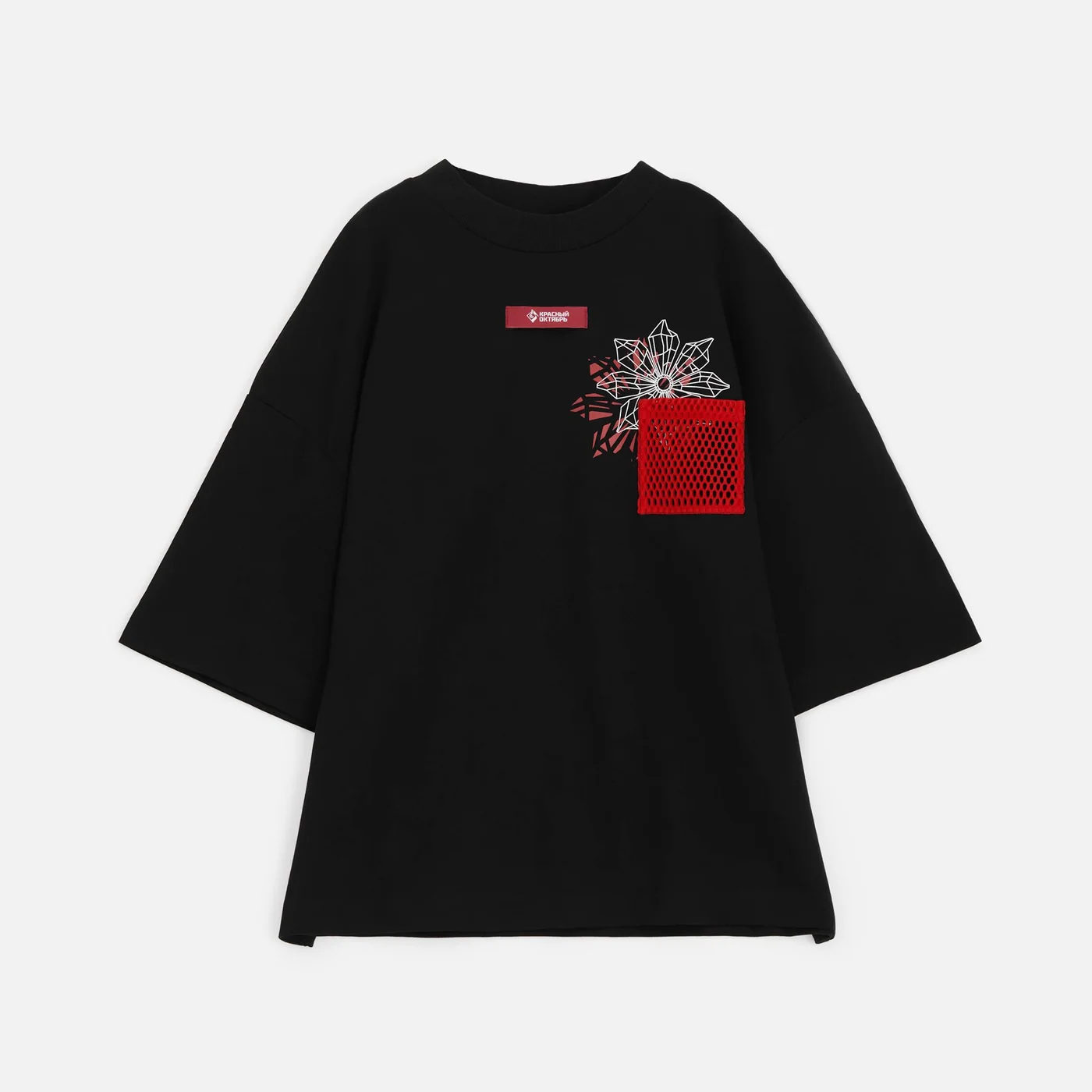
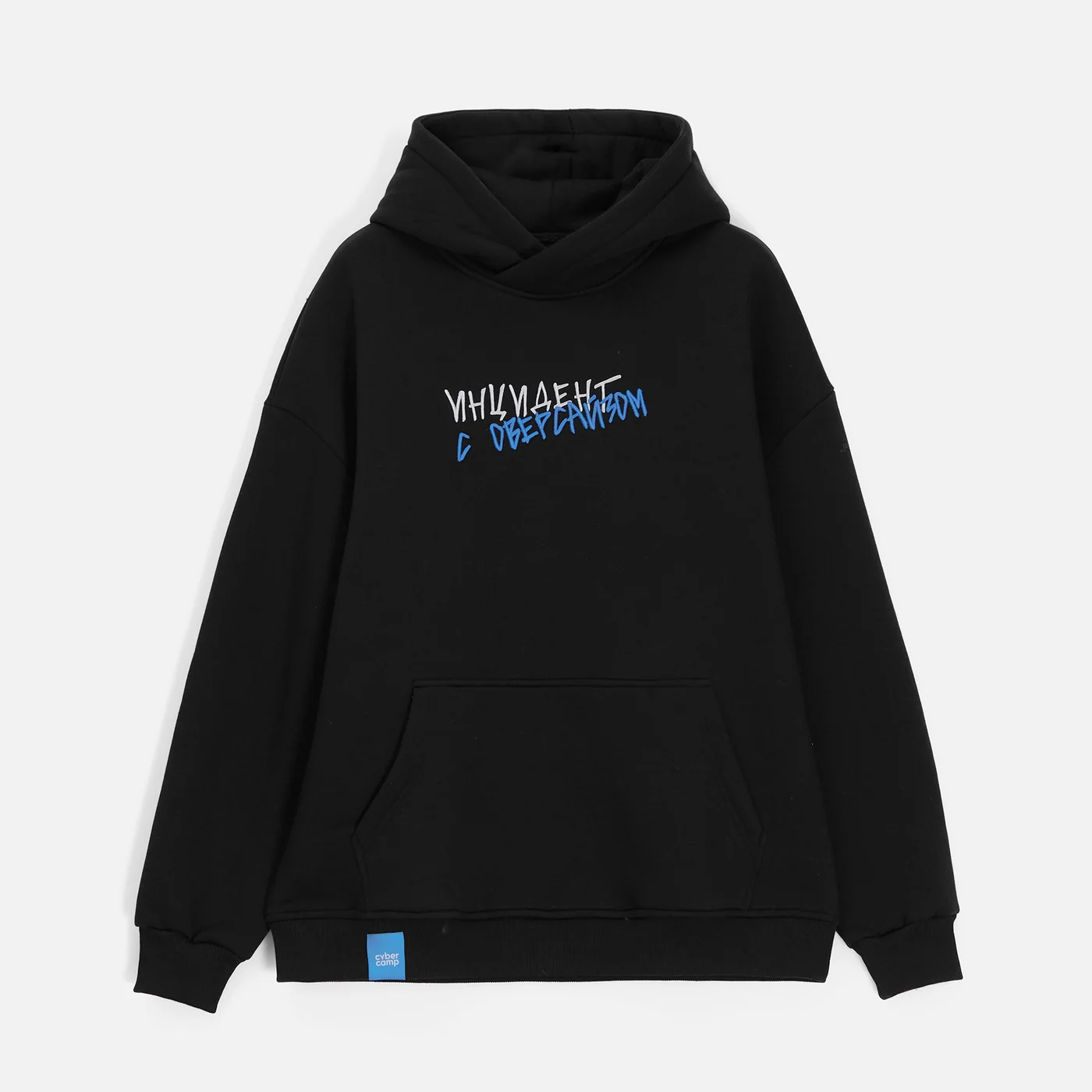
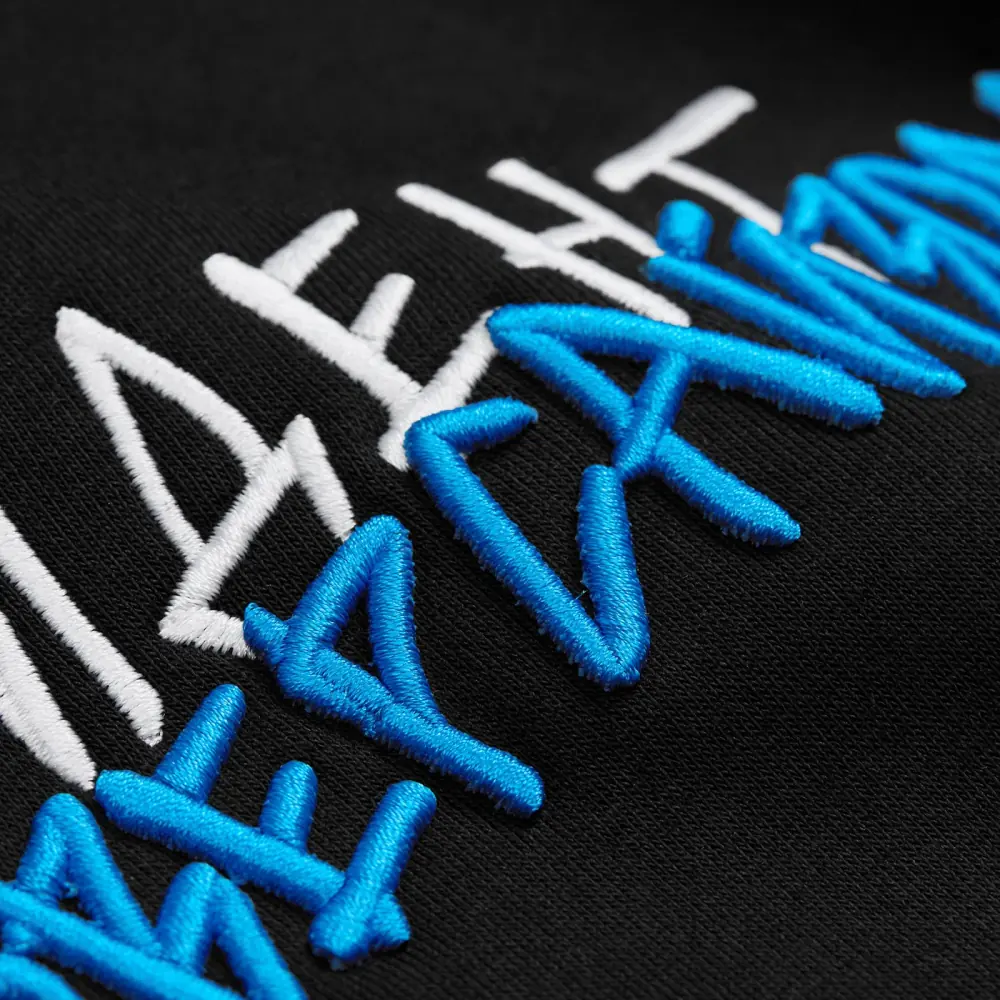
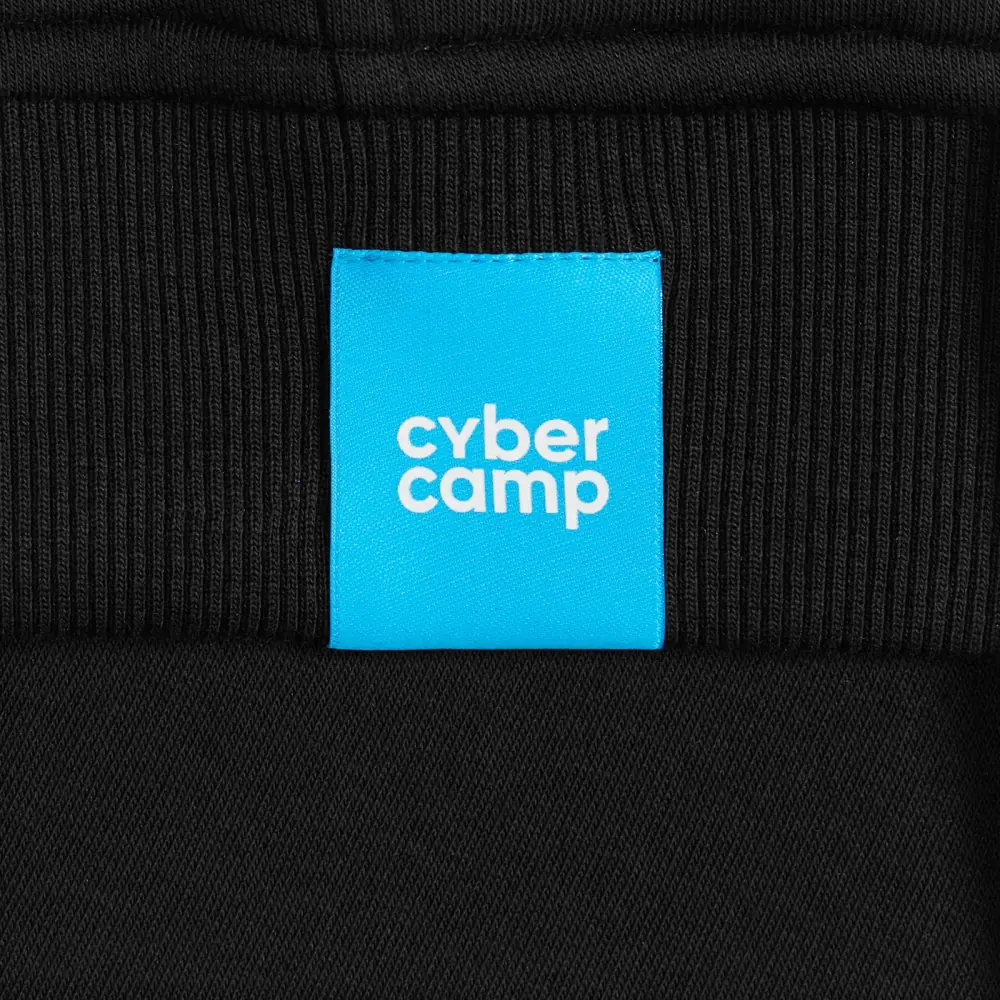
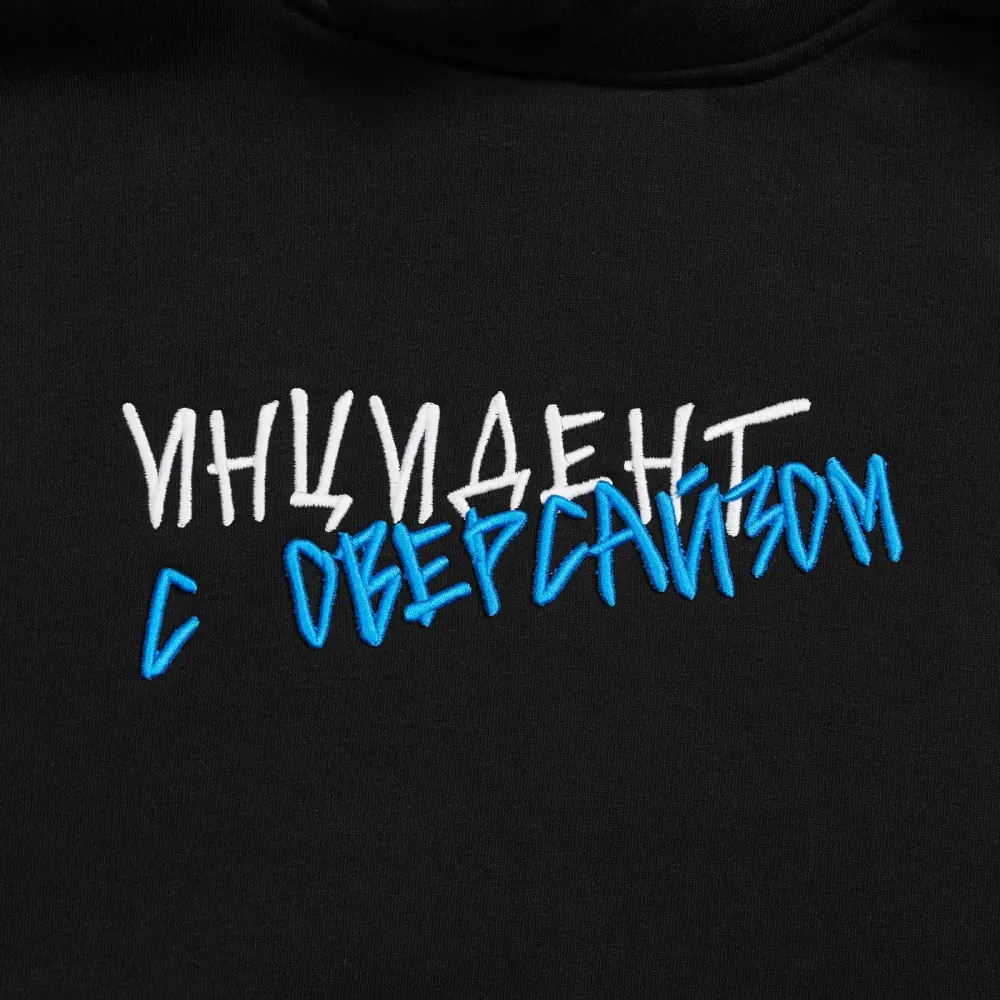
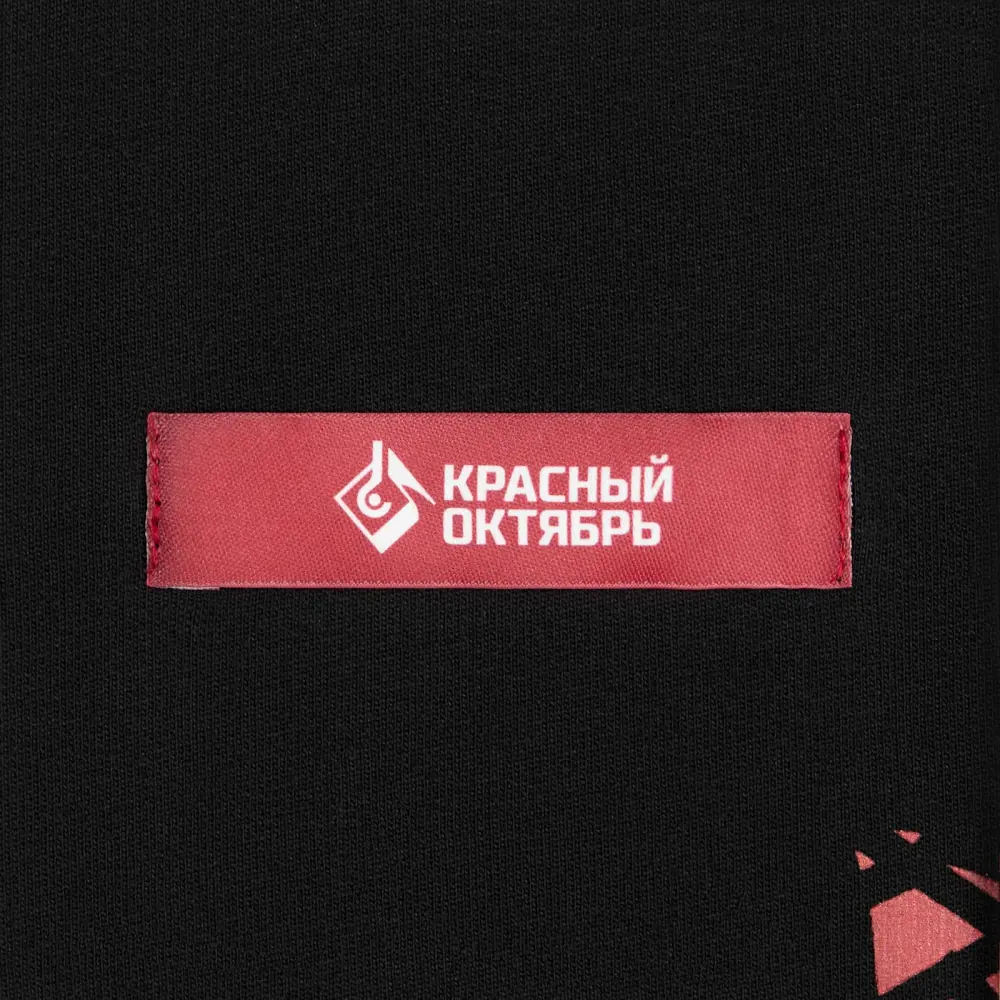
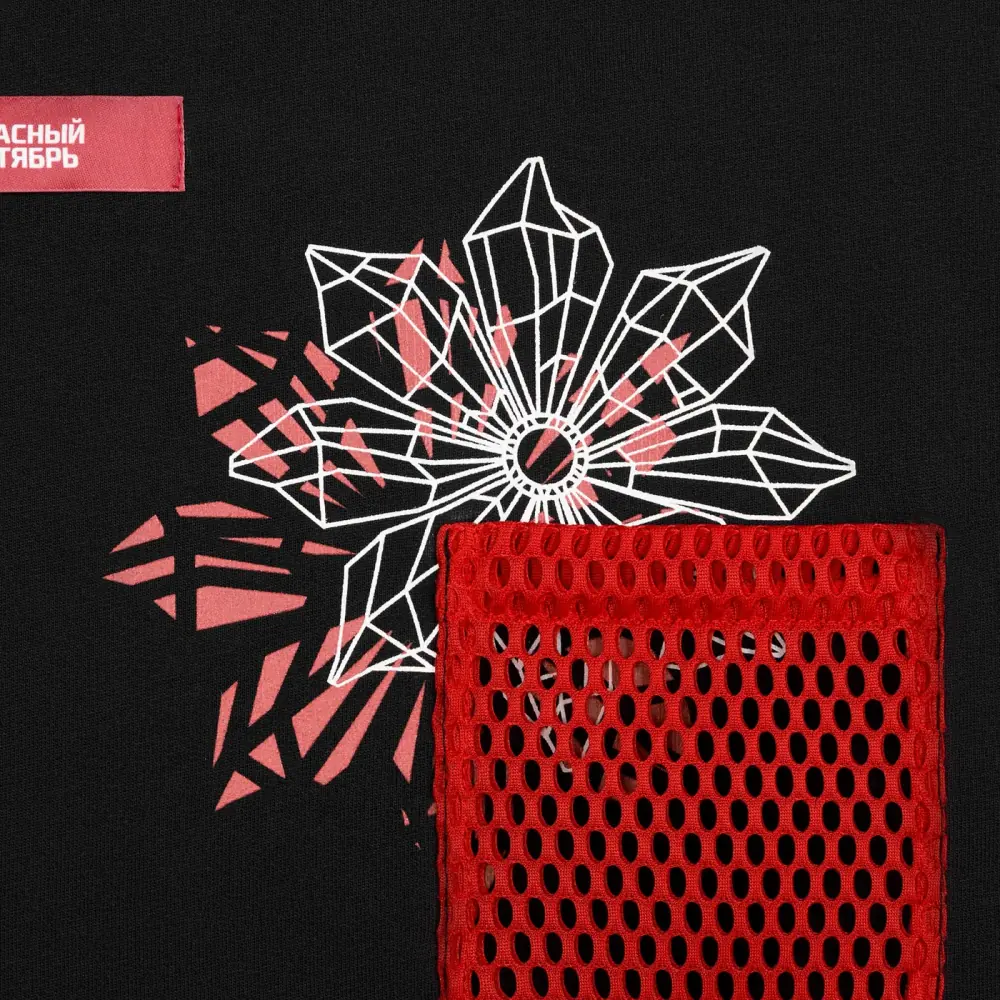
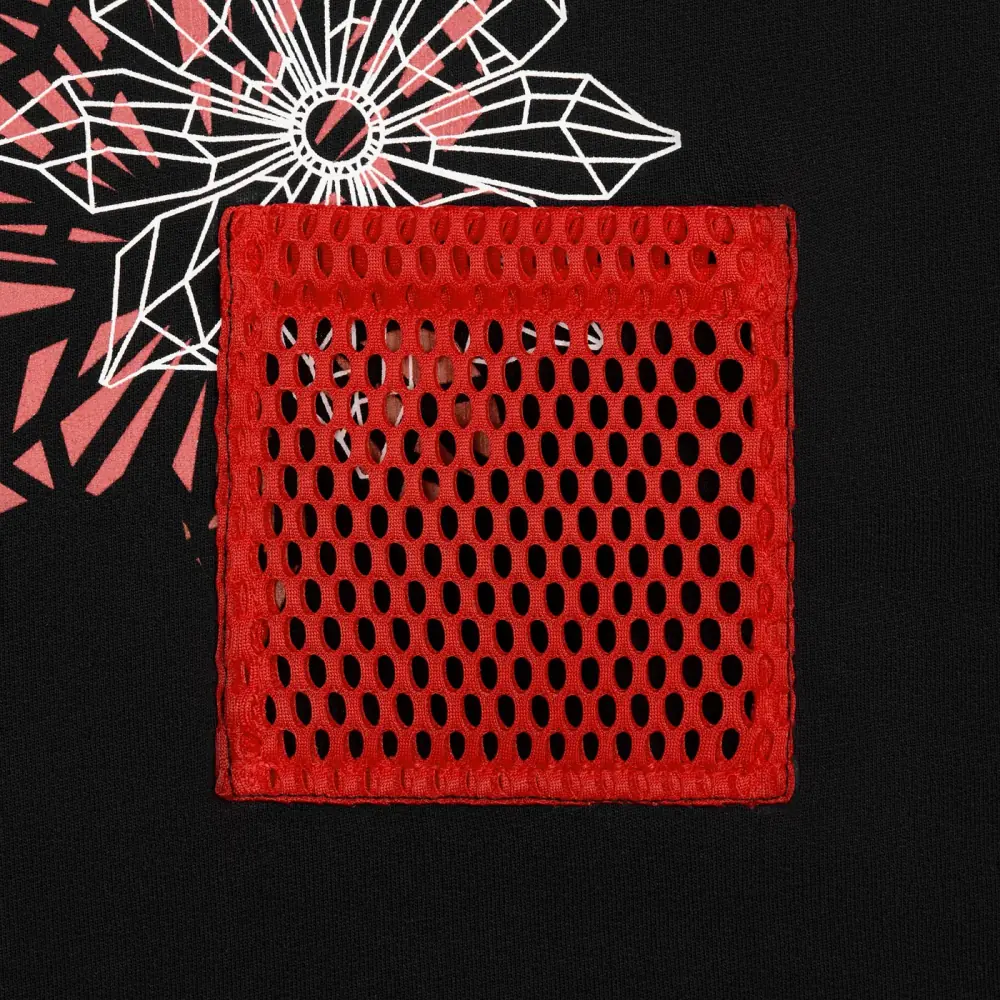
The VersaSize sample series shows how far you can move beyond the feeling of “a logo on a blank T-shirt”. On the hoodie, raised 3D embroidery is layered over flat embroidery; a separate jacquard label provides a retail-style cue. On the T-shirt, DTF graphics are combined with a woven label and a sewn-on mesh pocket.
Even with an order starting at 50 units, a ready-made model can have its own visual system: several levels of relief, a functional detail, branded labeling, and graphics tied to the garment's construction.
Five in-stock bases for a quick launch
The T-shirts and hoodies are already made: all that remains is to check sizes, choose a color, and prepare the branding system.
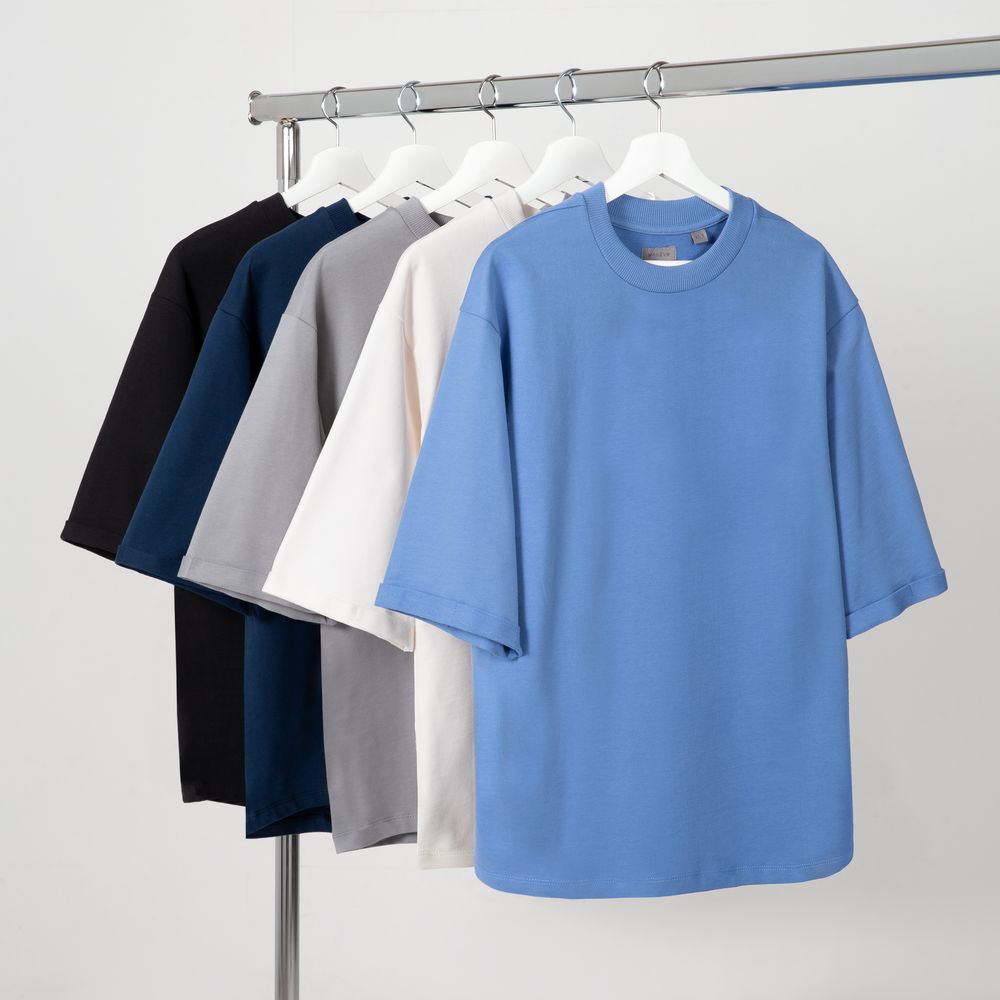
Kosmos 2.0
Heavyweight 100% cotton with a clean surface for combined branding.
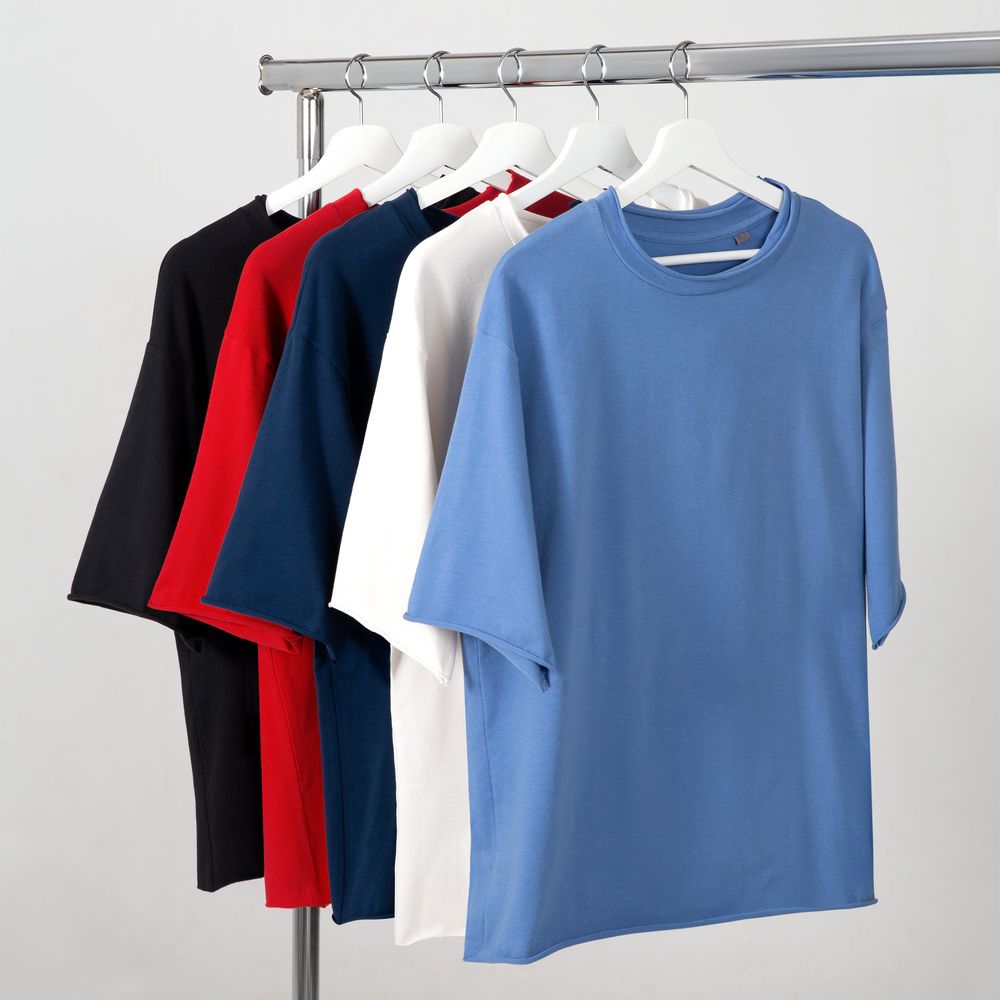
Vozduh 2.0
A relaxed base with raw edges for creative and youth merchandise.
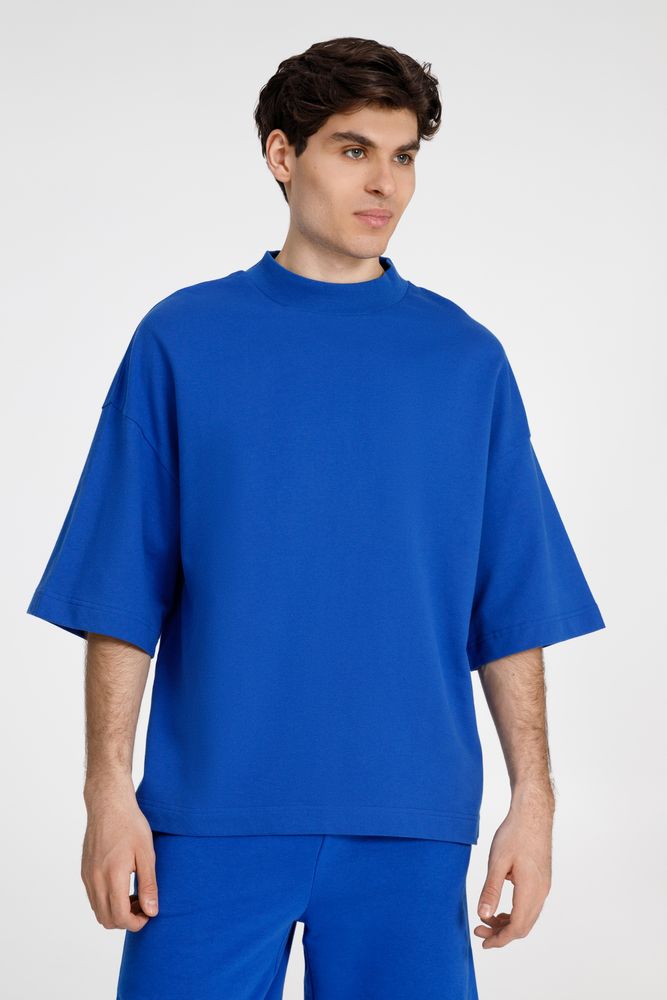
T9 T-shirt
100% cotton, a heavyweight minimalist base for an understated capsule collection.
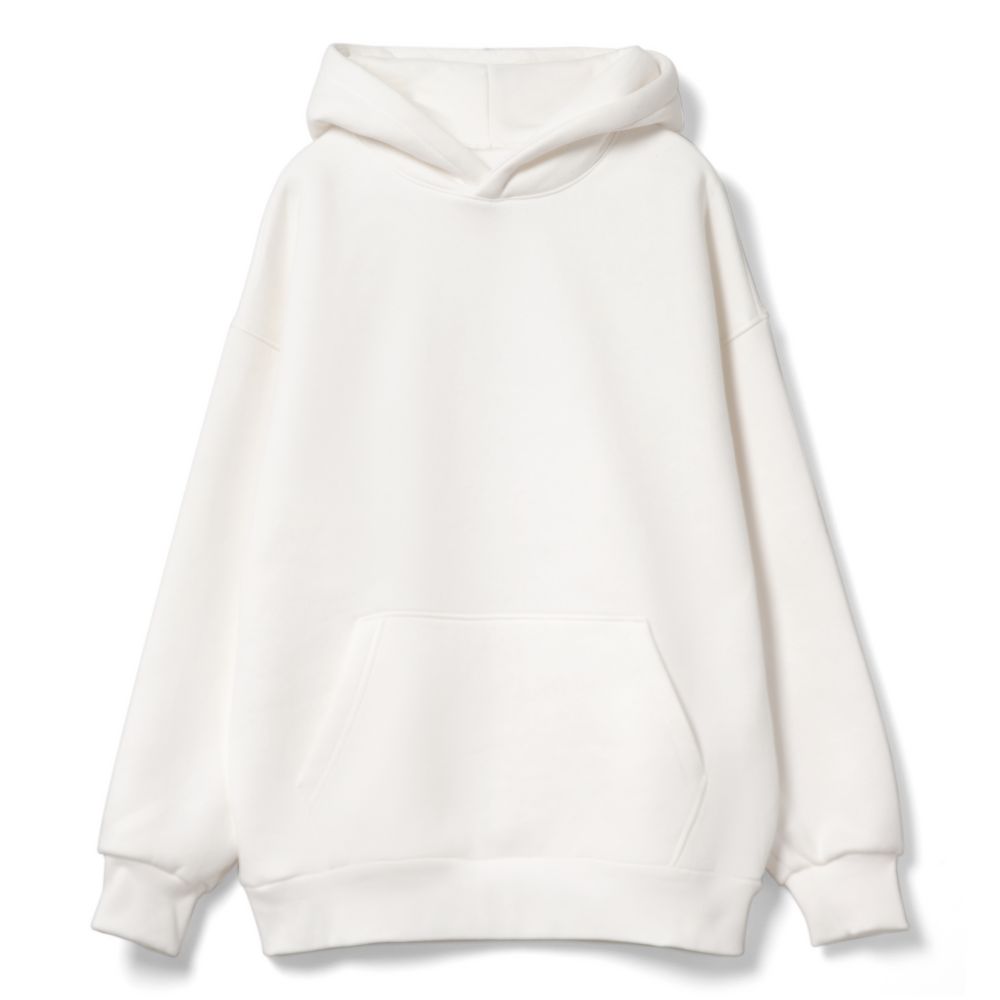
Go Easy hoodie
A warm model for a winter welcome kit, team, or merchandise drop.
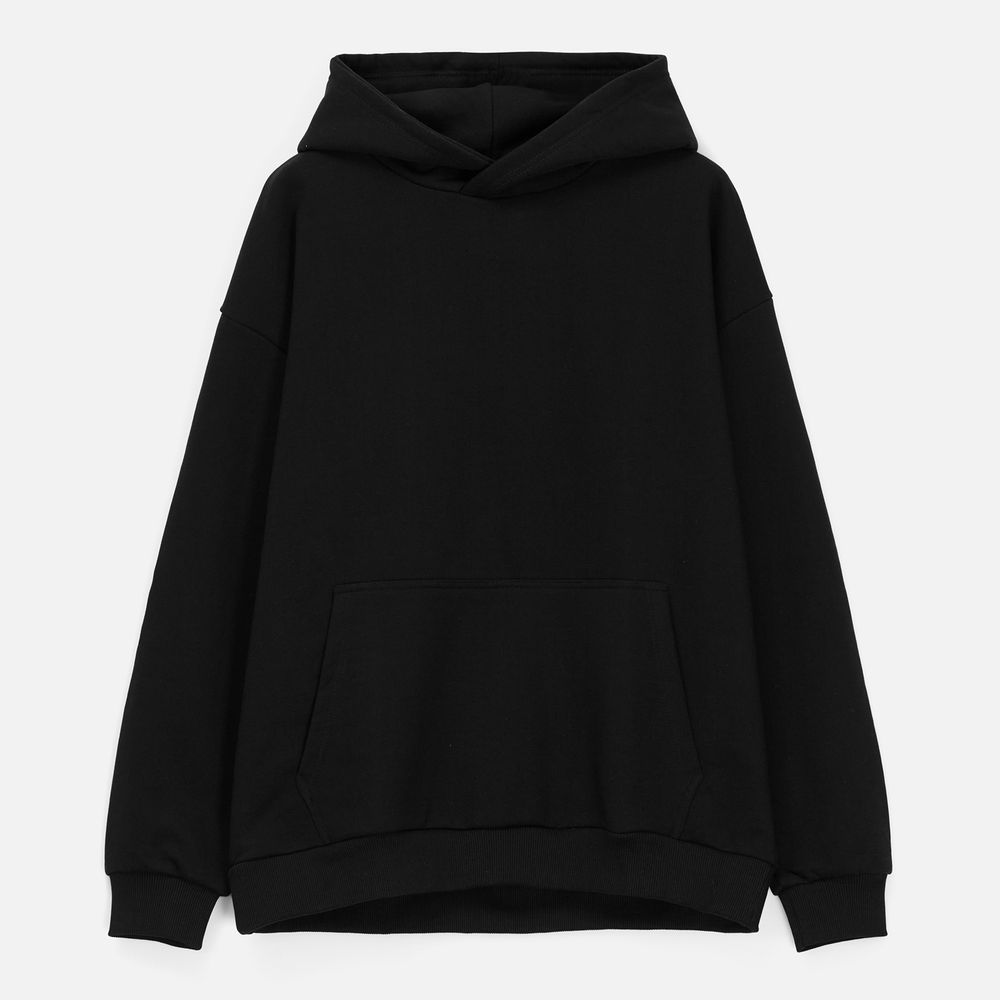
Daylero hoodie
A broad size matrix is convenient for a corporate team.
Base prices excluding branding. Availability of the specific color and size combination is confirmed before quoting.
Five more models for an expanded capsule collection
The anorak and tote bag complete the set, while made-to-order models provide more freedom for graphics and construction.
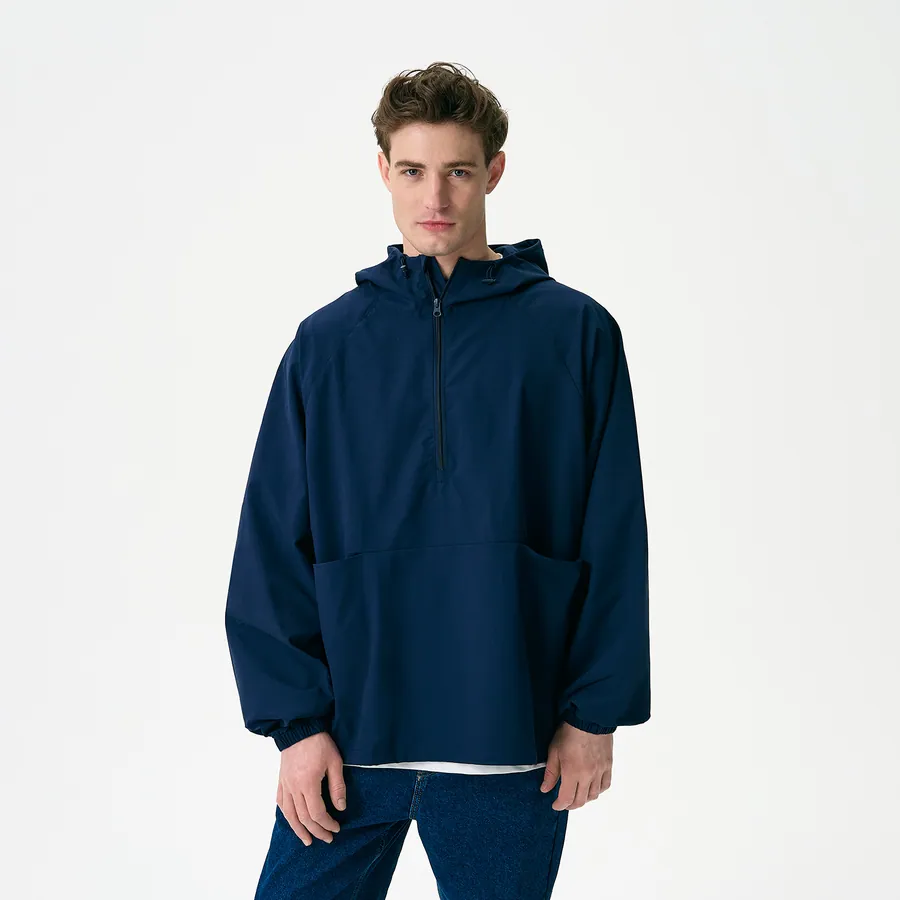
Rissman anorak
A base for the team at an event, festival, or offsite project.
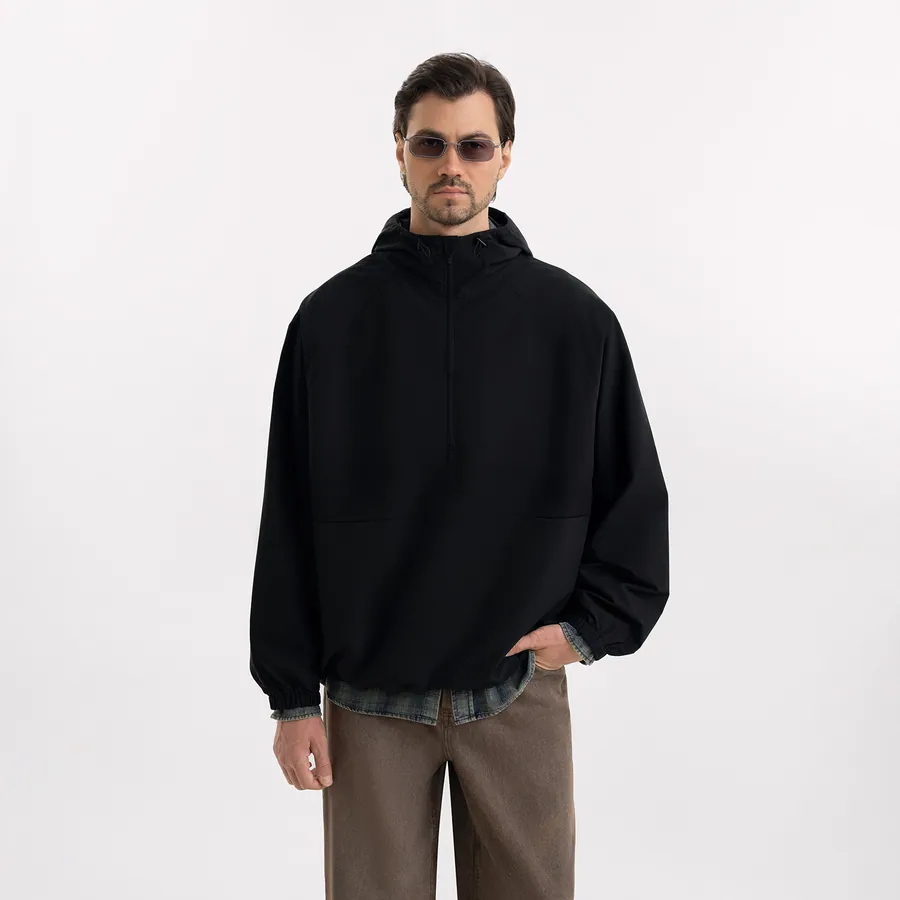
Rissman Black
A neutral base for a light-colored emblem, sleeve labeling, and a chevron.
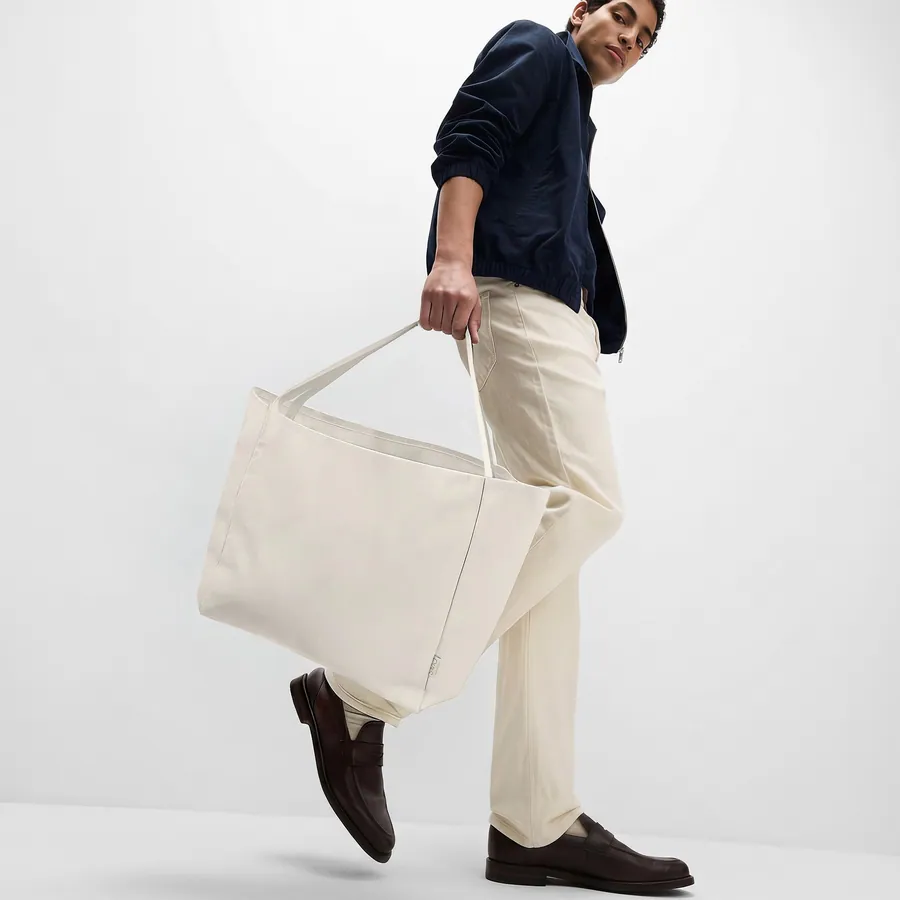
Grossbag
A large tote bag as a standalone branding item or packaging for the capsule collection.
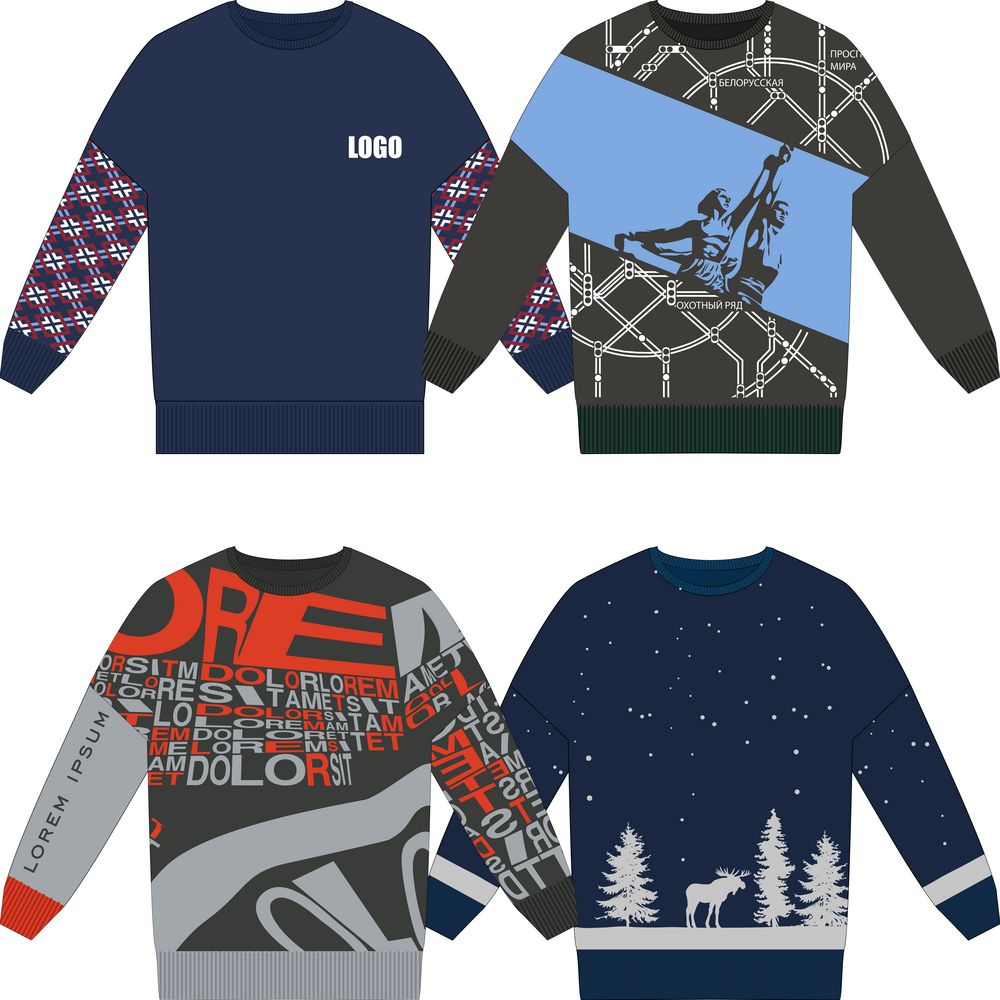
Tricksy Net
The front, back, and sleeves become one continuous jacquard composition.
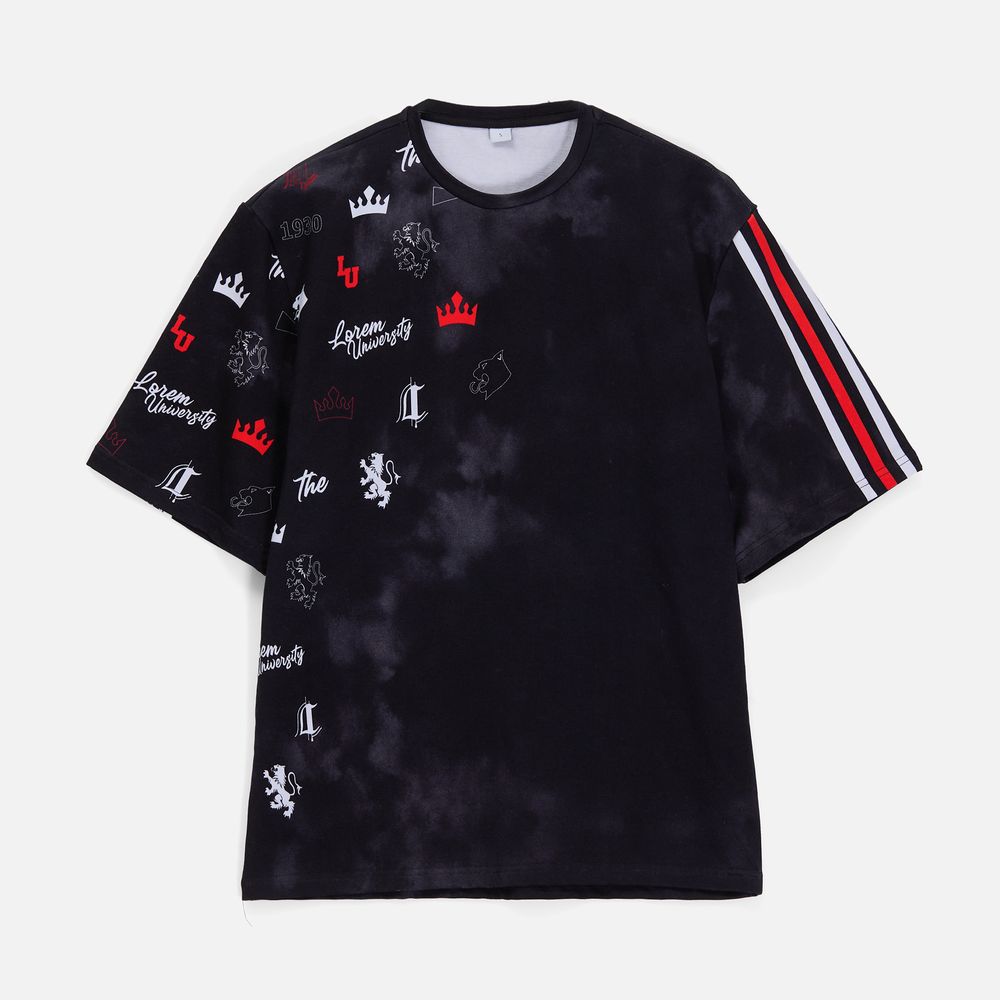
Originelli Terry
An option for all-over graphics when an in-stock base is not enough.
Prices are indicative and exclude branding. For made-to-order models, lead time and minimum order quantity are calculated separately.
How to choose a branding technique
| Method | When to choose | What to consider |
|---|---|---|
| DTF printing | Full color, photographs, gradients, and a small production run. | A large solid print area feels denser than the fabric. |
| Flat and 3D embroidery | A small status emblem and a raised accent. | Overly thin lines and small text need simplification. |
| Screen printing | Clean brand colors and a repeatable production run. | Each color requires a printing form; the method is more cost-effective for a production run. |
| Jacquard label | A retail feel, collection labeling, and a size system. | Define the position, size, and sewing method in advance. |
| Sewn-on detail | A pocket, patch, or panel becomes part of the design. | A pattern for the detail, a seam test, and a comfort check are required. |
A complex project does not have to rely on one technique. Combining printing, embroidery, and sewn-on elements helps assign roles: graphics provide the story, embroidery the relief, the label the identification, and the structural detail the item's uniqueness.
Relevant Impulse Media projects
A ready-made or custom-manufactured base becomes strong merchandise when all areas work as a system. Three case studies show different levels of customization.
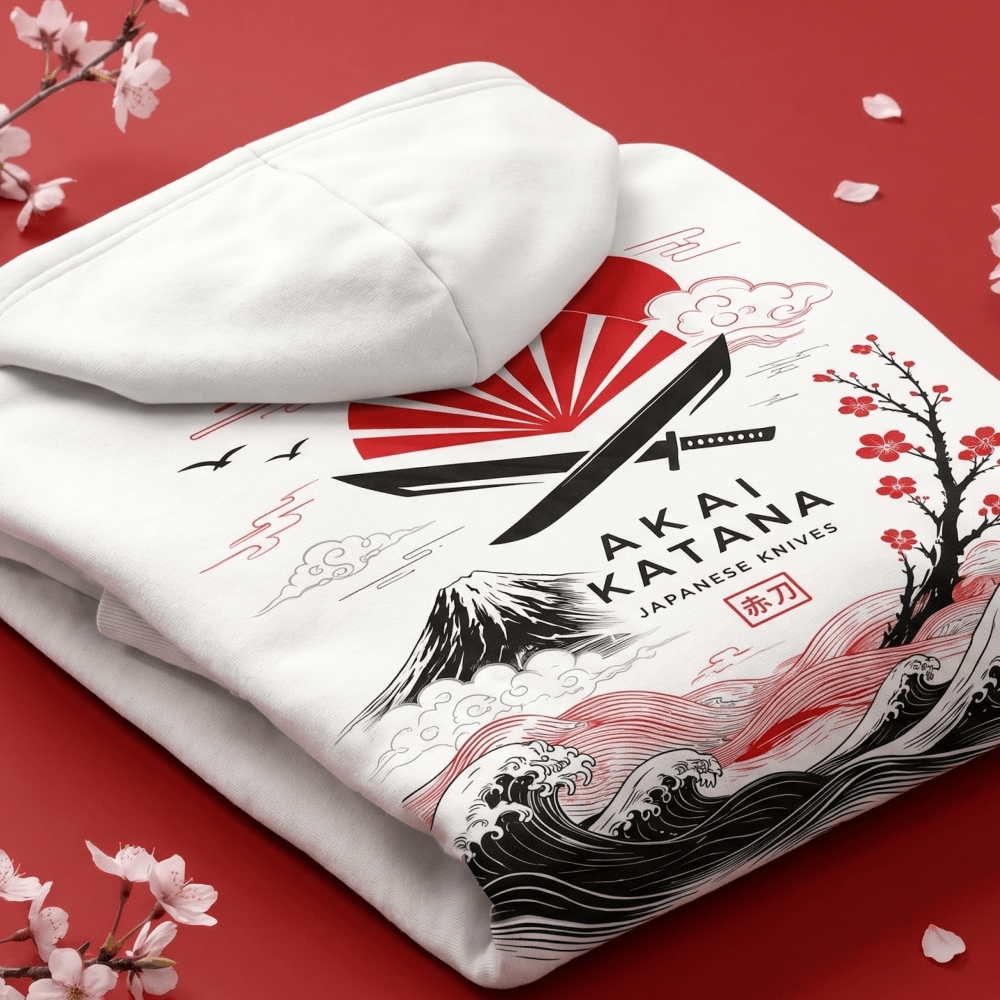
Akai Katana hoodie for Food Expo
View case study →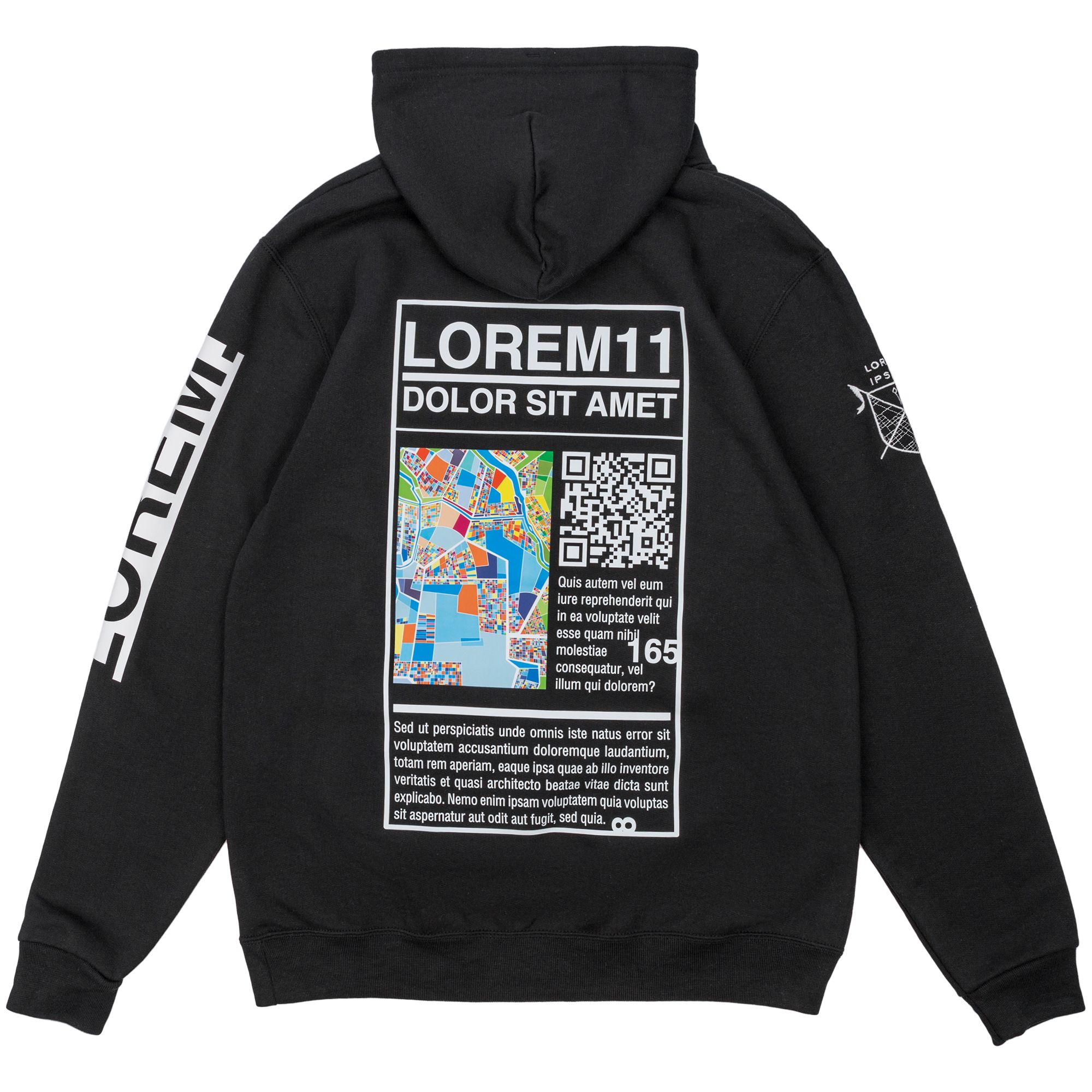
A branding system on one hoodie
View case study →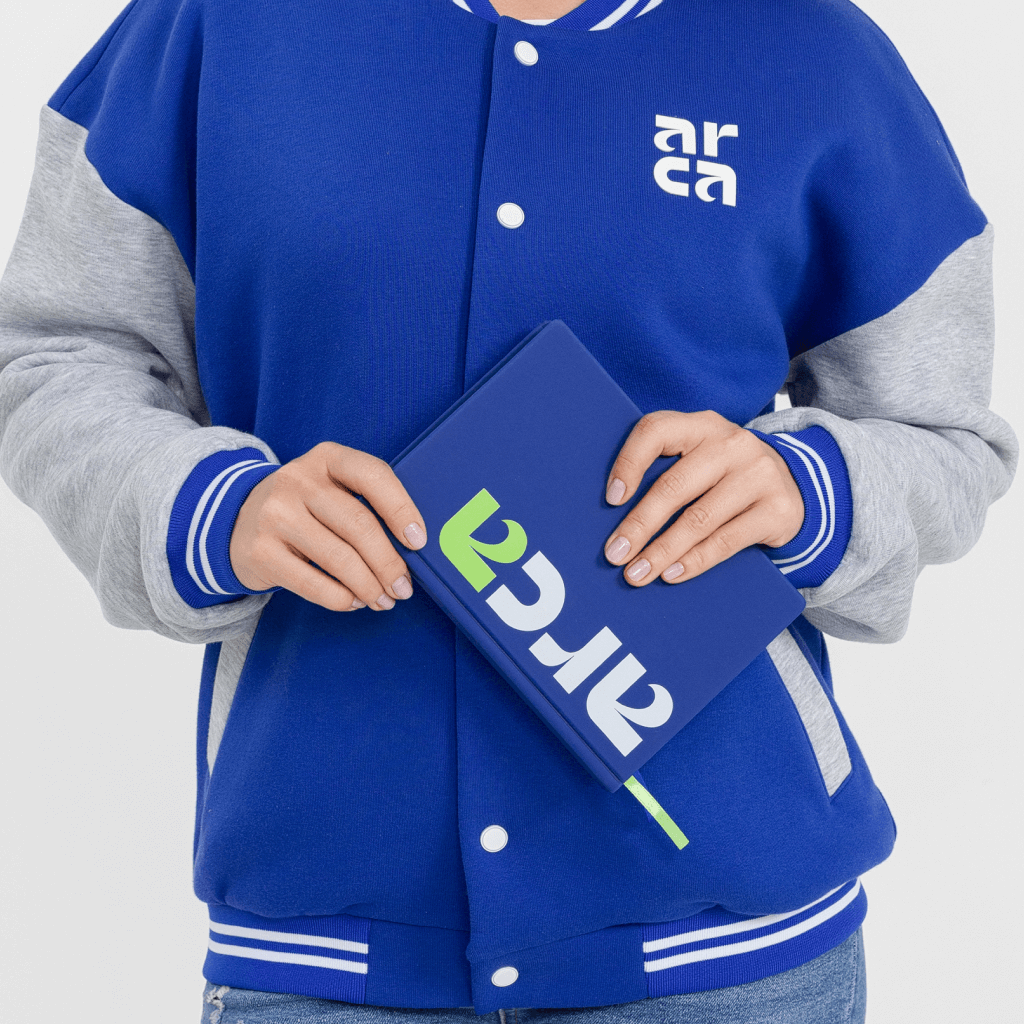
ARCA bomber jacket with branded lining
View case study →How to launch a small production run
Frequently asked questions
What is the minimum order for oversized merchandise?
For complex customization of a ready-made model, a practical starting point is 50 items. A smaller order may be possible for simple branding, while full garment sewing or knitting may require higher minimums.
Can sizes and colors be mixed?
Yes, if the required options are in stock. Before launch, finalize a table with the model, color, size, and quantity. Dark and light bases sometimes require different artwork settings.
Which is faster: embroidery or printing?
Lead time depends on the area, number of placements, and current workload. Full-color DTF is often convenient for a small urgent order; small embroidery produces a more textured and prestigious result.
Can several techniques be combined?
Yes. The VersaSize samples combine flat and raised embroidery, DTF printing, jacquard labels, and a sewn-on pocket. First, create a production sheet and check the sequence of operations.
Is a sample mandatory?
For a single small logo, the decision is made by agreement. A preproduction sample is strongly recommended when using several techniques, structural details, or critical colors.