Paracord is used for more than outdoor equipment. It is used to make keyrings, lanyards, wrist straps, phone straps, and bag charms. The material holds its shape well, creates a noticeable texture, and allows brand combinations without all-over printing.
The item's appearance depends on four things: the weave pattern, cord diameter, tension, and color. The same keyring can look sporty, restrained, or almost like jewelry. Changing the knot and hardware is enough.
Below are the main paracord weaving types suitable for production accessories and corporate merchandise.
What affects the weave pattern
Keyrings and lanyards usually use cord around 4 mm in diameter. Thinner cord suits wrapping, securing ends, and small decorative knots. Thick paracord creates pronounced relief but needs more space beside the ring or snap hook.
The pattern also depends on tension. If the knots are tightened unevenly, one side will be denser than the other. This is immediately noticeable on a short keyring. The first items in the series are therefore used as a reference: compare length, width, symmetry, and the position of colored sections.
Where a neat weave begins
Most constructions begin with a loop or by attaching the cord to a ring. The item's central axis is established at this stage. The loop should be even and the free ends equal in length if the pattern is symmetrical.
Check three parameters before starting:
- finished item length including the hardware;
- extra cord for knots and melting the ends;
- position of the front face of the weave.
Insufficient extra cord prevents a neat finish to the weave. Excessive extra length makes series assembly harder and increases material consumption.
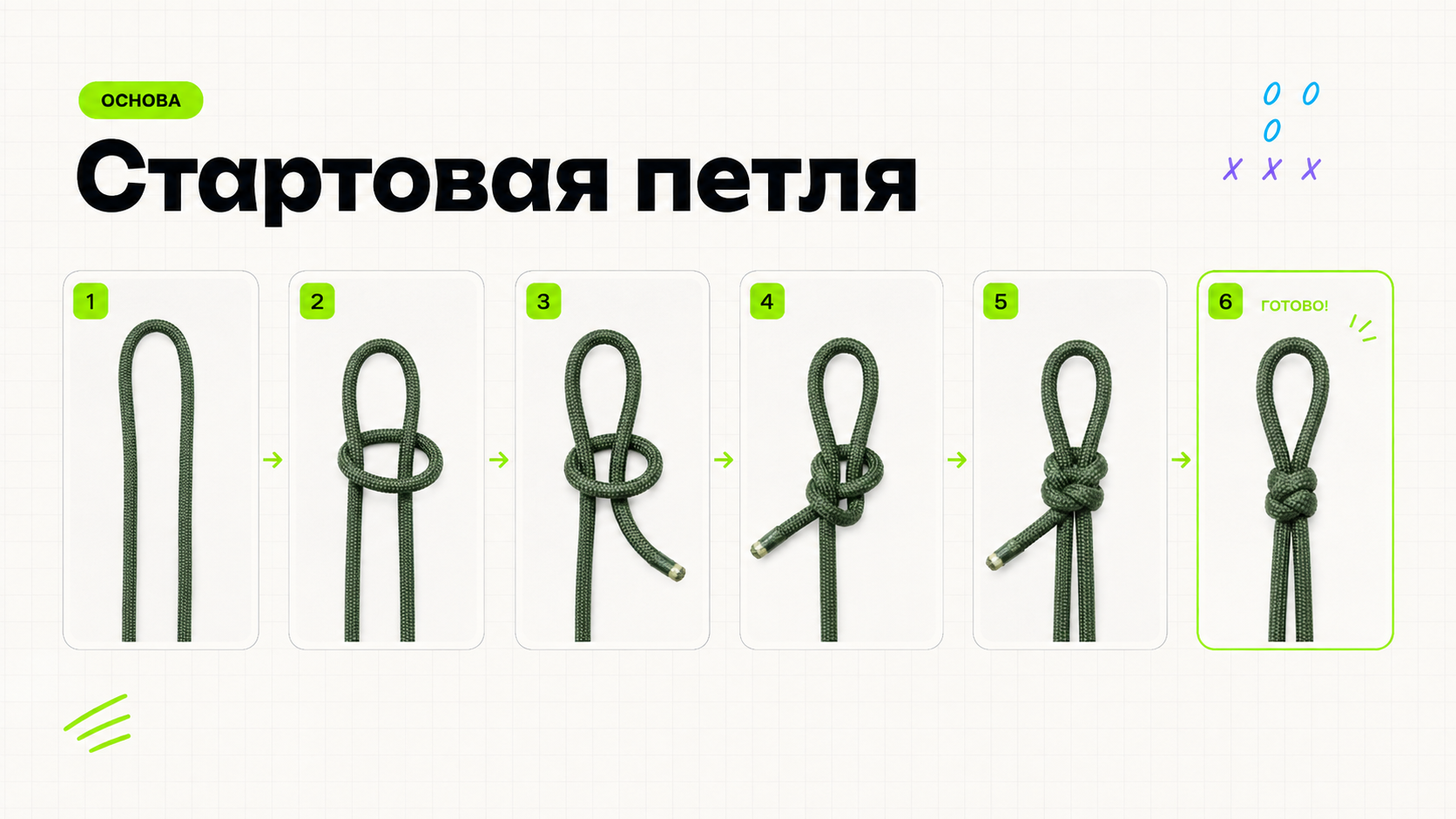
Cobra and double cobra
Cobra, or Cobra Weave, is one of the most recognizable paracord weaves. The two working ends alternately wrap around the central cords. The result is a flat, dense strip with a pronounced rhythm.
Cobra suits short keyrings, wrist lanyards, handles, and charms with a snap hook. A two-color weave shows the brand palette well: one color forms the left side of the knot and the other the right.
Double cobra, also called king cobra, is built over the completed first layer. The weave becomes wider and bulkier. This version suits a substantial keyring but may be too heavy for a name-badge or phone cord.
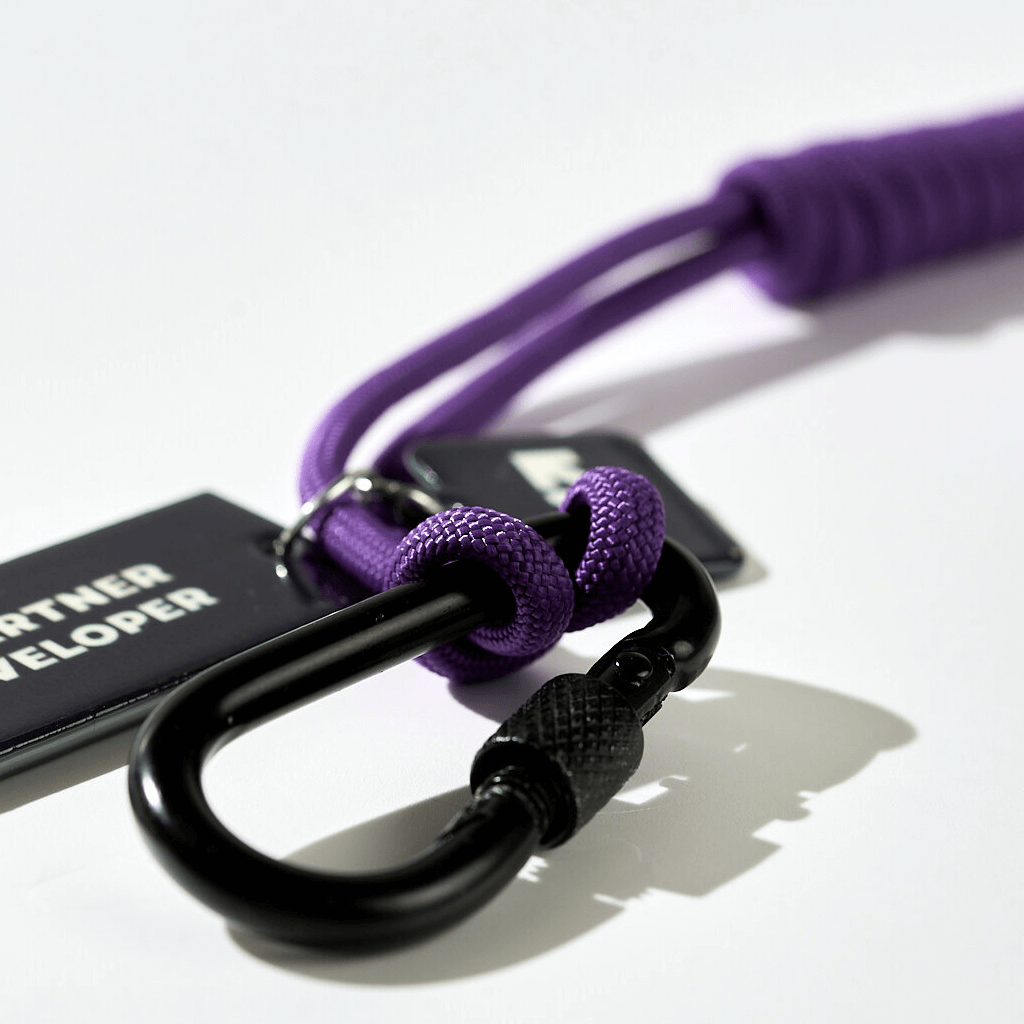
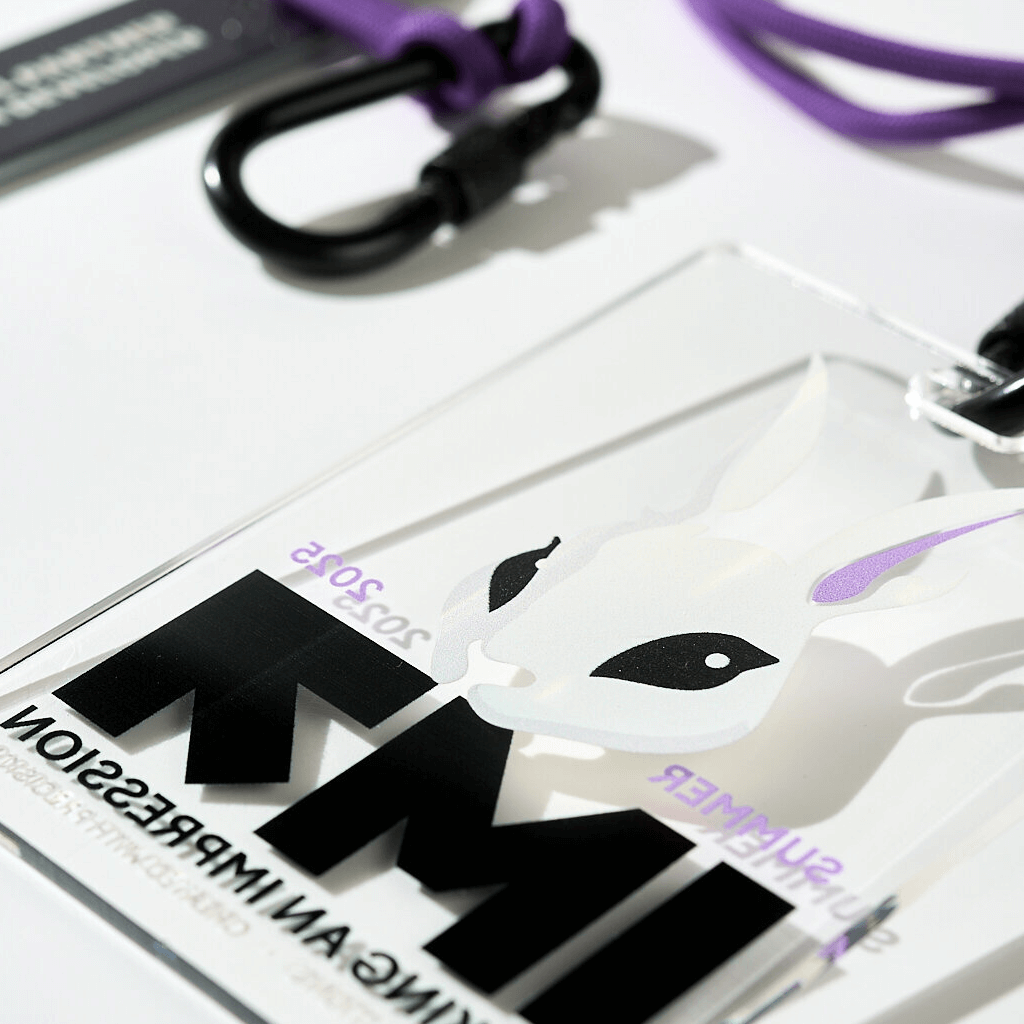
Purple lanyards and name badges
Contrasting paracord, black hardware, and transparent acrylic name badges. Close-ups show the knots and attachment points.
View the case study →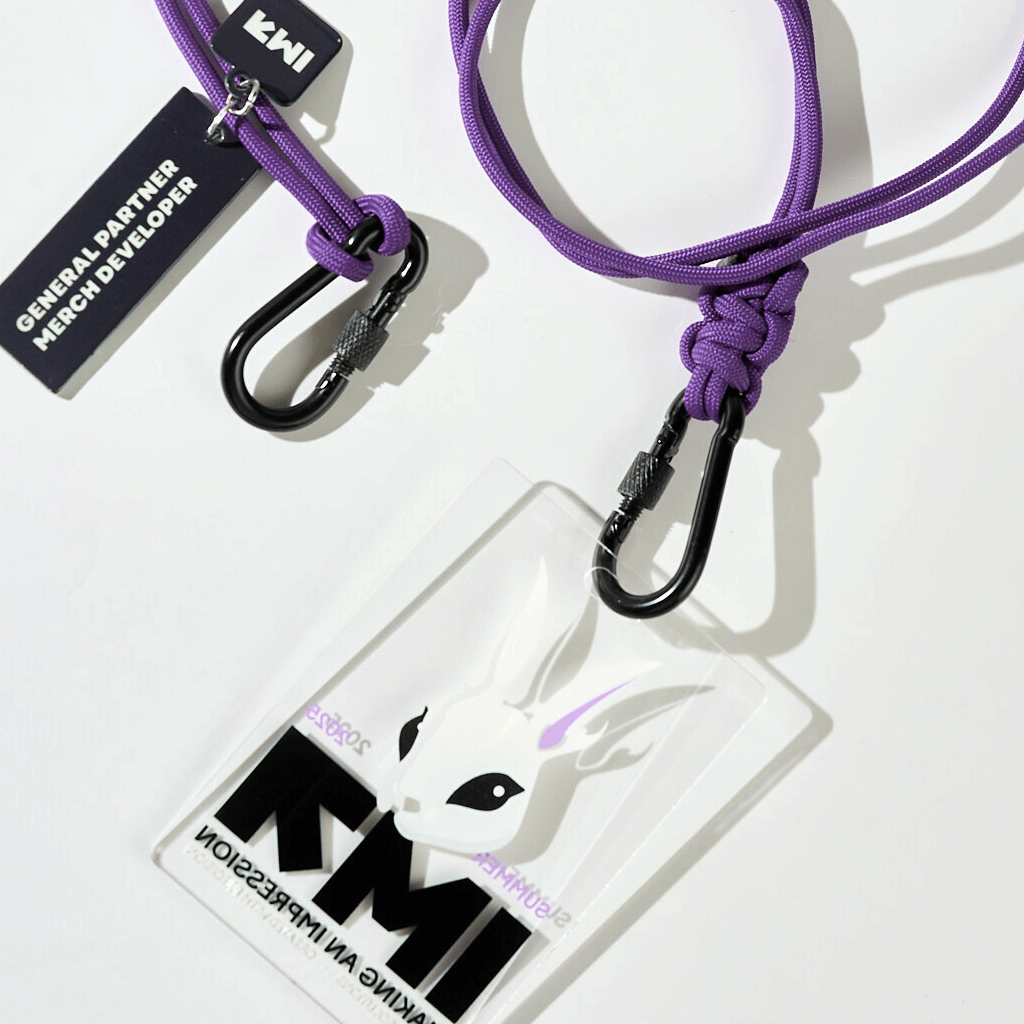
Snake knot
The snake knot, or Snake Knot, consists of short repeating knots. Small gaps can be left between them, or they can be placed tightly together. The pattern looks lighter than classic cobra and works well on thin loops.
Snake knot weaving is used for compact keyrings, charms, and transitions between cord and hardware. In two colors, the knots form a noticeable diagonal. With one color, the emphasis remains on shape and shadow.
Fishtail
The “fishtail” weave, or Fishtail, creates an elongated symmetrical pattern. It is narrower than cobra and bends more easily. This makes it convenient for wrist loops and long elements.
In a two-color version, one shade can be dominant and the other a thin accent along the edges. Before production, check how the pattern looks when bent: it appears different on a short straight sample and on a loop.
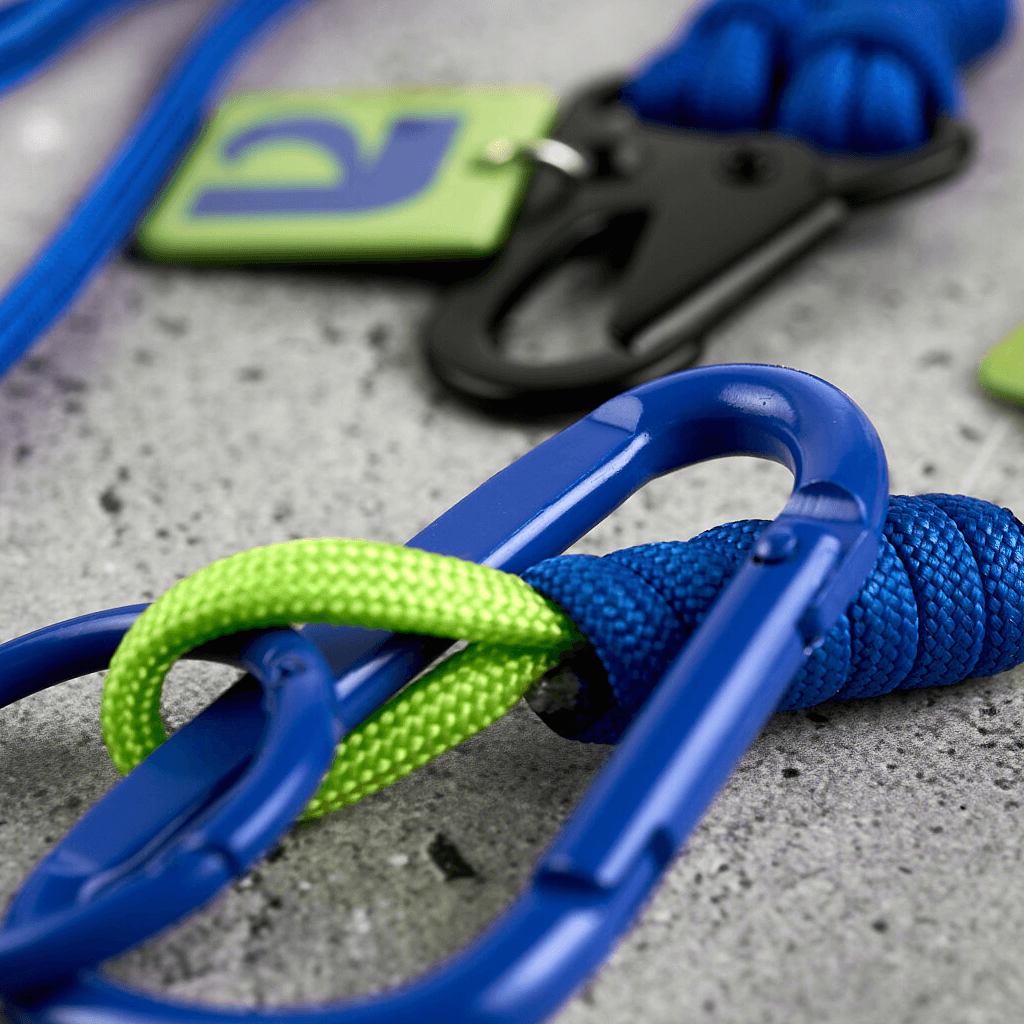
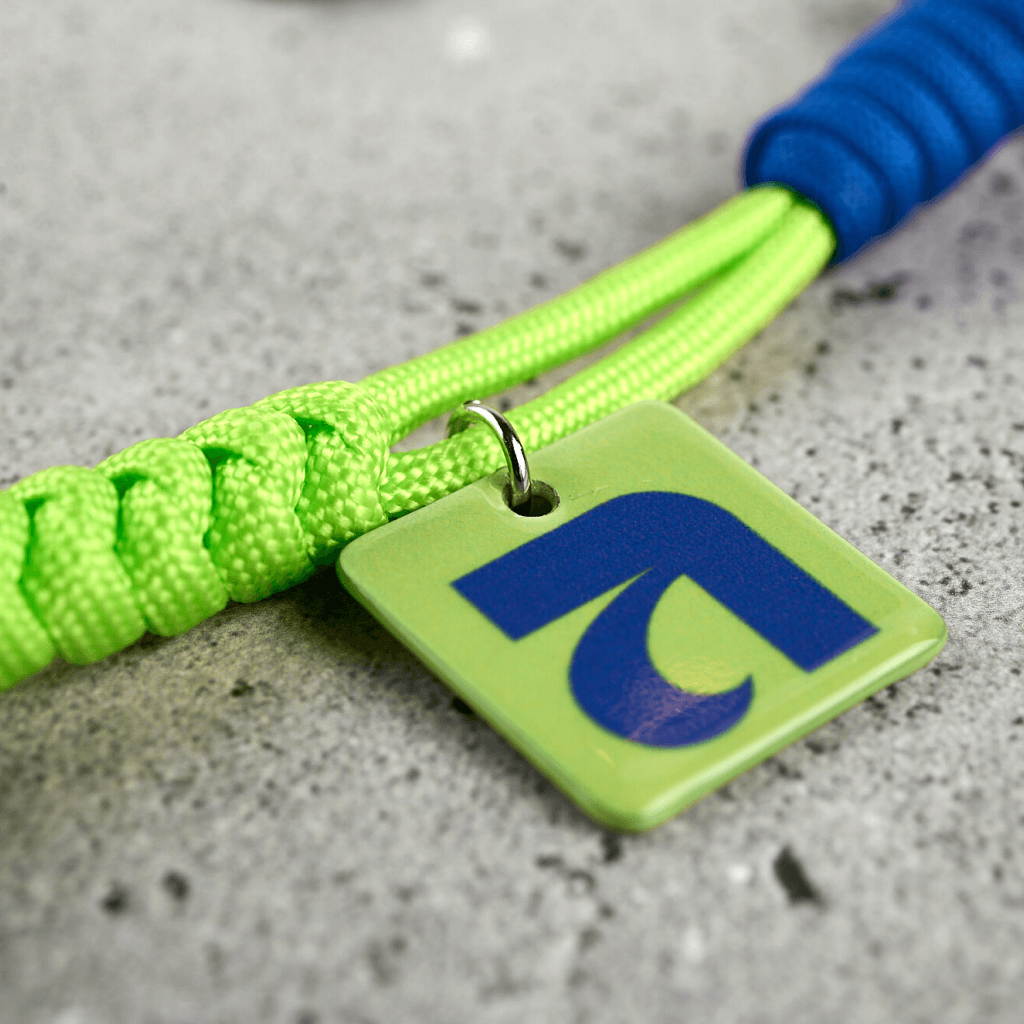
Blue-green series for ARCA
Two bright colors work as part of the construction. Black and blue snap hooks support the palette, while the square charm carries the mark.
View the case study →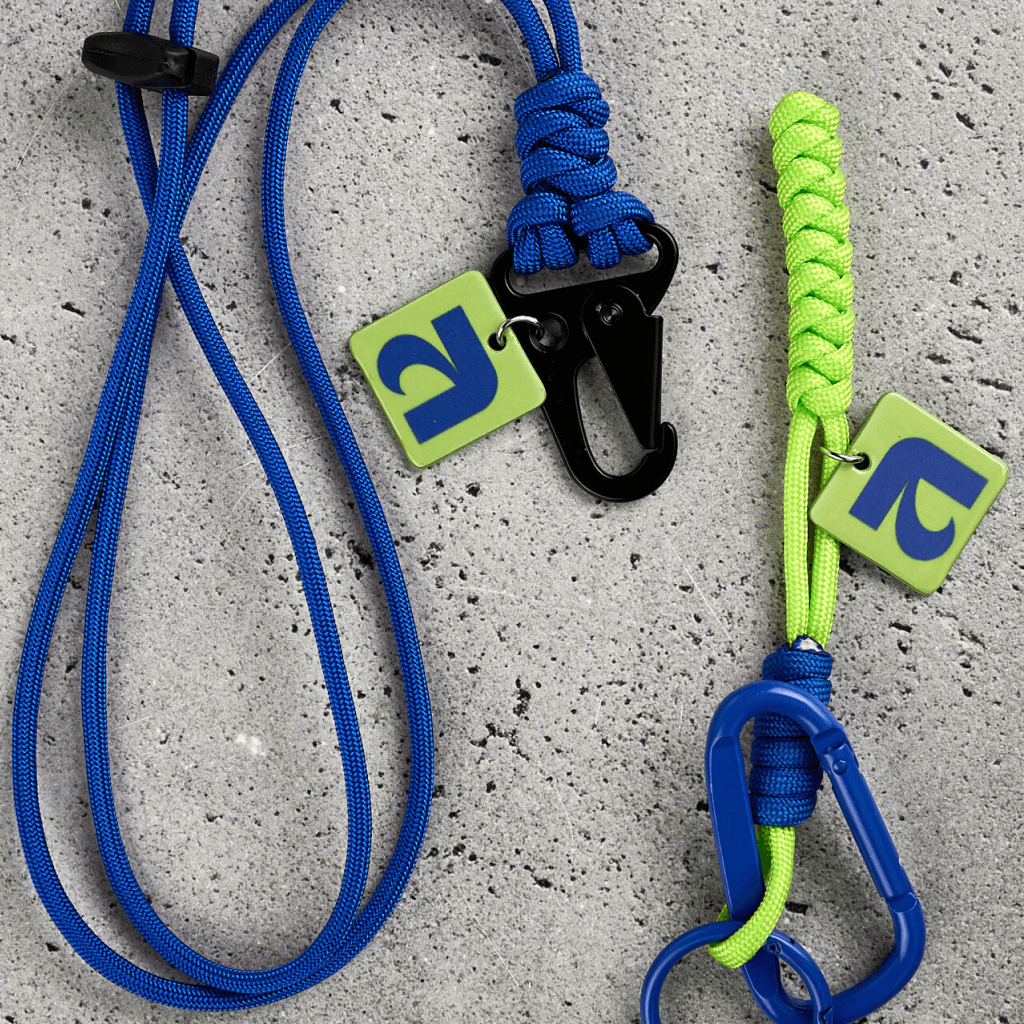
Circular weaving around a ring
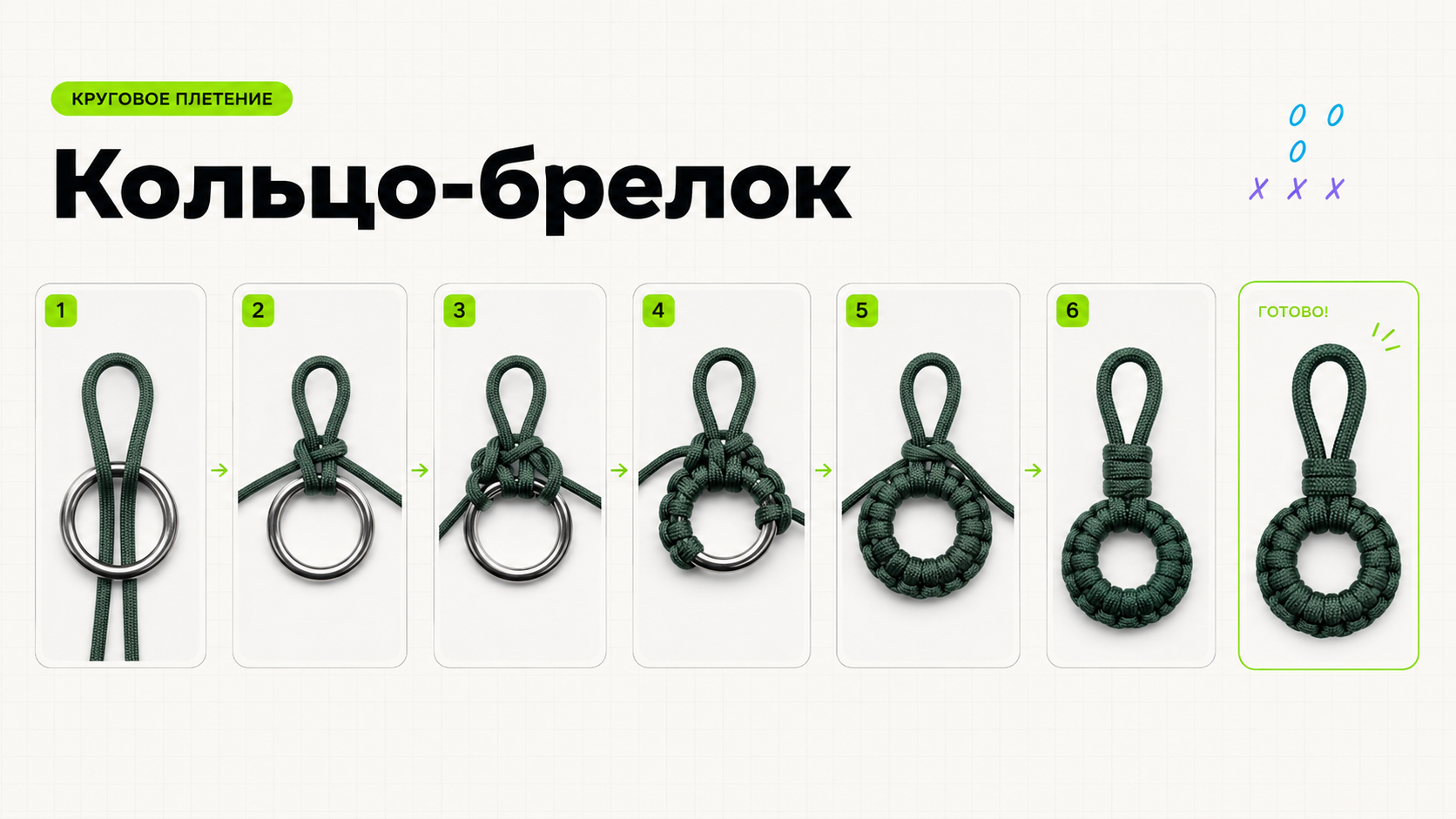
The metal ring can be left exposed or covered entirely with paracord. Circular weaving makes the hardware part of the pattern. The result is a dense keyring with a defined center.
This construction works well for keys and decorative charms. Calculations account for the ring diameter and the thickness of the finished wrapping. A ring that is too small may lose its usable internal space after weaving.
Diamond knot
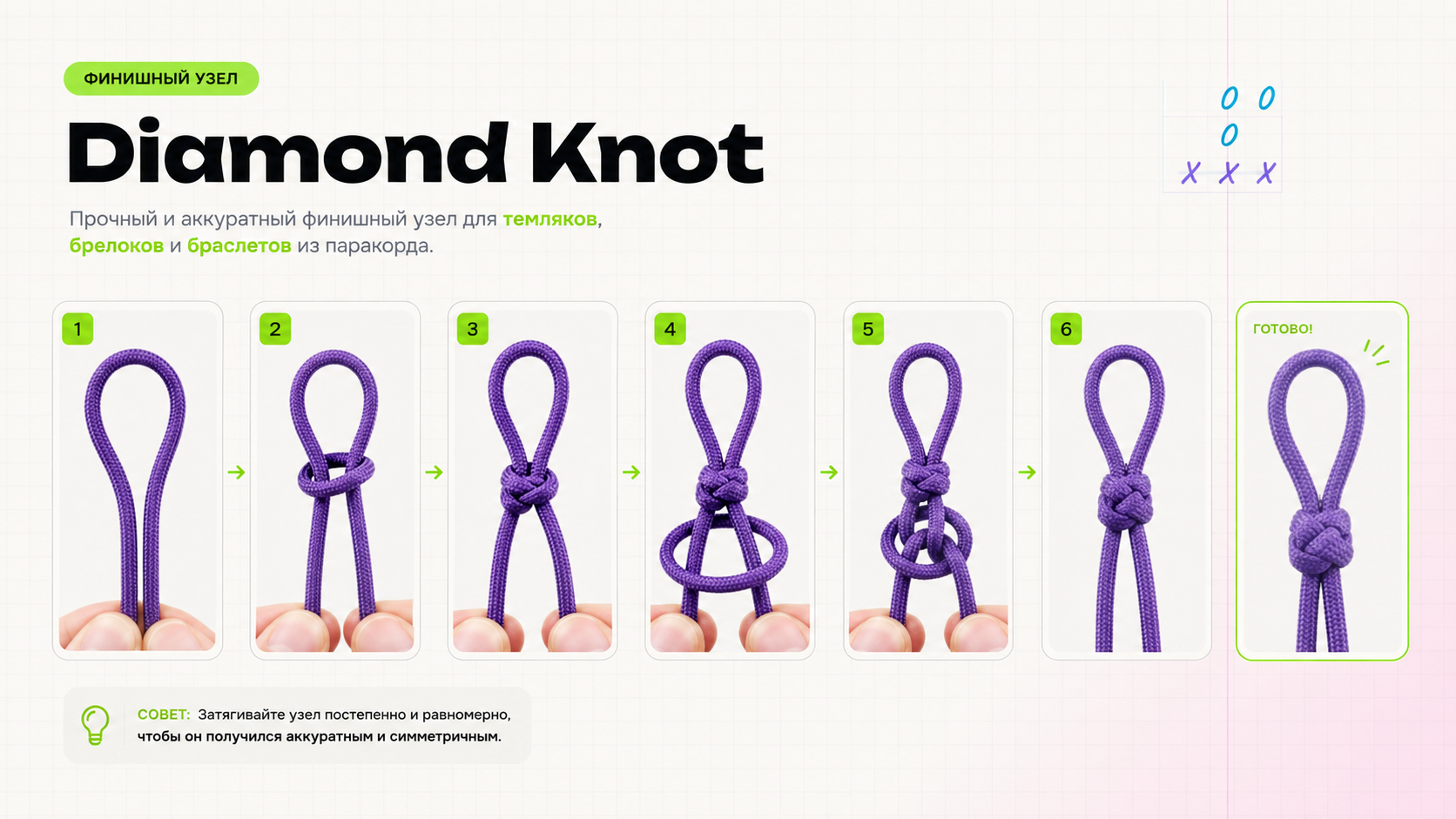
The diamond knot, or Diamond Knot, is most often used to finish a loop. It secures the two ends, creates a neat volume, and does not require a long woven section.
The knot suits wrist lanyards, short keyrings, and transitions to a snap hook. It can match the main cord or stand out in a contrasting shade. Across a series, maintain the same number of turns and the same tightening density.
Combined constructions
There is no need to limit the design to one pattern. One accessory can combine cobra weaving, a short wrap, a diamond knot, and a free loop. A metal ring, snap hook, or acrylic charm helps separate sections and keeps the weave from becoming overloaded.
The combination is especially useful for corporate merchandise. The brand color can be carried by the cord and the mark by a separate charm. The logo remains legible, and the accessory does not look like a typical promotional product.
How to choose a weave for a keyring or lanyard
| Objective | Suitable pattern | What to check on the sample |
|---|---|---|
| Dense keyring | cobra or double cobra | width, weight, and symmetry |
| Lightweight loop | snake knot or fishtail | flexibility and loop length |
| Keyring with a ring | circular weaving | the ring's clear internal diameter |
| Finishing a wrist lanyard | Diamond Knot | density and end positioning |
| Long lanyard | thin wrapping and individual knots | fit, adjustment, and load |
For a production item, the knot's appearance is not the only consideration. Consider hand-assembly speed, pattern repeatability, and space for a branded detail.
Models with different weaving styles
All 12 models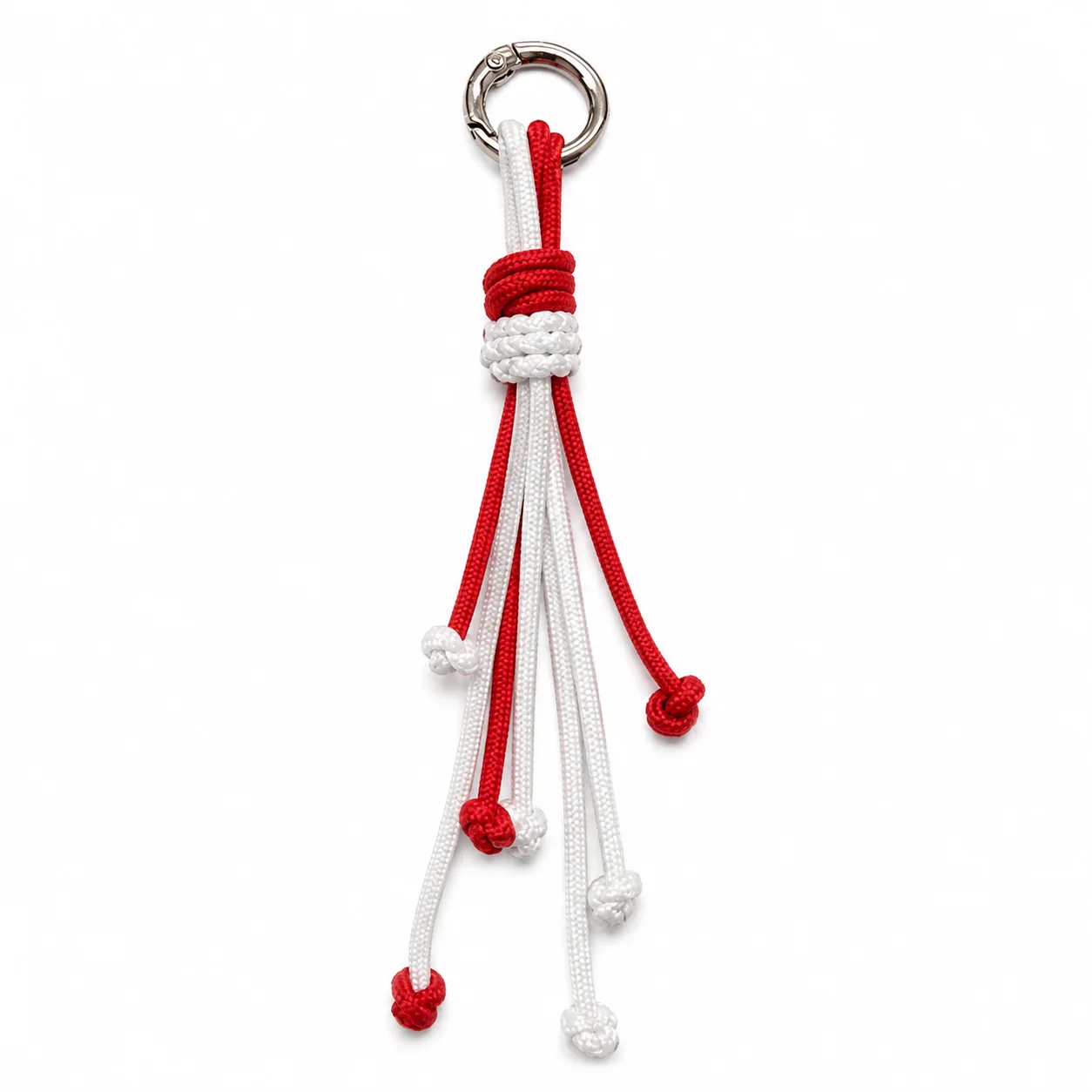 Paracord keychainsBlank for a braided keyring with a ring snap hookRed / whitefrom 350 ₽excluding branding · from 100 units
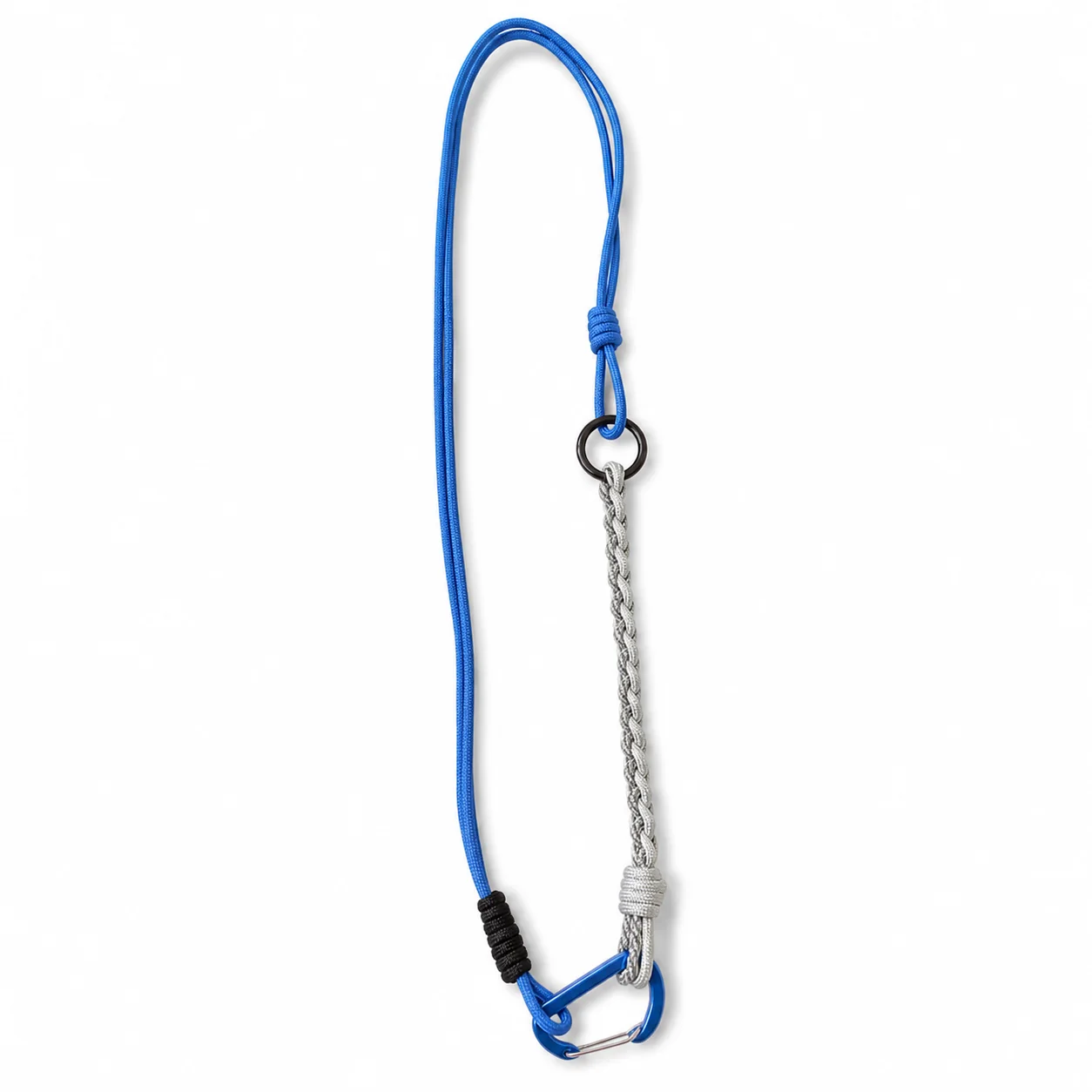 Paracord lanyardsTwo-section lanyard charm with a ring and snap hookBluefrom 480 ₽excluding branding · from 100 units
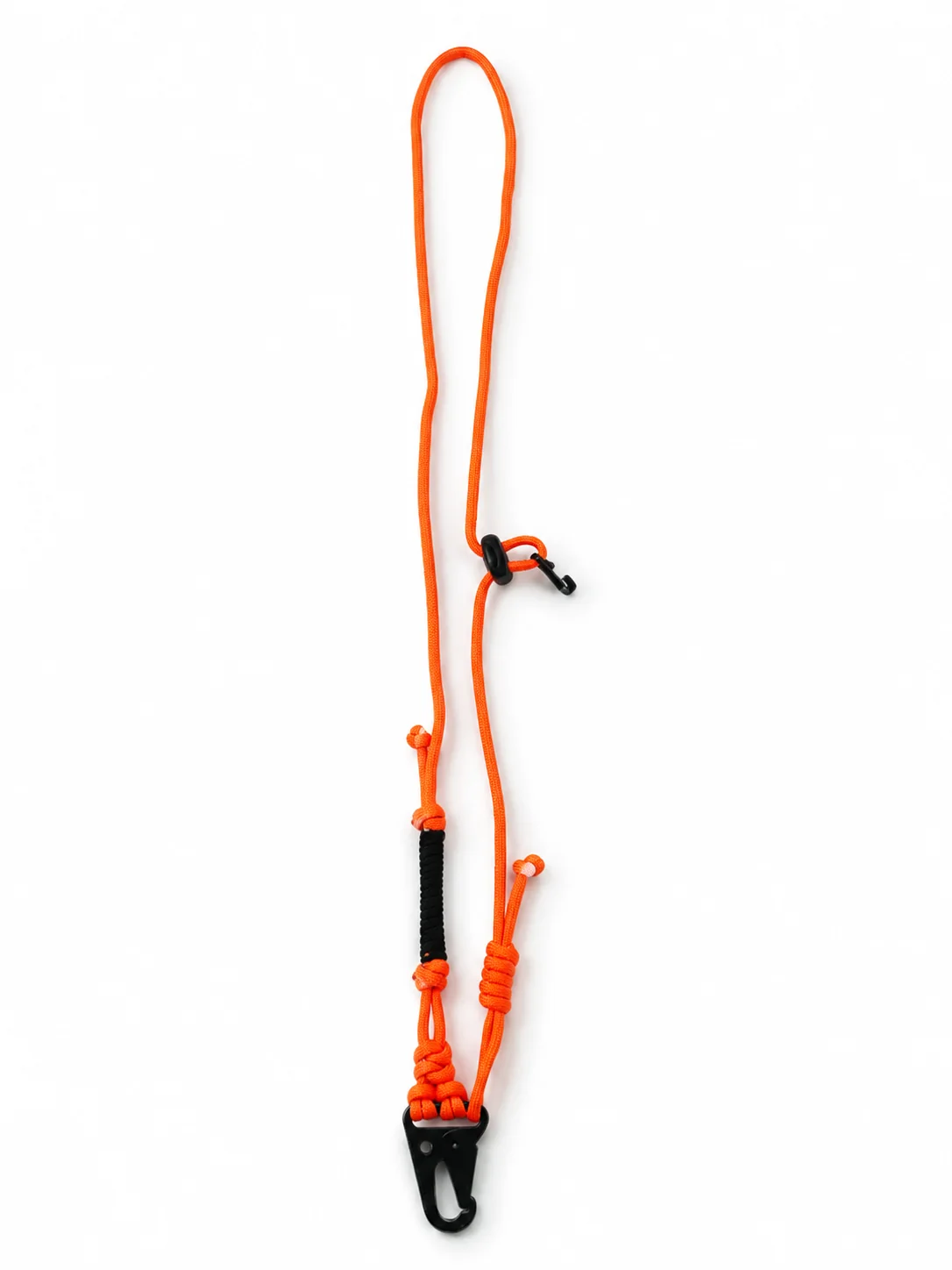 Paracord lanyardsAdjustable technical lanyard with a reinforced attachmentOrangefrom 670 ₽excluding branding · from 100 units
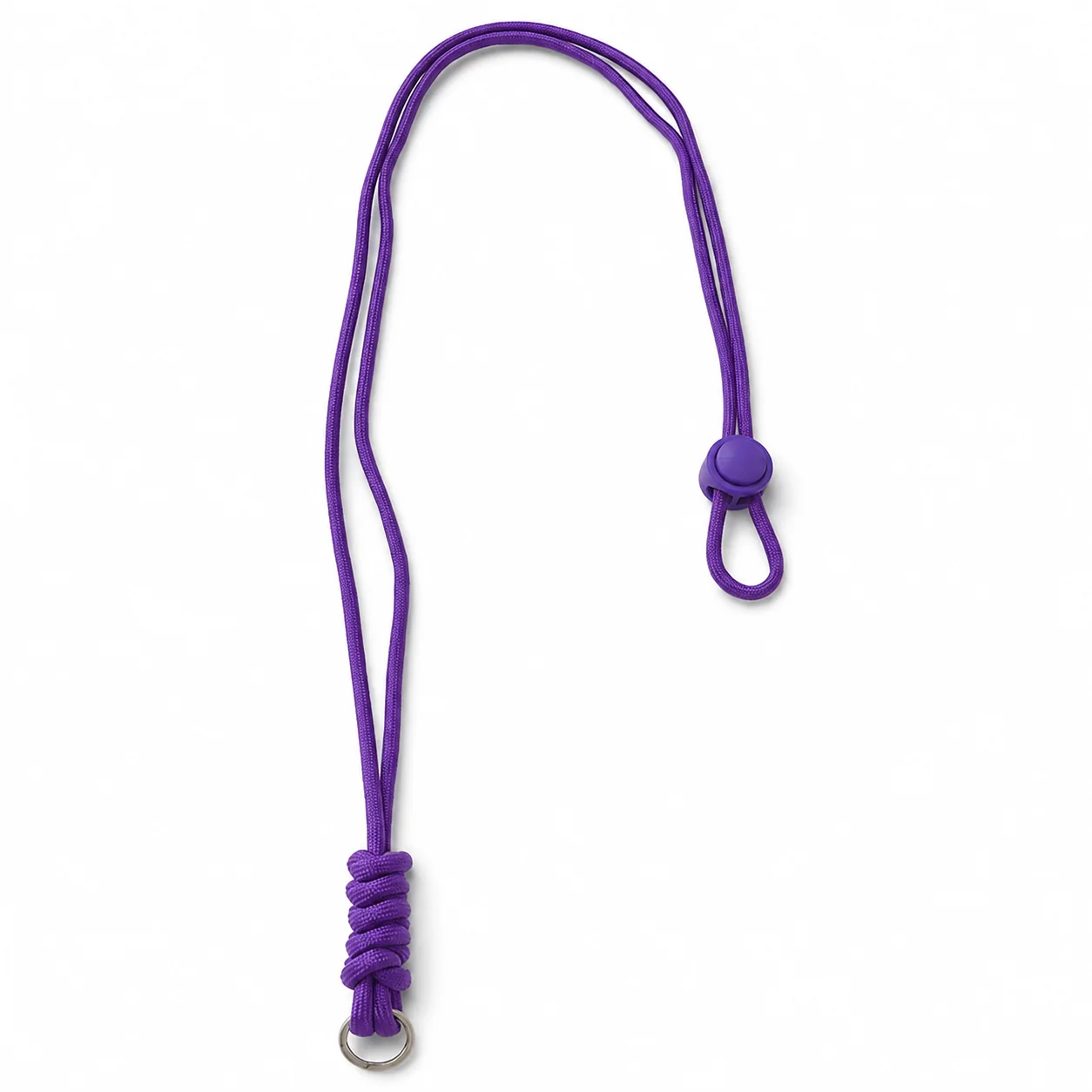 Paracord lanyardsMinimalist lanyard with a ring for charmsPurplefrom 320 ₽excluding branding · from 100 units
How weaving works within brand identity
Color can be distributed in different ways. An understated base and bright wrapping create a neat corporate accent. Two equally prominent colors make the pattern more dynamic. A monochrome weave shifts attention to the snap hook, tag, or acrylic charm.
Contrasting pairs work well in event projects. Everyday merchandise more often uses navy, graphite, khaki, or black cord with one brand color.
What to check before starting the production run
- cord color matching the approved sample;
- total length including the ring and snap hook;
- consistent knot density;
- strength of the connection to the hardware;
- finishing of the free ends;
- logo legibility on the charm;
- the item's convenience in actual use.
Check the finished sample with the item the accessory was designed for: keys, a bottle, phone, name badge, or backpack.
Frequently asked questions
Which weave is best for a keyring?
Cobra is often chosen for a dense, short keyring. Snake knot and fishtail suit a lightweight loop. The final version depends on length, hardware, and the required thickness.
Can two brand colors be combined?
Yes. Colors can be assigned to the sides of the knot, with one used as the base and the other for wrapping or individual sections.
Is a sample needed before production?
Yes. The sample shows the actual size, weave density, cord shade, and hardware behavior. These parameters cannot be assessed on screen.
Where should the logo be placed?
The logo is most often placed on an acrylic, metal, PVC, leather, or wooden charm. Suitable flat hardware can be engraved.