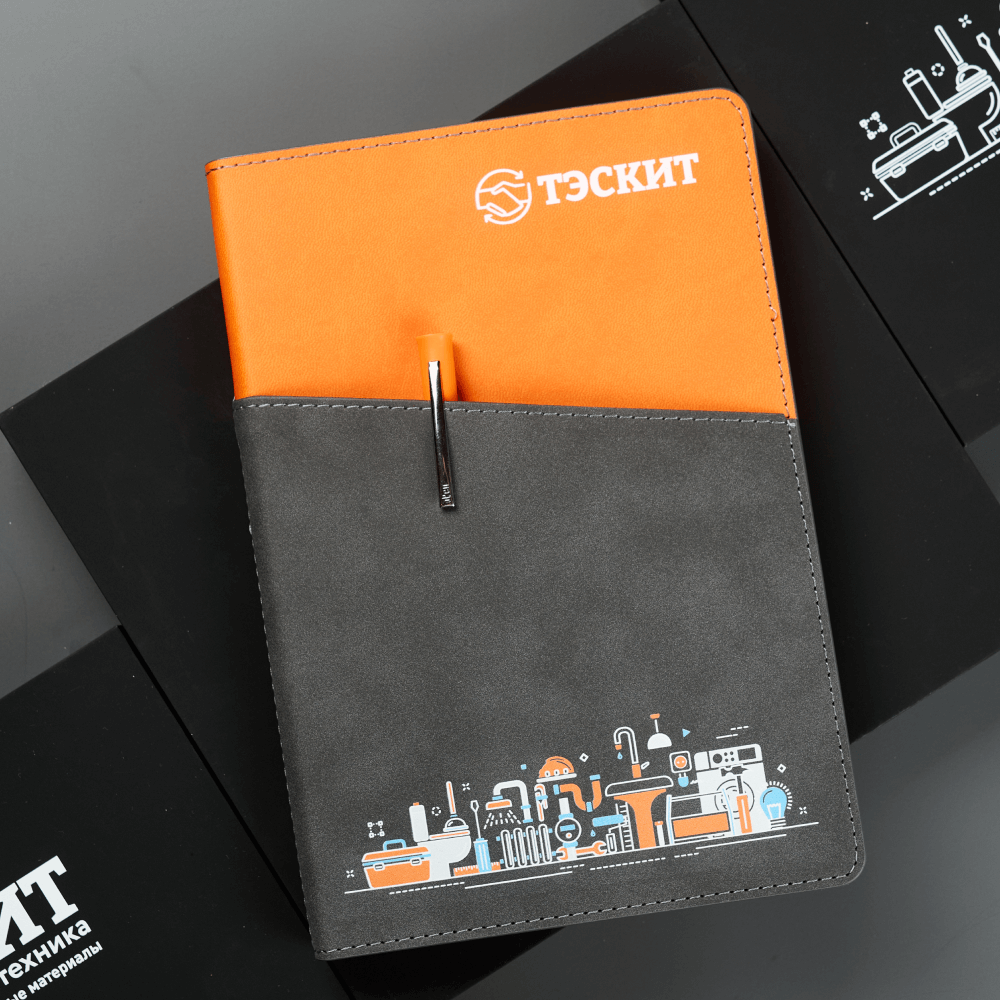
Printed materials are often seen as a secondary addition: a postcard that needs to go in the box. In practice, it ties the items into one story, explains the product's origin, helps personalize the kit, and creates a branded look without a large logo on every product.
Good printed materials do not increase the amount of information. It makes the message clearer.
Which elements can be used
| Element | Function | Suitable format |
|---|---|---|
| Postcard | Salutation and thanks | A6, square, custom shape |
| Story card | Explaining the concept | A6–A5, folded card |
| Sleeve | Bringing a box or item together | A strip cut to size |
| Tag | A small brand accent | 40–80 mm, one or two layers |
| Sticker pack | A playful and useful element | Sheet or individual stickers |
| Instructions | Explaining how to use it | Card, booklet, QR code |
| Certificate | Series verification | A5, heavyweight paper |
| Set menu | Ingredients, flavors, allergens | Card or accordion-fold leaflet |
| Sleeve | Protection and presentation | Sized to fit the item |
| Tissue paper with a sticker | The first unboxing layer | Paper and sticker |
Postcard
A postcard should contain one main idea. For a large-scale kit, it is a thank-you to the team; for a partner, a specific stage of collaboration; for a new employee, a brief welcome.
Structure:
- salutation;
- one reason for gratitude;
- a wish;
- signature;
- a QR code if needed.
If the postcard is personalized, the name should be part of the design.
Story card
It is useful for local products, a custom-made item, or a collectible award. The card explains why the material was chosen, where the design came from, and how to use the gift.
In a gourmet set, it can describe the flavor profile and a recipe; in a set with a throw, the pattern concept and care instructions.
Sleeve
A sleeve lets you quickly change the look of a ready-made box or group several items together. It suits seasonal presentation and different segments.
Advantages:
- a large design area;
- full-color printing;
- removable branding;
- distinguishing versions with one color;
- no printing on the box itself.
Check that the sleeve does not tear at the corners or slide off.
Tags and hang tags
A tag suits textiles, a bottle, small jar, Christmas tree ornament, or pouch. It can be single-layer or multilayer, with tracing paper, foil, or a custom die-cut shape.
Avoid placing long text on a small tag. A logo, series name, and short phrase are better.
Sticker pack
Stickers work when they suit the audience. A set of identical logos rarely creates interest. It is better to create a system:
- project symbols;
- short phrases;
- illustrations;
- graphic elements;
- functional planner stickers;
- one neat logo.
For laptops and bottles, choose the material and adhesive.
Instructions and QR code
A tech gift or complex set may need an explanation. A QR code can link to a video, project page, playlist, greeting, or internal portal.
Test the code at its actual size, after printing and lamination, using several phones and in low light.
Printed materials for a food gift set
The design must not obscure ingredients, allergens, the expiration date, weight, or manufacturer. If the branded label covers the original labeling, the information must be duplicated correctly.
A menu card can describe flavors but does not replace mandatory labeling.
How to choose paper
| Objective | Approach |
|---|---|
| A vibrant postcard | Coated or quality uncoated paper |
| Premium set | Textured specialty paper |
| Handwritten signature | Uncoated surface, pen test |
| Eco concept | Recycled or kraft paper |
| Tag on textiles | Heavyweight cardstock |
| Personal data | Material for digital printing |
Textured paper can change solid-ink density and small-text readability.
How to build a unified system
Printed materials should share a grid, typefaces, colors, and design logic. The elements do not have to be identical, however. The postcard can be emotional, the instructions neutral, and the label technical.
It is useful to create a master system: a main background, two accent colors, a set of pictograms, personalization rules, and several formats.
FAQ
How many elements does a set need?
One emotional and one functional element are usually enough.
Can personalized postcards be made?
Yes. A verified database and digital variable-data printing are needed.
Which should you choose: a postcard or a sleeve?
A postcard conveys the message; a sleeve changes the appearance and secures the box.
What text size is acceptable?
It depends on the typeface and paper. A physical test is needed.
Is lamination needed?
Not always. It protects the surface but changes its feel and recyclability.
Can a QR code be printed in foil?
Not recommended. High-contrast conventional printing scans more reliably.
How should personalized printed materials be stored?
By unique IDs, separately from shared elements. Only the required batch is sent for assembly.
| Impulse Media can develop a kit's print system, prepare the copy, variable data, and artwork, and arrange production of the run. |
|---|