Packaging production

Custom construction · from 100 units

Custom paper bags with a logo

We develop branded bags around the product size and the brand's task, from full-color printing and lamination to foil stamping, eyelets, and satin handles.

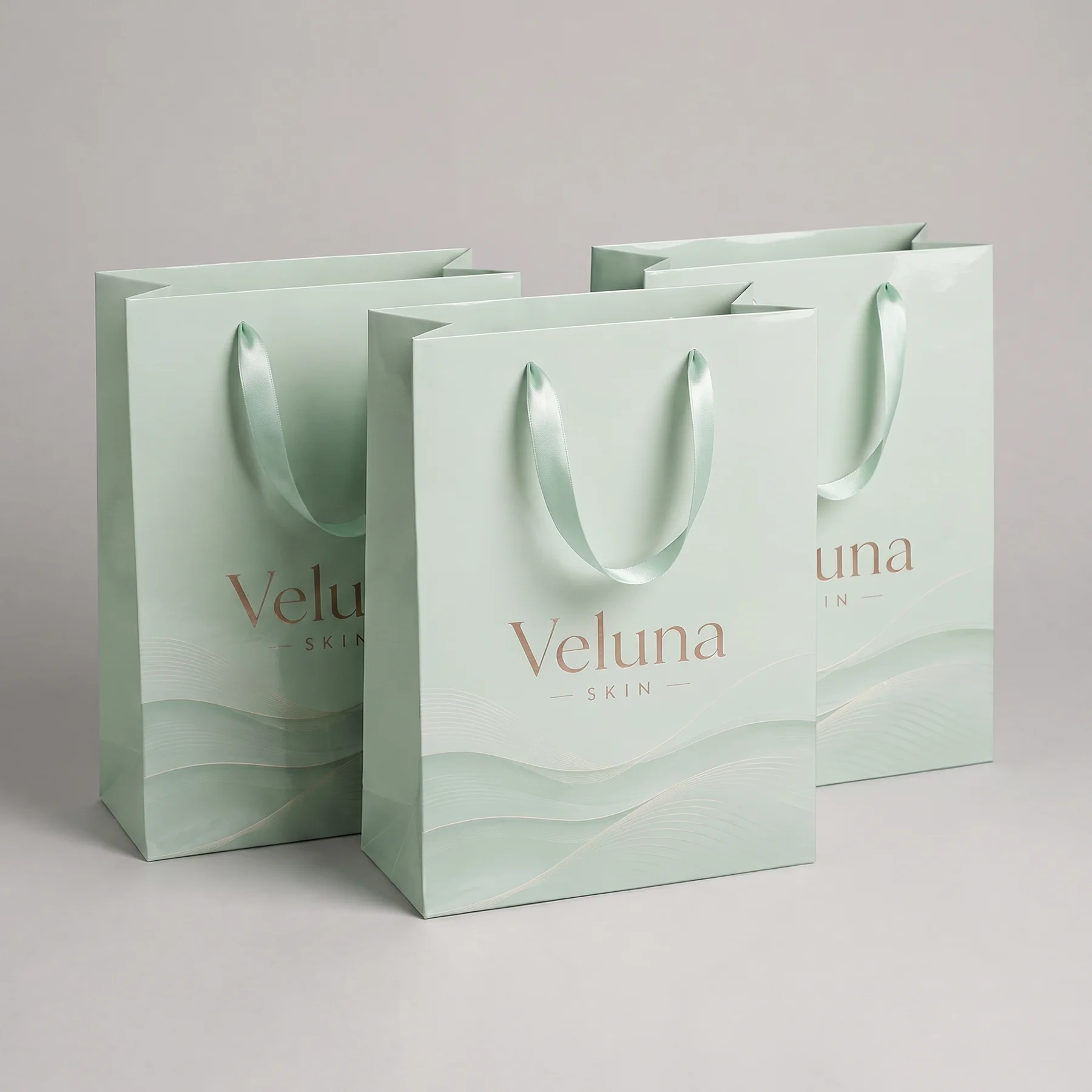
Mint-colored Veluna Skin paper bag with satin handles and a gold logo
The main costing principle

The price of a custom bag depends on more than order quantity. It is affected by format, gusset depth, paperboard weight, print area, lamination, stamping, handles, eyelets, and the need for a new cutting die.

A branded bag is packaging, an expression of visual identity, and part of the experience of receiving the product. It protects the purchase, brings products together into a set, and continues the brand's communication after a meeting, event, or sale.

When a paper bag works for the brand

A standard bag serves the purpose of carrying items. A custom bag supports positioning by echoing the main packaging's brand color, logo scale, graphic character, and feel. For cosmetics, clean shades and neat finishing matter; for events, striking full-color graphics; for gift sets, a strong base and a good fit around the box.

It is best to start with the product rather than choosing an effect. We clarify the dimensions of the contents, total weight, handover method, and the bag's journey. We then determine the format, material, reinforcements, and printing techniques.

from 100 unitsguideline for custom production
4+0 CMYKfull-color printing on the outside
200 g/m²a commonly used coated paperboard weight

Vertical or horizontal bag

Both constructions can be made using a custom dieline. The difference is determined by the proportions of the contents and the use case.

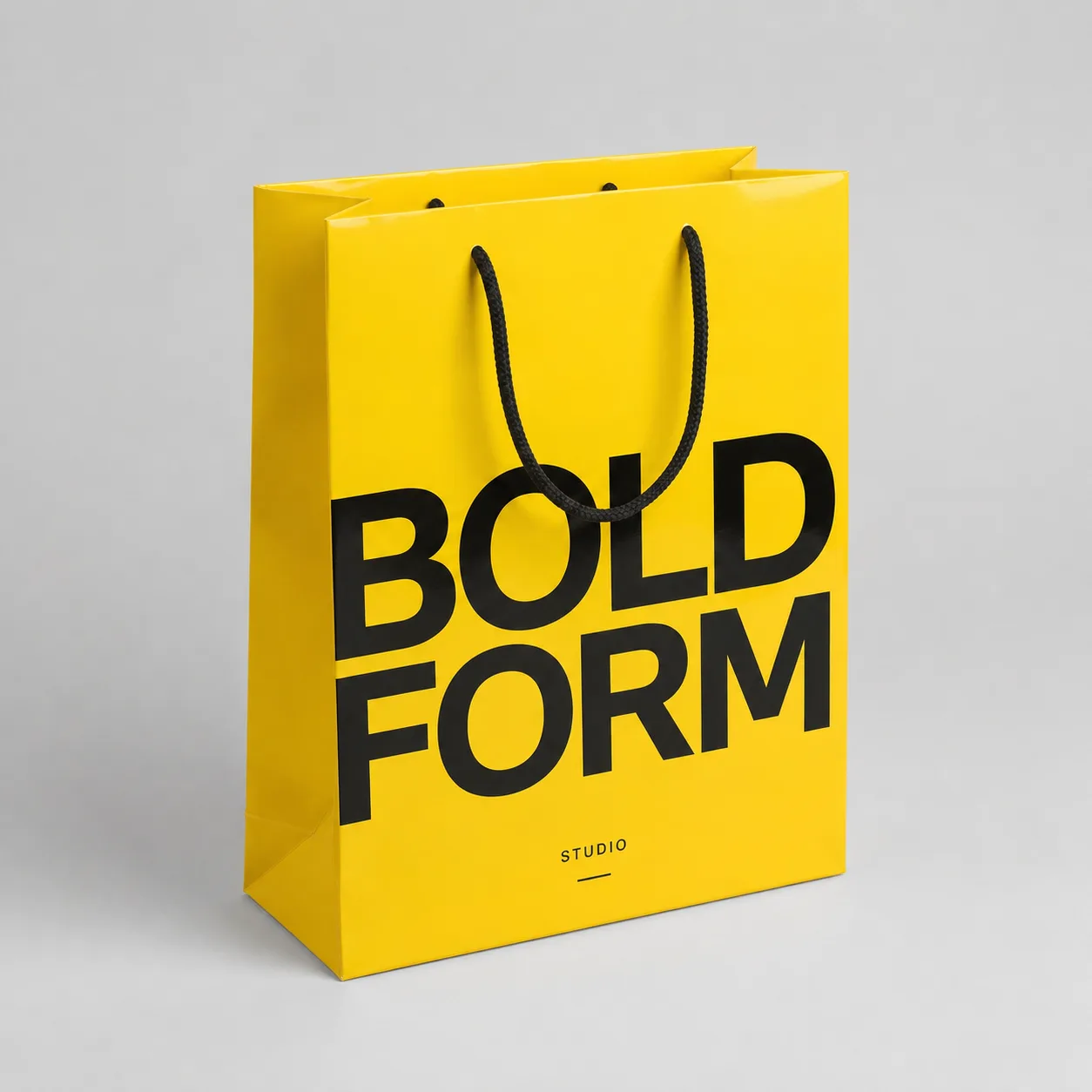
Vertical yellow paper bag with black cord handles
Vertical construction

Custom bag with a logo

For cosmetics, boxes, bottles, printed materials, and elongated gifts.

View product →
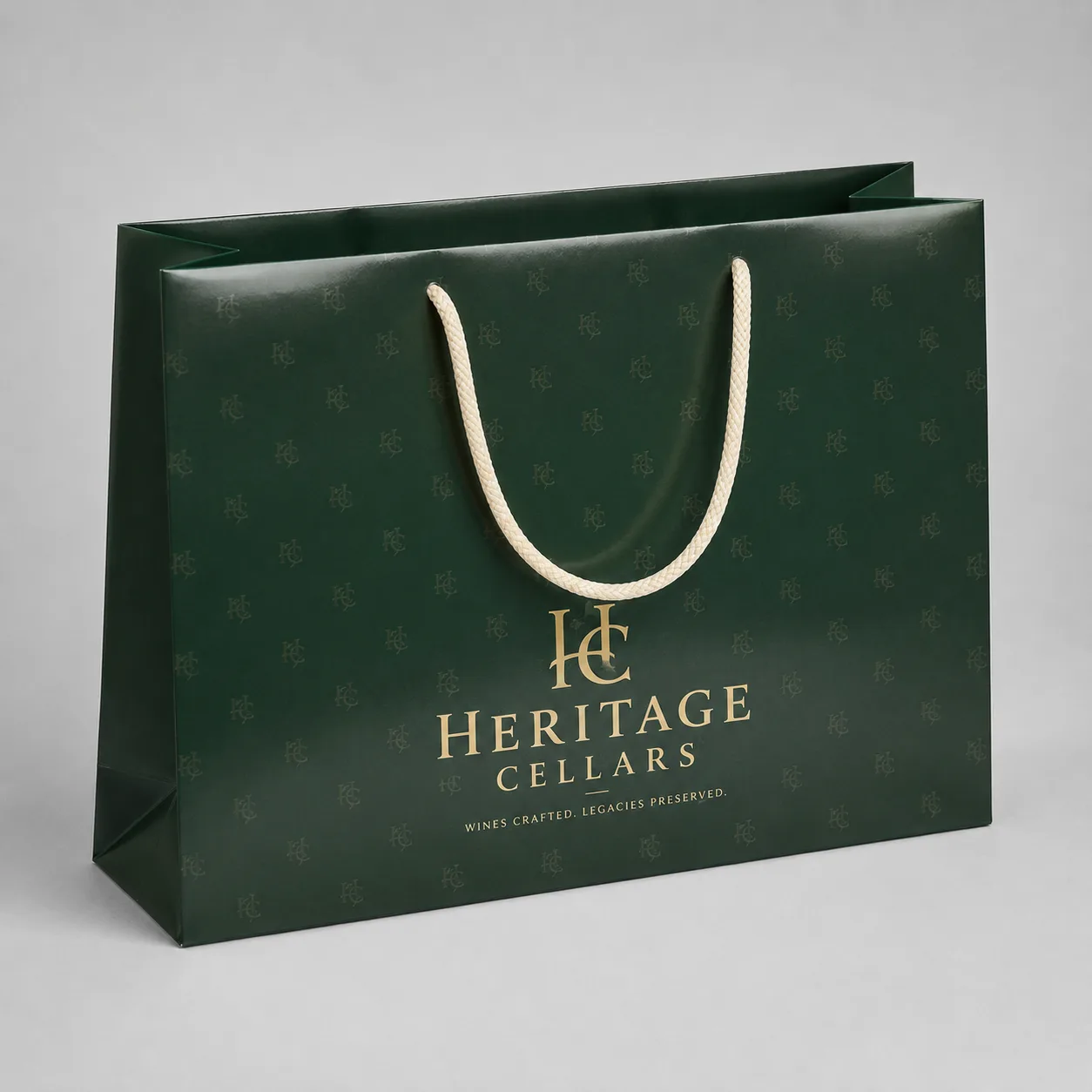
Horizontal dark green paper bag with a gold logo and light-colored handles
Horizontal construction

Bag with full-color printing

For clothing, wide boxes, corporate sets, and premium gift packaging.

View product →

Coated paperboard and structural strength

Presentation bags often use coated paperboard with a weight of around 200 g/m². It holds its shape, supports rich printing, and is suitable for lamination. However, the material is always chosen according to size and load: a large bag holding a heavy set may require a different paperboard weight, a reinforced base, and additional inserts.

After printing, the sheet is die-cut to the dieline, the fold lines are creased, and the bag is assembled. Side gussets create volume, while the folding base provides stable support. Handle areas are reinforced with paperboard patches; if needed, the holes are protected with metal or painted eyelets.

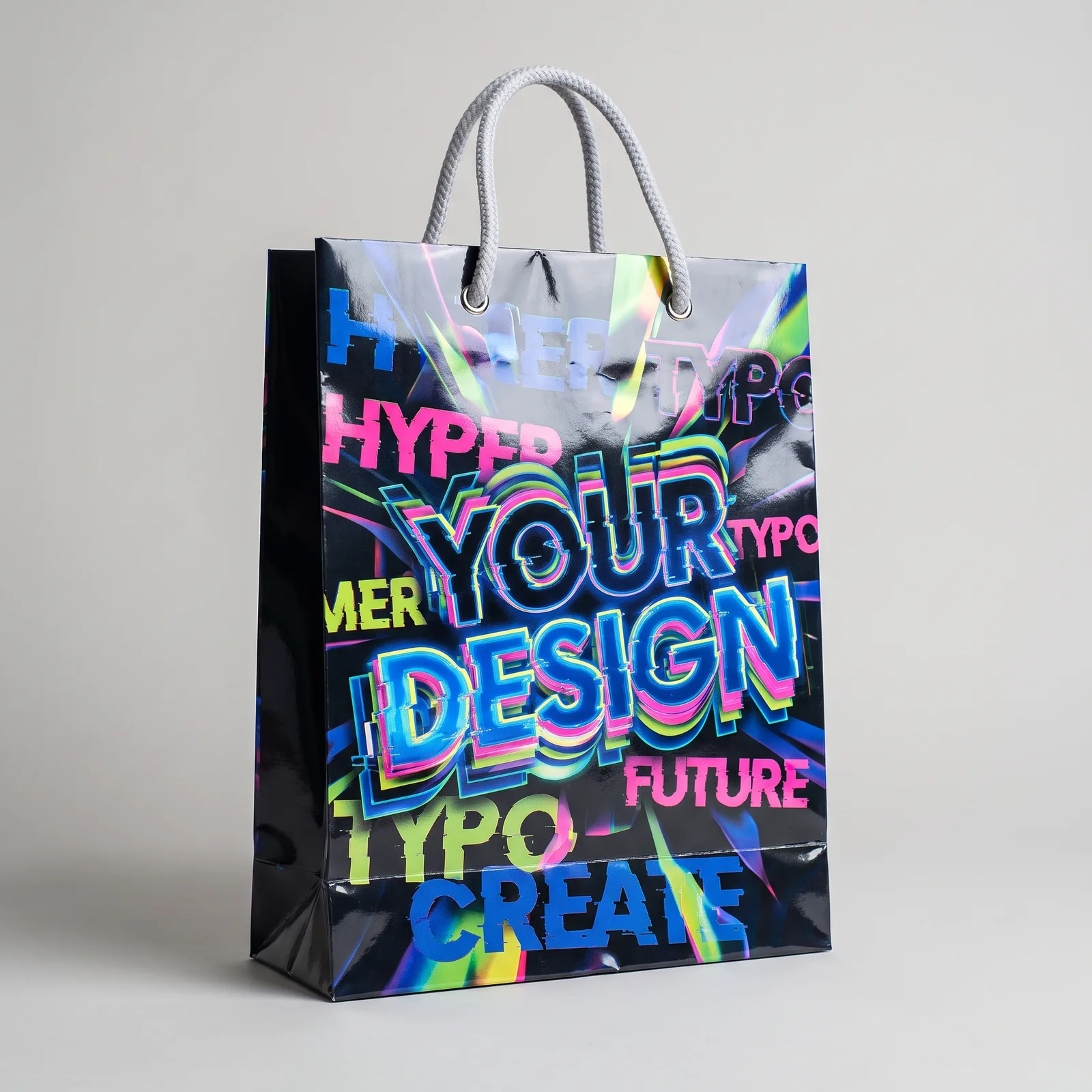
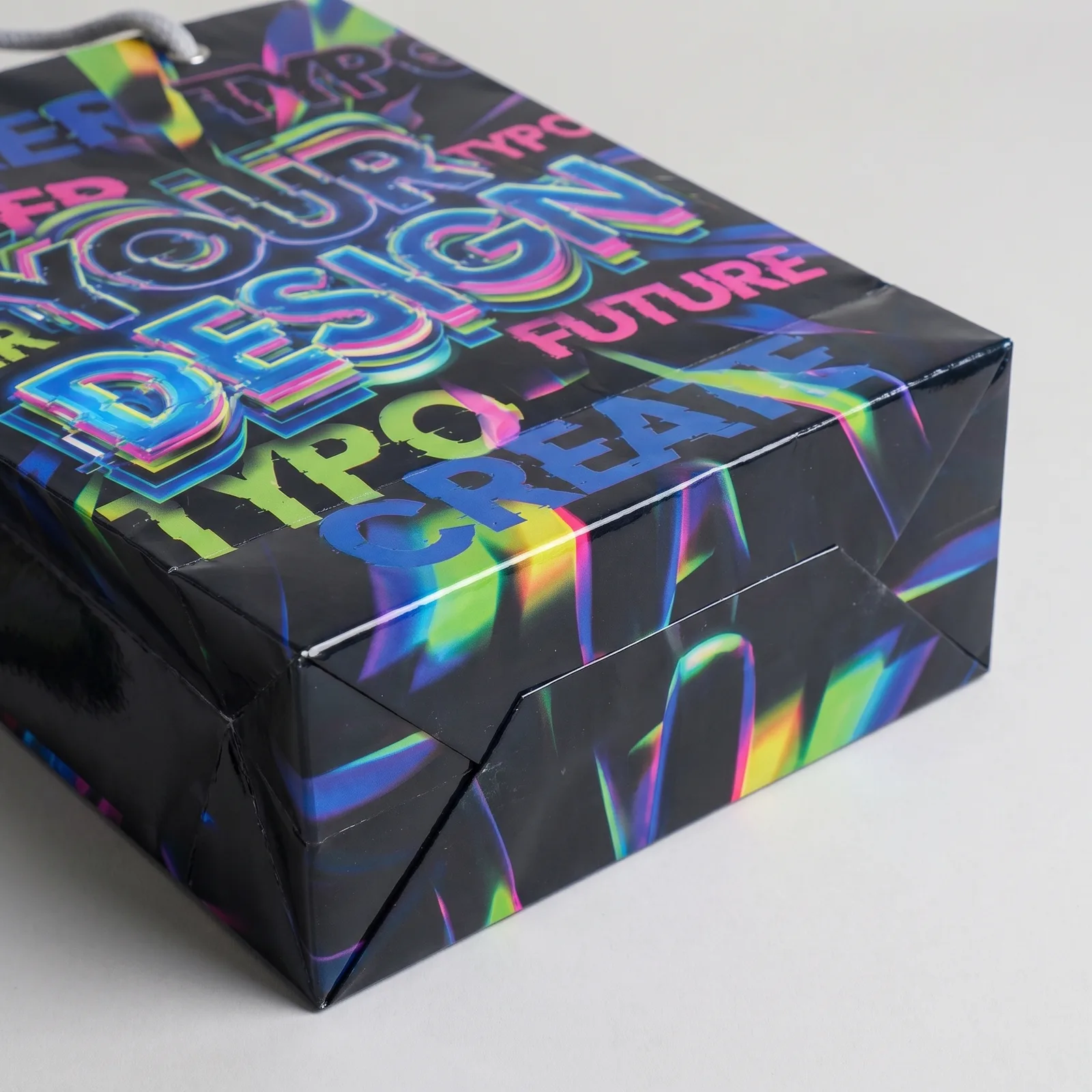
Vertical paper bag with bright full-color graphics
Full-color graphics can cover the entire outer surface.
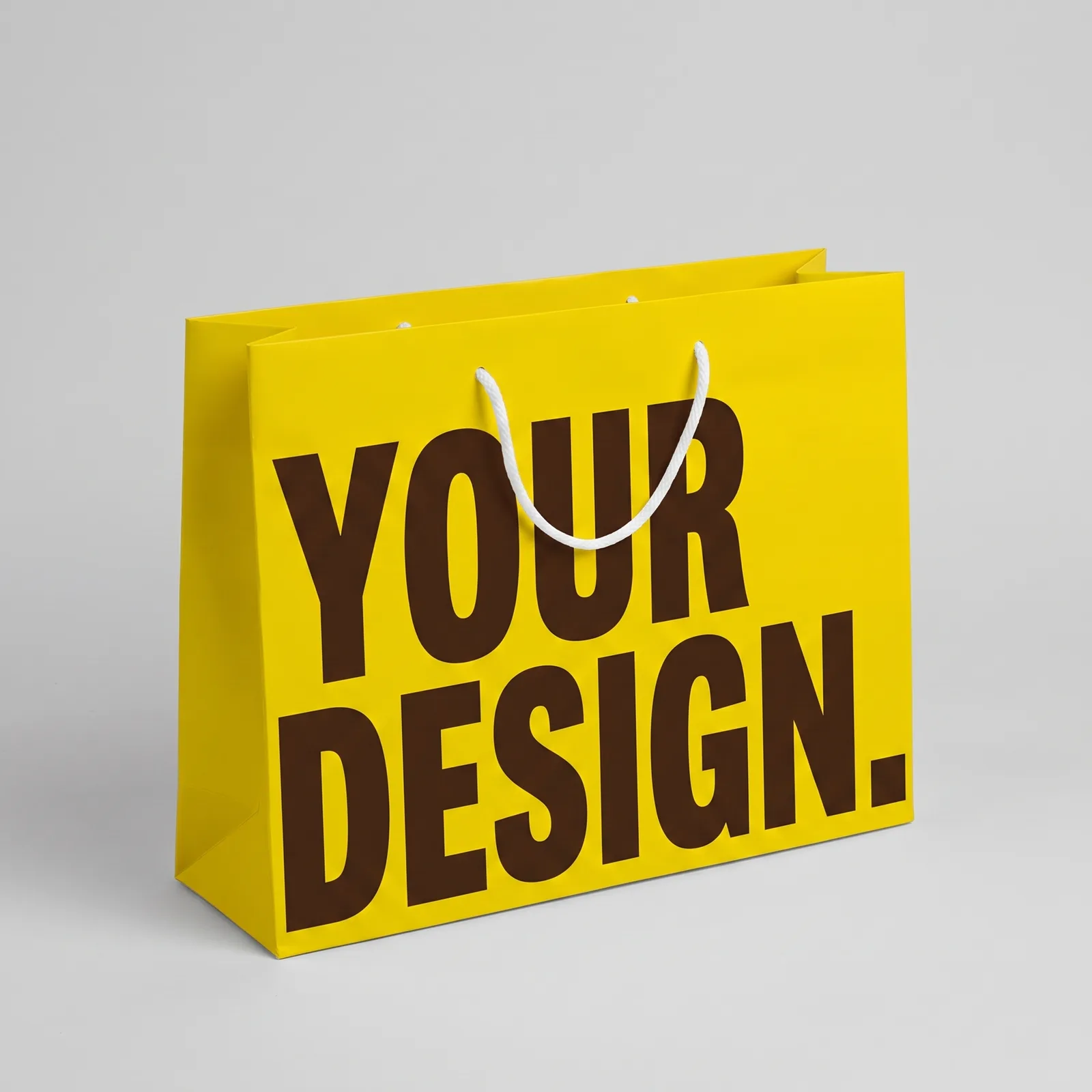
Yellow paper bag with large contrasting typography
Contrasting typography for a noticeable promotional bag.
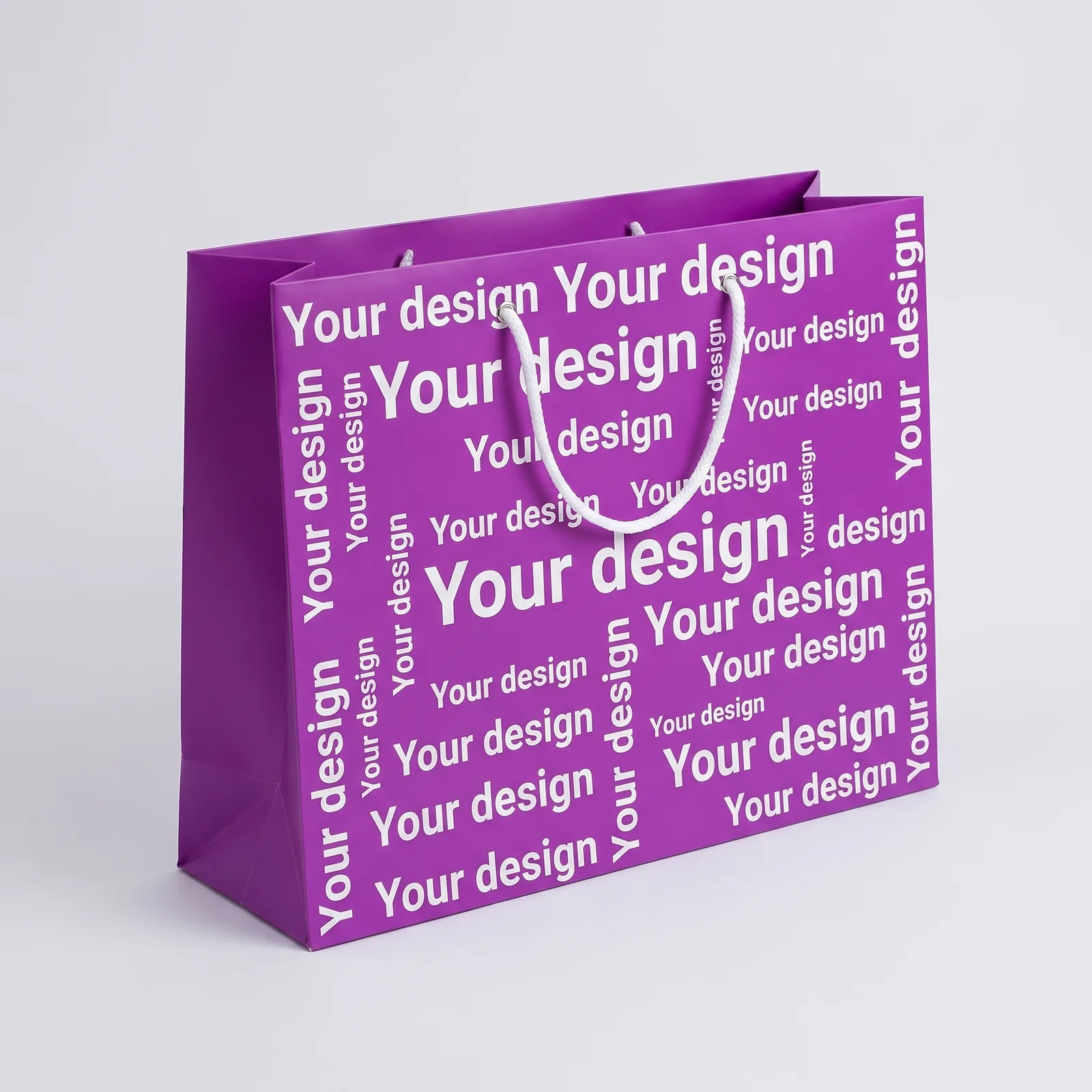
Purple horizontal bag with white printing
A horizontal format for a wide box or set.
Close-up of full-color printing on a paper bag
Detail of the printing and glossy surface.
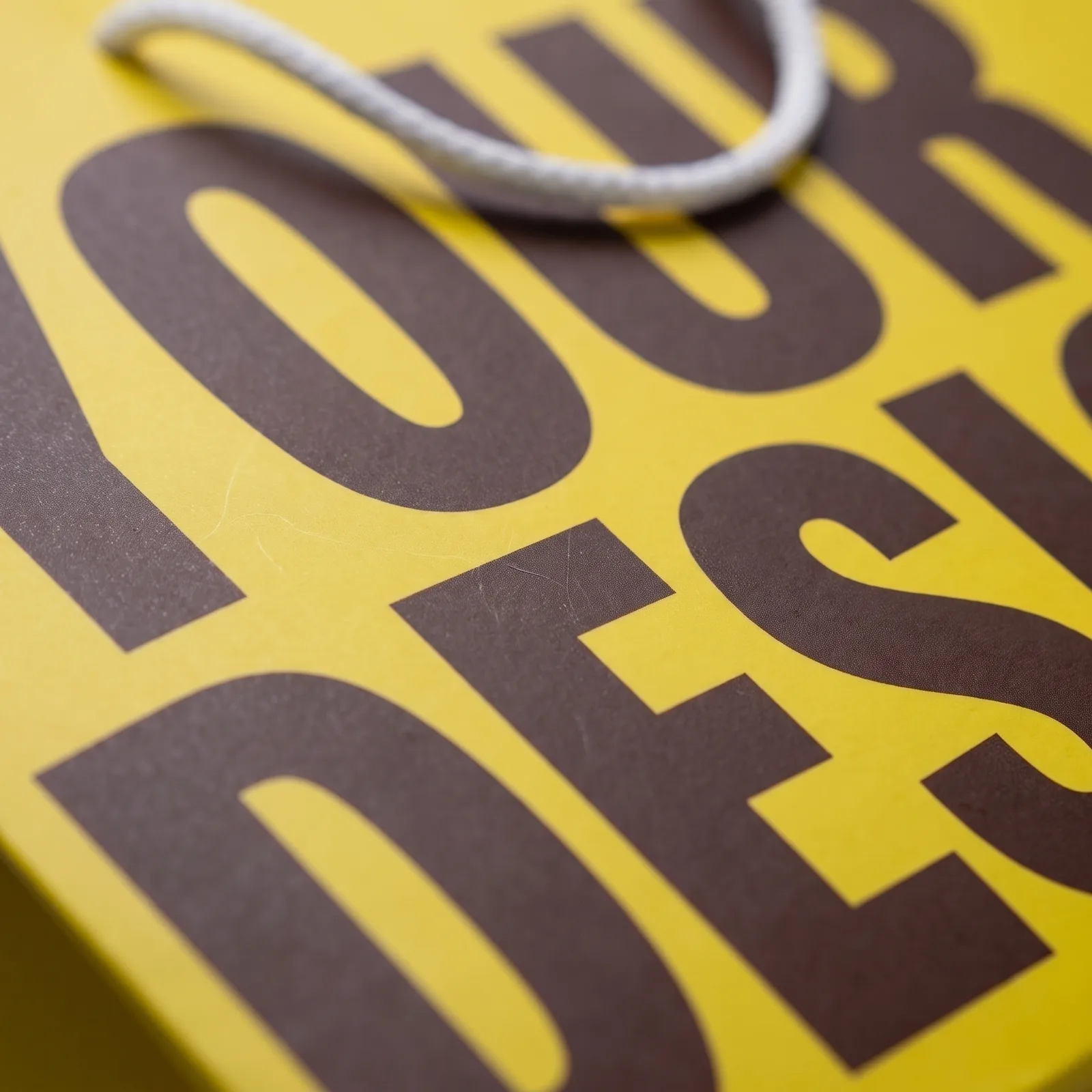
Close-up of the cord handle and printing on a yellow bag
The handle, hole, and fold area require separate checks.

Printing, lamination, and premium finishing

Full-color 4+0 offset printing suits photographs, gradients, illustrations, and complex brand graphics. If a specific corporate shade is critical, the production specialist determines how to work with Pantone and approves a color proof. The actual result depends on the whiteness of the paperboard, its coating, and subsequent lamination.

Gloss lamination makes colors appear richer and protects the surface from scuffing. Matte looks more understated and feels more pleasant. For a premium accent, add hot foil stamping, embossing, spot UV varnish, or a combination of techniques after testing on the selected material.

Full color 4+0Photographs, illustrations, patterns, and complex gradients.
PantoneCheck the brand shade against a proof and an approved sample.
Matte film laminationAn understated surface and protection from everyday damage.
Gloss laminationShine and enhanced saturation for full-color graphics.
Foil stampingA metallic accent for a logo, border, or small element.
Spot varnishA localized glossy contrast over a matte surface.

How to choose the right size

First measure the contents or box, then add the required production clearances. The bag should not squeeze the packaging, but excessive empty space also weakens the impression and increases material consumption. For a set, also check the total weight and the position of the center of gravity.

The size chart is a guide, not a promise that a cutting die is already available

Preliminary dimensions help determine the proportions. We confirm the availability of a suitable cutting die, the exact dieline, and tolerances before costing. If an existing construction does not fit, we design a custom one.

CompactCosmetics, accessories, small boxes.
MediumA product set, planner, or folded textiles.
LargeClothing, a shoe box, or a gift box.
CustomSized to the product, with a new cutting die.

Handles, eyelets, and reinforcements

Cord handles are practical and available in a wide color palette. Satin and grosgrain ribbons enhance the gift presentation. Choose the color according to the brand guidelines, but give final approval on a physical sample: a screen does not accurately reproduce the material's texture and shade.

  • polypropylene or cotton cord handles;
  • satin and grosgrain ribbons;
  • handles matching the bag or providing a contrasting accent;
  • eyelets matching the foil or main palette;
  • reinforcement of the handle area and a base insert;
  • a knot, plastic end piece, or concealed attachment.
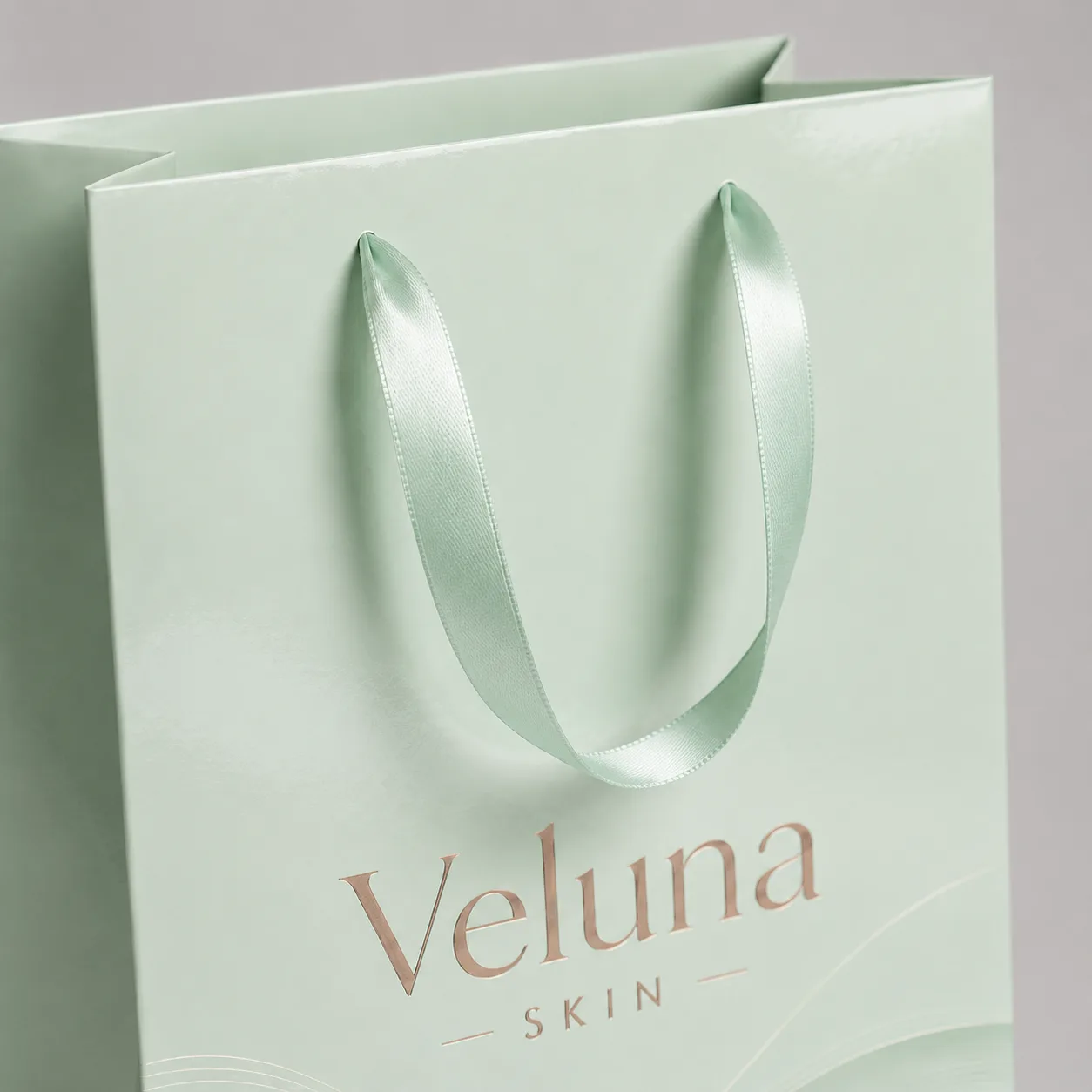
Three mint-colored Veluna Skin paper bags with gold stamping
Packaging case study

Veluna Skin: mint, gold, and satin

A series of bags in several sizes: coated paperboard, brand Pantone color, matte lamination, hot gold foil stamping, and handles matching the packaging.

View case study →

How to order paper bags

  1. Share the brief. Specify the product, dimensions of the contents, weight, order quantity, deadline, and delivery city.
  2. Choose the construction. We will compare vertical and horizontal formats, check existing cutting dies, or develop a new one.
  3. Approve the material and finish. We will specify the paperboard, printing, lamination, handles, reinforcements, and additional effects.
  4. Prepare the artwork. Simply provide the vector logo, brand guidelines, and original images; the designer will check the dieline.
  5. Approve the sample or color proof. We will check the shade, scale, stamping, assembly, and handle comfort.
  6. Start the production run. After production, we check completeness, packaging, and readiness for dispatch.

If the required quantity is below the production minimum, you can choose ready-made bags from the packaging catalog and add the logo using a suitable technique. For a fully custom format, the starting guideline is 100 units.

Read more about combining foil, lamination, and other effects in the article «Printing and finishing gift packaging».

Frequently asked questions

What is the minimum order quantity?

For fully custom production, the starting guideline is 100 units. The actual minimum depends on the construction and technique. For a smaller quantity, we will offer a ready-made base with branding.

Can the brand color be matched exactly?

Approve the color using a physical proof or Pantone reference. We account for the material and lamination, which affect the final perception of the shade.

Can an image be printed across the entire surface?

Yes, full-color offset printing suits an all-over pattern and complex graphics. Do not place important elements on crease lines, flaps, or production allowance areas.

What should you send for costing?

Order quantity, deadline, delivery city, dimensions and weight of the contents, logo, brand guidelines, and preferences for handles and finishing. If the exact size is not available, a photograph and the product dimensions are enough.

Is a sample mandatory?

A sample is recommended for a new construction, a complex brand palette, or combined finishing. It reduces the risk of discrepancies before the full production run starts.

Production costing

We will select the construction and finish

Send the dimensions of the contents, order quantity, deadline, and printing preferences. The manager will check the construction and prepare a quote.

Tell us about your projectContact details, order quantity, dimensions, and a short description.
Loading the secure form…