Short answer
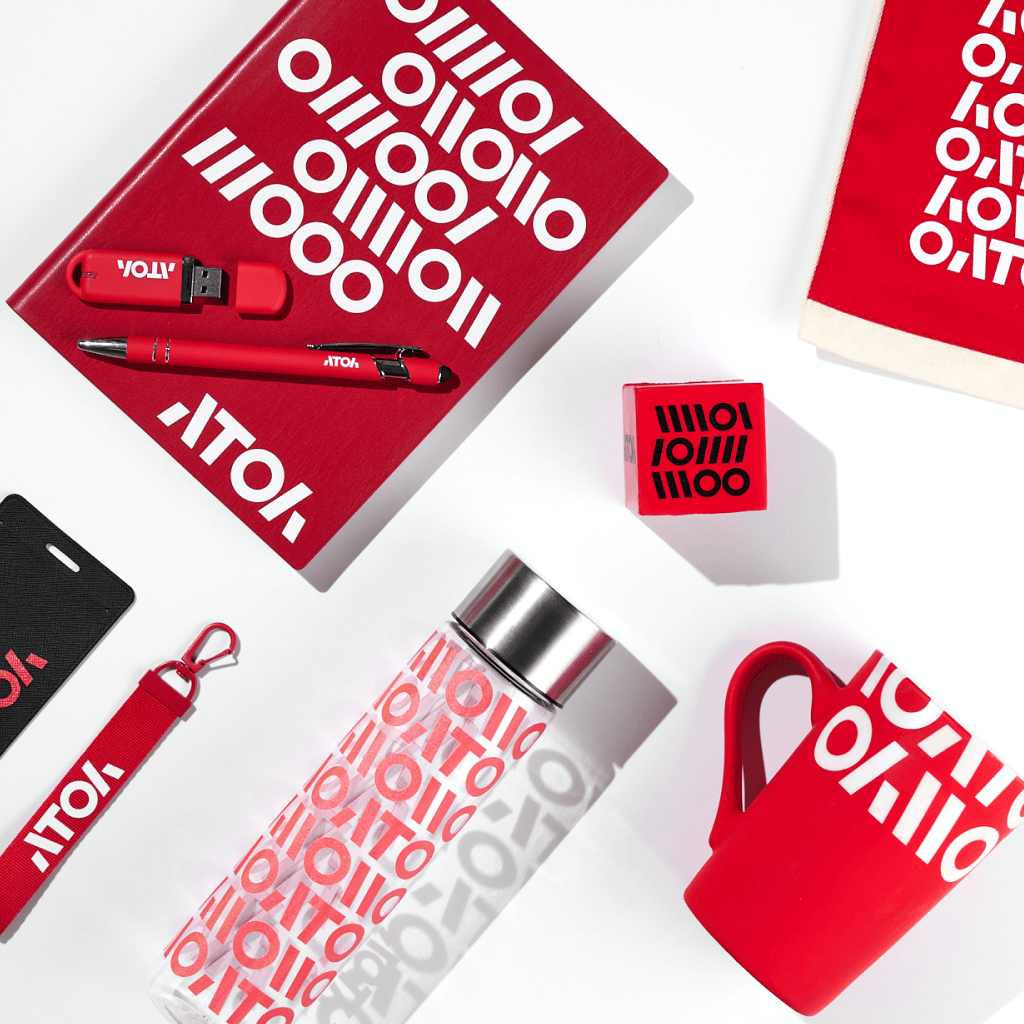
A useful welcome kit starts with the employee’s first few weeks. It is better to keep three to five items with clear roles than to increase the number of random promotional gifts. The basic combination is a desk item, a travel item, a textile product or accessory, and a short welcome from the team.
Where to start with the contents
Describe the first day: where the employee receives the kit, what they need to set up, and which meetings and trips lie ahead. A notebook, pen, and mug are useful for the office; a bottle, bag, hoodie, or tech organizer suits a hybrid team. Every item should be useful even without a logo; branding simply enhances it.
Check audience constraints: clothing sizes, food allergies, climate, work arrangements, and international shipping rules. If personal data is collected through a form, define the retention period and which employees have access in advance.
Budget and sample
Calculate more than the price of the items. The budget includes branding, artwork, packaging, the fitted insert, kitting, delivery, and reserves. For a complex kit, make one complete sample: open the box and check the item sequence, color, material odors, and condition after transport.
Document the reference sample with photographs and specifications. For a repeat run, compare the new batch with the reference sample, not your memory or an on-screen mockup.
Common mistakes
A large logo does not make the kit more valuable. Mistakes more often arise from unsuitable fabric, a cheap pen beside premium packaging, missing sizes, ordering boxes late, and promising one delivery date for different regions.
After distribution, ask employees which items they use after 30 and 90 days. This data is more useful than an assessment at unboxing and helps improve the next batch.
Welcome kit preparation schedule
Start with the handover date and work backward. First reserve products and sizes, then approve the artwork, order a sample, begin branding, produce the packaging, and leave time for kitting. If kits are shipped to employees’ addresses, finalize the recipient list and address-change rules before labeling the boxes.
For the first project, it makes sense to add reserves of key items and popular sizes. Reserve stock does not need immediate personalization: some items can be kept without names for new employees, defective-item replacements, or incorrect sizes. The project owner keeps the final specifications, artwork, and photographs of the reference box.
Check before production starts
- The first-day plan and the following 90 days
- Recipients’ sizes, allergies, and restrictions
- Cost of items, branding, packaging, and delivery
- Approved physical sample
- Reserves for replacements and new employees
- Usage survey after 30–90 days
Next step
Discuss your project
Send the occasion, audience, order quantity, deadline, delivery city, and indicative budget. We will prepare the questions and options.
Request ideas