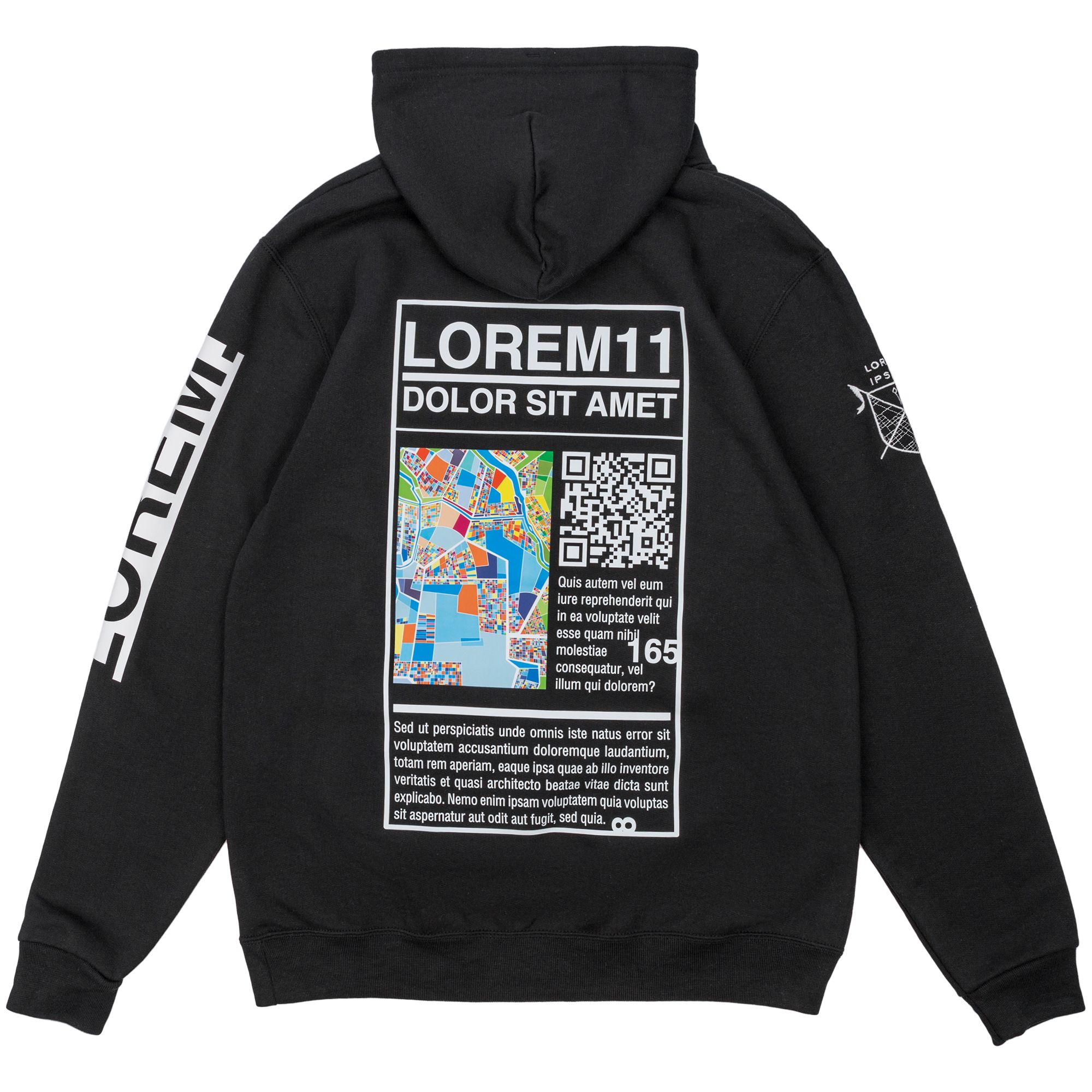
How a hoodie differs from a sweatshirt and a bomber jacket
| Product | Neckline | Fastening | Hem | Typical elements |
|---|---|---|---|---|
| Hoodie | Hood | No fastening or a zipper | Cuff or waistband | Hood, kangaroo pocket |
| Sweatshirt | Round neckline | Usually absent | Knitted waistband | Cuffs, rib knit |
| Bomber jacket | Rib-knit collar | Center zipper or snaps | Rib-knit waistband | Pockets, lining |
| Zip hoodie | Hood | Zipper | Waistband | Split pocket |
| Half-zip | Stand collar or hood | Short zipper | Waistband or straight hem | Yoke, collar |
| Crewneck | Round neckline | No | Waistband | Minimal construction |
Set-in sleeve
A set-in sleeve joins the body along a closed armhole. The shoulder seam and sleeve cap create a defined shoulder line.
Where it is used
- basic T-shirts
- classic sweatshirts
- polo shirt
- shirts
- bomber jackets
- regular-Fit Hoodie
Advantages
- neat fit
- clear size chart
- convenient for placing embroidery on the chest
- easy to combine different sleeve and body materials
- suitable for corporate uniforms
Disadvantages
- less freedom of movement than raglan
- requires a precise fit
- an incorrect sleeve-cap height creates folds
- harder to combine sizes
Raglan sleeve
A raglan sleeve starts at the neckline and forms a diagonal seam to the underarm.
Where it is used
- sports sweatshirts
- hoodies
- windbreakers
- raincoats
- functional clothing
- garments with combined colors
Advantages
- comfortable for arm movement
- less sensitive to the wearer’s shoulder width
- suitable for unisex models
- allows sizes to be combined
- the diagonal seam becomes part of the design
Disadvantages
- less space for large branding on the upper chest
- harder to position the print precisely relative to the seam
- an incorrect balance creates folds around the neckline
- fabric consumption may be higher
Dropped shoulder
This is not a separate sleeve type, but a change in the position of the shoulder seam.
| Amount of drop | Shift | Visual effect |
|---|---|---|
| Minimal | 2-3 cm | Soft, relaxed fit |
| Moderate | 4-6 cm | Modern oversized fit |
| Pronounced | 7-10 cm | Streetwear |
| Extreme | More than 10 cm | Fashion construction |
Where it is used
- oversized T-shirts
- hoodies
- sweatshirts
- shirts
- shirt jackets
- heavy streetwear
With a dropped shoulder, both the front and back panels and the sleeve need to be widened. Otherwise, the garment will have a wide body and an overly narrow sleeve.
Cut-on sleeve
The sleeve is drafted together with the front or back, without a separate conventional armhole.
Application
- poncho
- raincoats
- simple oversized models
- kimono
- promotional clothing with combined sizes
Pros
- fewer seams
- fast production
- good freedom of movement
- suitable for water-protective materials
Cons
- high fabric consumption
- less precise fit
- possible folds under the arm
- complex placement of a large print
Sleeve comparison
| Parameter | Set-in | Raglan | Dropped shoulder | Cut-on |
|---|---|---|---|---|
| Precise fit | High | Medium | Medium | Low |
| Freedom of movement | Medium | High | High | High |
| Unisex | Yes | Excellent | Excellent | Yes |
| Combined sizes | Limited | Good | Good | Excellent |
| Fabric consumption | Basic | Slightly higher | Higher | High |
| Chest branding | Comfortable | Seams need to be considered | Comfortable | Depends on the construction |
| Sporty look | Medium | High | Medium | Medium |
| Fashion look | Medium | Medium | High | High |
Hood types
| Hood type | Construction | Where to use it |
|---|---|---|
| Single-seam | One center seam | Budget merchandise |
| Two-seam | Two side pieces | Basic hoodies |
| Three-piece | Side panels and center insert | Premium and streetwear |
| With a high neckline | The hood extends into a stand collar | Outdoor, half-zip |
| Double | Two layers of fabric | Heavyweight hoodies |
| Lined | Main fabric plus lining | Jackets and premium models |
| With a visor | Additional piece | Sportswear |
For heavyweight sweatshirt fabric, a double-layer or three-piece hood is preferable. A single-layer hood may lose its shape and expose the wrong side of the fabric.
Neckline and collars
- round neckline with ribbing
- classic hood
- hood with a stand collar
- bomber collar
- high collar
- half-zip
- polo collar
- double stand collar
- snap-fastened collar
Cuffs and waistband
| Material | Advantage | Risk |
|---|---|---|
| 1×1 rib knit | Stretch | May stretch out quickly |
| 2×2 rib knit | Pronounced texture | Not for minimalist models |
| Rib knit with Lycra | Good recovery | The color must be matched precisely |
| Main fabric | Consistent texture | Less stretch |
| Elastic tape | Technical look | May feel tight |
| Straight hem | Modern silhouette | Requires neat finishing |
It is important to agree on the stretch ratio for cuffs. A cuff that is too long will ripple, while one that is too short will gather the sleeve into excessive folds.
Pockets
- kangaroo pocket
- split pocket on a zip hoodie
- side-seam pocket
- welt pocket
- zippered pocket
- patch pocket
- concealed inner pocket
- phone pocket
- flap pocket
- pocket inside the kangaroo pocket
Construction combinations
| Model | Sleeve | Shoulder | Neckline | Hem |
|---|---|---|---|---|
| Classic sweatshirt | Set-in | Natural | Round | Waistband |
| Sports sweatshirt | Raglan | Without a shoulder seam | Round | Waistband |
| Oversized hoodie | Set-in | Dropped | Hood | Waistband |
| Streetwear hoodie | Wide set-in sleeve | Deeply dropped | Three-piece hood | Waistband |
| Zip hoodie | Set-in or raglan | Regular | Hood + zipper | Waistband |
| Bomber jacket | Set-in | Natural | Rib-knit collar | Waistband |
| Varsity jacket | Set-in or raglan | Regular | Collar | Waistband |
| Raincoat | Raglan or cut-on | Relaxed | Hood | Straight |
| Half-zip | Raglan or dropped | Relaxed | High stand collar | Waistband or straight hem |