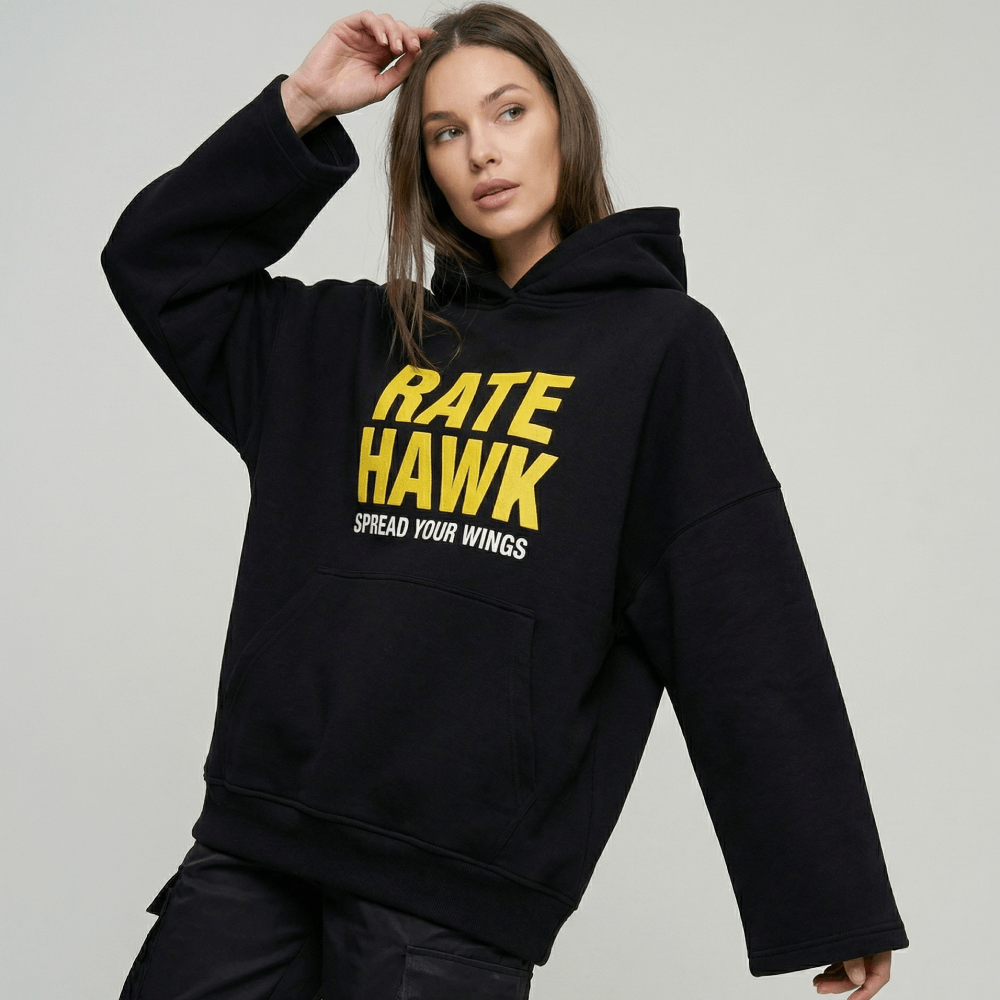
Choosing fabric for corporate apparel does not begin with color or even fabric weight. First determine the supplier type.
Some companies maintain large stocks of imported materials. Others specialize in membranes and fleece. Others manufacture knit fabrics within Russia. A separate group consists of companies working with fabrics for uniforms, workwear, and home textiles.
The Russian fabric market remains diverse. According to BusinesStat estimates, fabric sales in Russia grew from 2.42 billion square meters in 2020 to 3.33 billion square meters in 2024.
In the cotton-fabric segment, the share of Russian products had previously fallen from 74% in 2018 to 64% in 2022. The figures relate to different periods but reflect the market's continued dependence on imported ranges.
According to preliminary data, the total output of Russia's light industry reached RUB 1.26 trillion in 2025. Knit fabrics accounted for RUB 26.7 billion, while sewn products accounted for approximately RUB 539.7 billion.
Main supplier types
| Company type | What can be purchased | Which projects it suits |
|---|---|---|
| Large stock supplier | Sweatshirt knit, jersey, Oxford, rainwear fabric, lining, decorative fabrics | Small and medium runs, quick launch |
| Specialist distributor | Membranes, softshell, fleece, sports knit fabric | Jackets, vests, sportswear |
| Russian knit-fabric manufacturer | Sweatshirt knit, piqué, ribana rib knit, kashkorse rib knit, interlock | T-shirts, hoodies, polo shirts, sweatshirts |
| Technical fabric manufacturer | Blended and protective fabrics, uniform fabrics | Corporate uniforms, workwear |
| Cotton textile mill | Poplin, calico, sateen, printed fabrics | Bags, home textiles, accessories |
Startex: a broad range and purchasing from stock
Startex positions itself as a large textile marketplace with wholesale and retail sales.
The company has offices, warehouses, and showrooms in Russian cities, as well as an office in Shaoxing, China, one of the world's key textile centers.
When to use Startex
- several fabric types need to be selected quickly;
- a small quantity is needed to make a sample;
- the project includes apparel, bags, lining, and packaging textiles;
- different compositions and fabric weights need to be compared in one place;
- ordering a full factory batch is not possible;
- fast delivery within Russia is required.
The main advantage of this type of supplier is its range and the availability of small quantities.
The main risk concerns batches. Different deliveries of the same product code may vary in shade, texture, weight, or fabric width. For series production, reserve material for the entire run and record the batch number.
Lertex Group: membranes, fleece, and sports materials
Lertex specializes in jacket and membrane fabrics, softshell, fleece, lining materials, sports knit fabrics, and reflective fabrics.
The company states that its range includes more than 100 varieties of membrane fabrics and over 50 types of fleece.
The catalog includes materials with water-resistance and water-vapor-permeability specifications, outdoor apparel fabrics, sports meshes, and functional knit fabrics.
Some membrane materials are supplied in rolls of approximately 100 linear meters.
Lertex materials are suitable for
- branded jackets;
- windbreakers;
- vests;
- sports capsule collections;
- apparel for outdoor events;
- functional bags;
- covers and accessories;
- corporate uniforms for field employees.
For membrane and functional materials, checking fabric weight alone is not enough.
The technical brief should specify:
- composition;
- number of layers;
- membrane type;
- water resistance;
- water-vapor permeability;
- water-repellent treatment;
- colorfastness;
- permissible application temperature;
- seam-joining method;
- care instructions.
Райтекс: Russian knit fabric
Райтекс produces the following in the Ivanovo region:
- single jersey;
- interlock;
- sweatshirt knit;
- piqué;
- ribana rib knit;
- kashkorse rib knit;
- other types of knit fabric.
The company states a production capacity of up to 40 tonnes of knit fabric per day.
The materials suit projects that require developing a custom model rather than simply buying a ready-made T-shirt:
- heavier-weight T-shirts;
- hoodies;
- sweatshirts;
- polo shirt;
- children's clothing;
- corporate capsule collections;
- apparel made to custom patterns.
When ordering Russian fabric, separately agree on:
- shrinkage after washing;
- dye fastness;
- fabric width;
- usable width;
- permissible variations in fabric weight;
- twisting after washing;
- pilling;
- the color of the cuffs and main fabric;
- batch repeatability.
Унтекс: integrated knit-fabric production
Унтекс works with yarn, fabric knitting, dyeing, printing, and finished-garment production.
The company describes its production operation as one of the larger enterprises in Russia's knit-fabric segment. The group also reports having production sites in Turkey.
This format suits large corporate projects that require a unified production chain:
yarn → knitting → dyeing → printing → cutting → sewing → branding.
The more stages one group controls, the lower the risk of incompatibility:
- the shades of the main fabric and cuffs;
- fabric width and garment patterns;
- material and equipment;
- fabric and printing method;
- the sample and main production batches.
Чайковский текстиль: fabrics for uniforms and specialist tasks
“Чайковский текстиль” produces fabrics through a full production cycle.
The company specializes in materials for:
- workwear;
- corporate uniforms;
- healthcare;
- service;
- the food industry;
- industrial enterprises.
Production meets the localization criteria for Russian products.
These fabrics are worth considering if the apparel needs to:
- withstand intensive use;
- be washed regularly;
- retain color;
- have increased strength;
- meet corporate uniform requirements;
- have antistatic or protective properties.
Technical fabric may be unnecessary for a standard promotional T-shirt. For employees who wear the uniform every day, it may be economically justified by its service life.
Шуйские ситцы: cotton fabrics and printed collections
“Шуйские ситцы” is a large Russian textile enterprise with its own production of fabrics and finished home textiles.
The company develops plain-dyed and printed cotton materials.
The materials can be used for:
- tote bags;
- textile packaging;
- aprons;
- scarves;
- kitchen textiles;
- gifts for the home;
- interior collections;
- corporate sets for hotels and restaurants.
Supplier comparison
| Supplier | Main specialization | Speed to launch | Custom production |
|---|---|---|---|
| Startex | Large stock range | High | Limited |
| Lertex | Membranes, fleece, sports | High if in stock | For selected items |
| Райтекс | Russian knit fabric | Medium | Yes |
| Унтекс | Knit fabrics and full-cycle production | Medium | Yes |
| Чайковский текстиль | Uniforms and technical fabrics | Medium | Yes |
| Шуйские ситцы | Cotton fabrics | Medium | Printed collections |
Budget guideline
This is neither market statistics nor a commercial proposal.
| Purchasing scenario | Indicative budget index | Comment |
|---|---|---|
| Ready-made fabric from stock | 1,0 | Minimum launch costs |
| Batch reserve and laboratory testing | 1,1-1,2 | Samples and checks are added |
| Dyeing in the brand color | 1,3-1,8 | Depends on MOQ and formulation |
| In-house knit fabric | 1,6-2,5 | Knitting, dyeing, and testing |
| Technical fabric with special properties | 1,8-3,0 | Certification and complex finishing |
Checklist before ordering fabric
- Obtain a physical sample.
- Check the composition.
- Check the actual fabric weight.
- Carry out a shrinkage test.
- Check the color in daylight and artificial lighting.
- Apply a test print or embroidery.
- Record the batch number.
- Calculate the usable garment yield from one meter.
- Add a production allowance.
- Check that certificates are available.
- Agree on batch repeatability.
- Check the direction of the nap or pattern.
- Check pilling and abrasion resistance.
- Specify permissible variations.
Conclusion
For a quick run, it is more convenient to work with stock suppliers.
Specialization in membranes is important for jackets and functional apparel.
For hoodies, T-shirts, and polo shirts, consider knit-fabric manufacturers.
Uniforms and heavily used apparel are best made from materials supplied by specialist technical manufacturers.
Sources
- BusinesStat: https://businesstat.ru/russia/light_industry/threads/fabrics/
- Союзлегпром: https://souzlegprom.ru/
- Startex: https://star-tex.ru/
- Lertex: https://lertex.ru/
- Райтекс: https://raiteks.ru/
- Унтекс: https://unteks.ru/
- Чайковский текстиль: https://textile.ru/
- Шуйские ситцы: https://sitsy.ru/