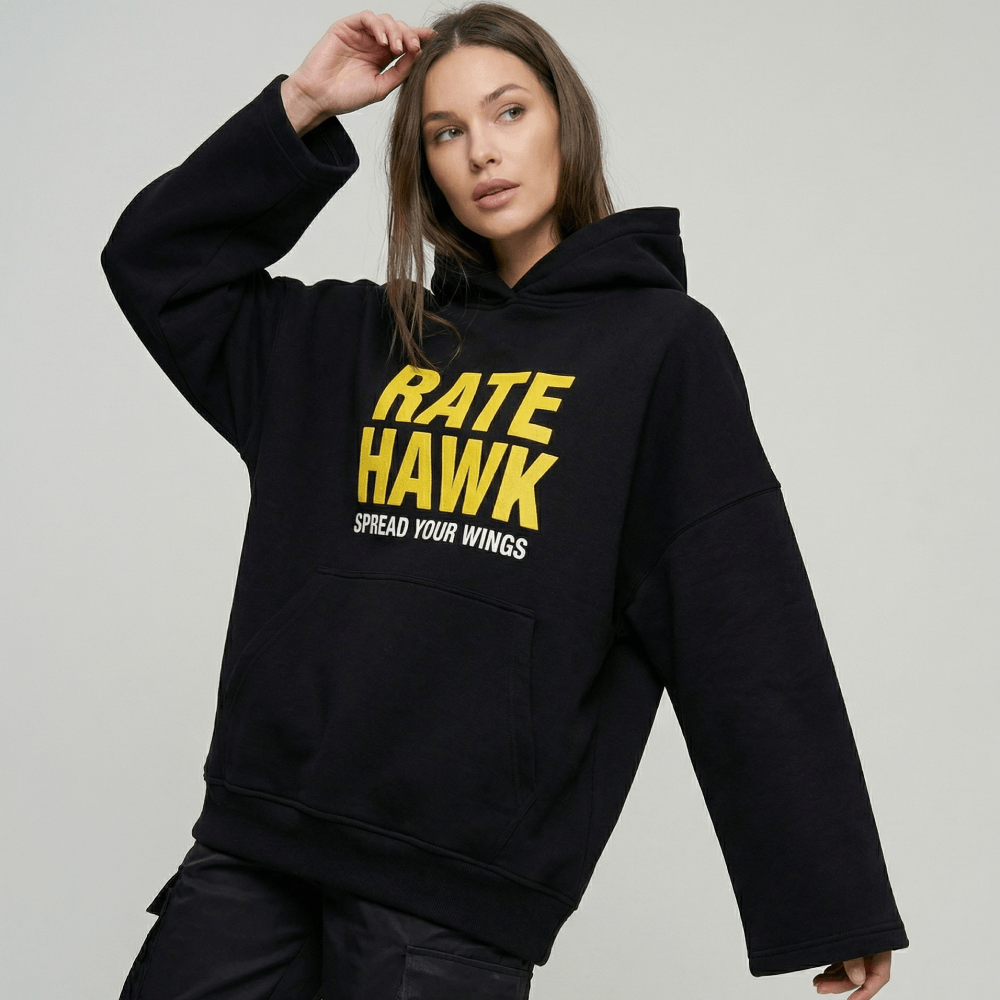
Uzbekistan is gradually shifting from exporting cotton fiber and yarn to selling fabrics and finished products.
In 2025, the country exported approximately 2.63 billion dollars' worth of textile products.
Finished textile products accounted for 54.3% of exports, and yarn for around 27%.
In January–May 2026, textile exports reached 1.268 billion dollars, up 20.1% from the same period in 2025.
The export breakdown was as follows.
| Category | Share of exports, January–May 2026 |
|---|---|
| Finished textile products | 50,8% |
| Yarn | 32,3% |
| Knitted fabric | around 9% |
| Fabrics | around 6% |
| Socks and carpets | around 2% |
Global Textile
Global Textile operates a vertically integrated model:
- cotton fields;
- spinning;
- fabric production;
- finished-garment sewing.
The company states:
- its own raw-material base covering around 75 thousand hectares;
- yarn output of up to 120 tonnes per day;
- cotton knit fabric production.
The range includes:
- single jersey;
- interlock;
- ribana;
- pique;
- honeycomb;
- greige fabric;
- dyed fabric;
- cotton yarn;
- ready-made T-shirts;
- hoodies.
The company reports having OEKO-TEX Standard 100, ISO 9001, and other compliance systems. Lab dips and production samples are also available.
Suitable for
- T-shirts;
- hoodies;
- polo shirt;
- sweatshirts;
- basic corporate clothing;
- large cotton-product runs.
Uztex Group
Uztex Group positions itself as a major manufacturer of:
- cotton yarn;
- fabrics;
- knitted fabric;
- finished products;
- home textiles.
The company brings together several production sites in different regions of Uzbekistan.
Consider Uztex if you need:
- cotton yarn;
- knitted fabric;
- woven materials;
- home textiles;
- finished clothing;
- large-scale production.
When ordering, clarify which specific factory within the group will be the contracting party. Equipment and specialization may differ between production sites.
BCT Cluster
BCT is developing a cotton-textile cluster and a denim business.
Together with an affiliated entity, the group manages more than 40 thousand hectares of agricultural land and operates as a vertically integrated textile company.
For corporate products, relevant options include:
- denim;
- denim jackets;
- aprons;
- bags;
- heavyweight accessories;
- workwear collections;
- casual merchandise.
BCT is most relevant for a product in which denim is the main material and part of the visual concept, rather than for a standard T-shirt.
Indorama Kokand Textile
Indorama Kokand Textile specializes in spinning.
The company produces compact-spun combed cotton yarn in the Ne 20s–40s range for weaving and knitting enterprises.
This is a supplier of raw materials at an earlier production stage.
Working with yarn is justified if the customer has:
- a partner knitting mill;
- a large order;
- requirements for a custom composition;
- a need to control the material from the yarn stage;
- a long-term production program.
For most corporate orders, buying finished fabric is more cost-effective than organizing knitting independently.
Which products Uzbekistan suits
| Product | Recommended raw material |
|---|---|
| T-shirt | Single jersey, compact cotton |
| Hoodie | Two-thread or three-thread sweatshirt fabric |
| Polo shirt | Piqué |
| Cuffs | Ribana, kashkorse rib knits |
| Children's clothing | Interlock, cotton jersey |
| Denim jacket | Woven denim |
| Bag | Denim or heavyweight cotton fabric |
| Home textiles | Poplin, sateen, woven cotton fabric |
Uzbekistan's strengths
- Access to cotton raw materials.
- Development of a full production cycle.
- Competitive pricing at large volumes.
- Proximity to CIS markets.
- The ability to produce fabric and finished products.
- Growth in the share of finished products in exports.
- Development of textile clusters.
- The possibility of long-term contracting.
Limitations
- Not all factories are equally strong in dyeing.
- Fabric shrinkage needs to be checked.
- Check for twisting after washing.
- The batch color may differ from the lab dip.
- A small order is not always cost-effective.
- Certification should be checked for the specific product code.
- Logistics from inland regions adds time.
- A yarn mill does not necessarily produce quality finished clothing.
- Sewing and packaging quality need to be checked separately.
A practical purchasing process
| Project | Recommended approach |
|---|---|
| 50–100 items | Buy finished fabric from a local supplier |
| 100–300 items | Look for fabric held in the mill's stock |
| 300–1000 items | Consider a custom color |
| 1000+ items | Direct contract and fabric reserve |
| Ongoing program | A contract for several batches |
Conclusion
Uzbekistan is particularly relevant for:
- cotton knit fabric;
- yarn;
- basic clothing;
- denim;
- large recurring orders.
The economics become most attractive at medium and large volumes.
For a small order, the potential savings on raw materials may be entirely absorbed by sample, delivery, and quality-control costs.
Sources
- National Statistics Committee of Uzbekistan: https://stat.uz/
- Global Textile: https://global-textile.com/
- Uztex Group: https://uztexgroup.com/
- BCT Cluster: https://bctdenim.com/
- Indorama Kokand Textile: https://www.indorama.uz/