Short answer
The leading categories are useful, durable, and visually neutral at the same time: drinkware, apparel, bags and backpacks, and tech accessories. Notebooks and pens remain effective in business settings but require more precise selection. Single-use novelty items work only with a strong idea or event context.
It is important to separate market data from editorial assessment. PPAI measures consumer attitudes, while the Impulse Media Keepability Index is a category comparison tool for designing a proposal.
Graph 1. Recall and retention of promotional products
Source: PPAI Research, The 5-Second Impact, October 3, 2025.
| Metric | Value |
|---|---|
| Remember the brand | 61% |
| Clear logo | 57% |
| Kept the product | 54% |
| Frequent use | 44% |
Keepability Index methodology
We assess the category on six parameters: usefulness — 30%, design — 20%, durability — 20%, frequency of use — 15%, brand visibility — 10%, and logistics convenience — 5%. Each parameter receives a score from 1 to 10, then a weighted index from 0 to 100 is calculated.
The methodology does not replace testing a specific model. A poor insulated mug does not become good simply because its category is strong, while a quality pen can outperform a mediocre gadget. The index helps determine where to direct attention and budget.
Drinkware: 92/100
A bottle or insulated mug is used at home, in the office, in the car, and while traveling. PPAI reports that 73% of consumers use branded drinkware daily. The category offers frequent contact and a large area for thoughtful design.
Risks: leaks, an inconvenient lid, an unstable finish, and excessive weight. Before production, test leak resistance and actual use. Budget guideline: RUB 1 500–4 500 per item with basic branding.
Apparel: 88/100
Good apparel becomes part of a personal wardrobe and creates a sense of belonging. It is kept for a long time, but only if the fit, fabric, and design meet expectations. A large logo or a generic one-size-fits-all model sharply reduces wearability.
T-shirts weighing 220–300 g/m², hoodies with a clear fit, full-zip or half-zip models, headwear, and subtly branded accessories work better. Guideline: RUB 1 800–3 500 for a T-shirt and RUB 4 500–9 000 for a hoodie.
Graph 2. Keepability Index Impulse Media
Expert editorial model. Not the result of a survey.
| Metric | Value |
|---|---|
| Drinkware | 92 |
| Apparel | 88 |
| Bags/backpacks | 84 |
| Tech | 81 |
| Notebooks | 74 |
| Pens | 69 |
| Novelty | 45 |
Bags and backpacks: 84/100
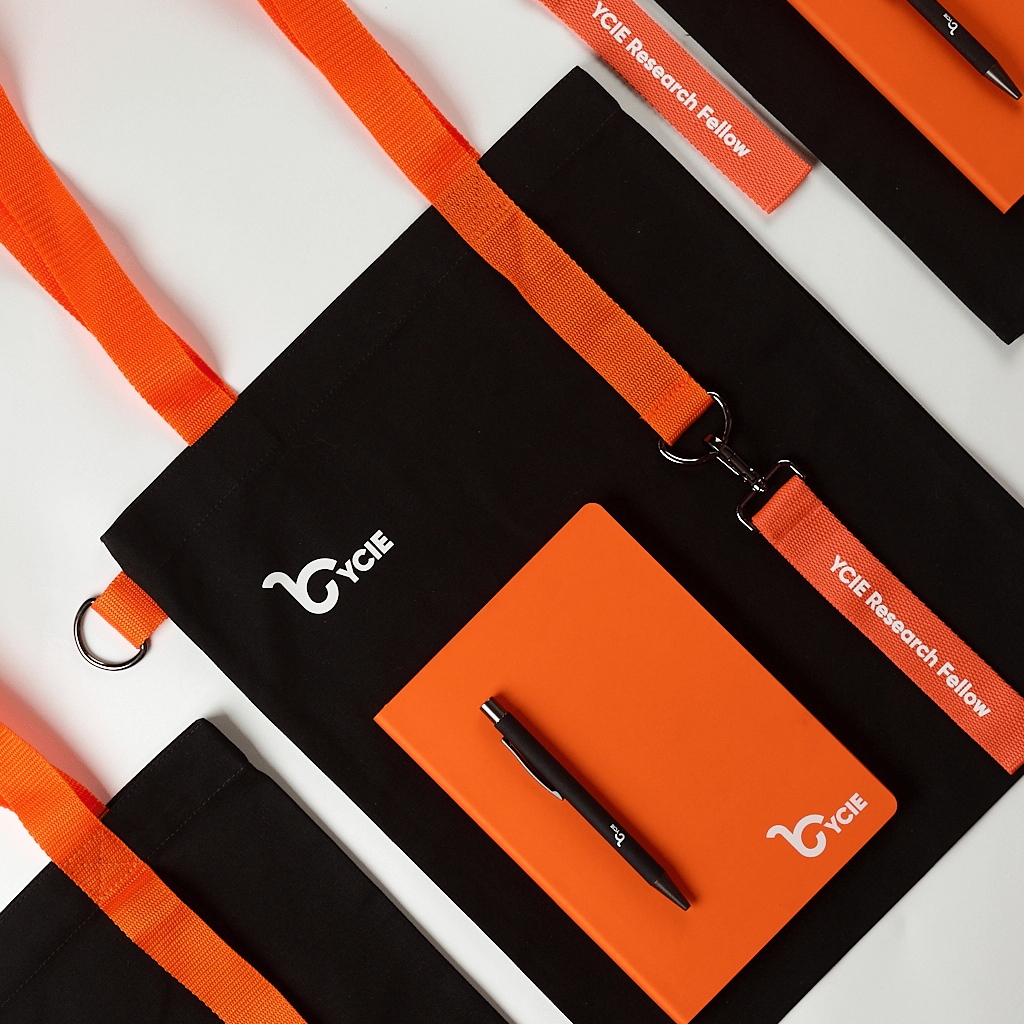
The category is useful and highly visible in urban settings. A tote bag can be a budget solution for a large audience, while a backpack can be part of a welcome pack or an employee gift. Value is determined by the fabric, seams, handles, pockets, and carrying comfort.
The risk is choosing a model that looks promotional. It is better to avoid an oversized front logo and work through a label, patch, stitching, zipper pull, or interior detail. Budget: RUB 800–2 500 for a quality tote bag and RUB 2 500–8 000 for a backpack.
Tech accessories: 81/100
38% of Product Power 2026 participants believe that a tech item makes a brand look modern and relevant. A power bank, charger, USB-C hub, TWS earbuds, cable organizer, or smart tag can be very strong choices if their specifications are honestly verified.
The category requires checks of compatibility, power, certification, and battery quality. An incompatible connector or weak charging quickly turns the gift into a negative brand interaction. Budget: RUB 2 000–9 000, depending on the device type.
Notebooks and planners: 74/100
Business stationery remains useful when it fits the workflow. An undated notebook is more versatile, while a custom page block creates higher perceived value. Paper, opening behavior, format, and ease of taking notes matter.
The category is particularly strong in banking, education, consulting, conferences, and onboarding programs. Budget: RUB 700–3 500 for a ready-made model, and more for a custom page block and cover.
Pens: 69/100
A pen remains one of the most affordable ways to create many interactions with a brand. It works well paired with a notebook, at a conference, and in a business set. However, a cheap mechanism or poor refill quickly cancels out the effect.
Metal or quality plastic models with proven writing performance, a comfortable grip, and neat engraving are ideal. Budget: RUB 250–1 800.
Single-use novelties: 45/100
The category can be striking and viral, but its average lifespan is short. It is justified when the idea itself is part of the campaign: an unusual object, meme, local cultural reference, collectible drop, or an item for photographs.
Without an idea, a novelty becomes an expense. It is therefore best used as an additional layer alongside the main useful gift, rather than as the only item.
How to use the ranking in a proposal
Do not simply present the client with 20 products. It is best to structure the proposal by role: the main useful item, an emotional or collectible detail, packaging, and personalization. This makes it clear what function each budget component serves.
For a large event, choose a pen or tote bag as the base, but add a quality design system. For a welcome pack, choose a backpack, drinkware, or apparel. For VIPs, choose an item for long-term use with personalization and packaging.
Editorial index formula
| Criterion | Weight | What we check |
|---|---|---|
| Usefulness | 30% | Is there a regular use case |
| Design | 20% | Is the recipient willing to use the item in public |
| Durability | 20% | Material, construction, repairability |
| Frequency | 15% | How many interactions with the item occur per week |
| Brand visibility | 10% | Does the brand appear naturally in the setting |
| Logistics | 5% | Weight, fragility, storage, and delivery |
Category overview
| Category | Strength | Main risk | Best use case | Budget/unit* |
|---|---|---|---|---|
| Drinkware | everyday use | leaks and finish | welcome, travel, office | 1 500-4 500 |
| Apparel | belonging and public visibility | fit and a large logo | team, drop, event | 1 800-9 000 |
| Bags/backpacks | function and mobility | promotional appearance | onboarding, travel | 800-8 000 |
| Tech | modernity | compatibility and quality | IT, VIP, remote | 2 000-9 000 |
| Notebooks | work routine | inconvenient page block | business gift | 700-3 500 |
| Pens | scale and affordability | mechanism and refill | conferences | 250-1 800 |
| Novelty | emotion and virality | short lifespan | campaign/drop | by project |
FAQ
Which gift has the longest lifespan?
Apparel, quality drinkware, backpacks, and selected tech accessories. The specific result depends on the model's quality and its fit with the audience.
Should you always choose the most useful category?
No. For a PR campaign or event, an emotionally engaging collectible may be more effective. However, the set should ideally contain at least one useful anchor item.
Why do pens rank below notebooks?
Because of wide variations in quality and lower perceived value. A good metal pen in a case may receive a higher individual score.
How can a category be checked before purchasing?
Order a sample, run a brief test within the team, and assess the packaging, actual use case, and branding quality.
Can the ranking be published as independent research?
No. It should be labeled as an Impulse Media editorial model, with external PPAI data shown separately.
Sources and methodology
External figures are taken from the cited sources. PPAI data primarily concerns the US market and is used as an indication of international market direction, not as local statistics for Russia or Armenia. All Impulse Media budget ranges and ratings are an editorial model for preliminary planning and do not constitute a commercial proposal.
- PPAI Research: The 5-Second Impact - data on retention and recall
- PPAI Product Power 2026 - data on retention period, drinkware, and tech
- PPAI Research: New Year, New-ish Trends - retail design, durability, and quality
- Google Search Reviews System - requirements for in-depth reviews and recommendations
- Google Image SEO Best Practices - chart captions, alt text, and indexing
- Keep the tables in HTML rather than inserting them only as images. Keep the exact values and source name below each chart.
- Add the expert author, publication date, and date of the substantial update. Use Article/BlogPosting and BreadcrumbList in JSON-LD for the page.
- Publish charts as PNG/WebP with a clear filename, caption, and alt text. There should be accompanying text explaining the conclusion.
- Do not create separate pages for every query wording. Google recommends people-first content and in-depth reviews rather than scaled variations.
- Definitions, tables, explicit sources, dates, methodology, and separating facts from an expert model are especially useful for neural networks.
- A transparent methodology and explanation of the weights help readers interpret and cite the ranking correctly.