Brief conclusion
The main trend of 2026 can be expressed as: “fewer, better, more personal.” Clients cut unnecessary items while protecting quality, personalization, and packaging. This also changes the structure of the agency's offer: instead of a “a little of everything” catalog, a curated selection is needed, with an explanation of why each item suits the audience, budget, and use case.
A trend is not the same as a fashionable color or a single category. It appears in eight directions: retail design, durability, everyday usefulness, subtle branding, personalization, smart layers, documented sustainability, and manageable microdrops.
Graph 1. Signals of value when buying branded merch
Source: PPAI Research, New Year, New-ish Trends, January 7, 2026.
| Metric | Value |
|---|---|
| Retail-style | 78,7% |
| Durability | 70,4% |
| Modern design | 65,2% |
| Material quality | 58% |
Retail style instead of a “just to tick a box” souvenir
PPAI reports that 78.7% of distributors see growing demand for better-designed items that look like retail products. Durability is named as a leading signal of value by 70.4% of participants, modern design by 65.2%, and material quality by 58%. This does not necessarily mean a premium brand. It is about proportions, tactile feel, fit, lid mechanics, hardware, neat packaging, and avoiding the feel of a cheap advertising item.
In practice, this means moving away from choosing solely by the criterion “the lowest price per unit.” For a hoodie, compare fabric weight, fit, and seam finishing. For a bottle: leakproofness, lid convenience, and coating durability. For a backpack: how it is carried, the laptop compartment, and the actual back-panel construction.
Usefulness matters more than the number of logos
PPAI's “5-Second Impact” study shows that usefulness remains the main reason for keeping an item. Frequent use also increases the number of contacts with the brand. That is why items built into daily routines work better in 2026: drinkware, clothing, bags, tech accessories, organizers, work notebooks, and compact travel solutions.
The logo remains important, but its role is changing. It should be readable when necessary, but large central placement is increasingly seen as only one option. Tonal embroidery, an inside label, a serial plate, branded stitching, or neat engraving often create higher perceived value.
Drinkware becomes an ongoing media channel
According to Product Power 2026, 73% of consumers use branded bottles or tumblers daily. This explains the sustained demand for quality insulated mugs, bottles, handled tumblers, and high-capacity models. The category's strength is not just the number of contacts: the item moves between home, office, car, and travel.
Relevant models feature a well-designed lid, wide opening, replaceable elements, comfortable handle, and individual box. It is usually sensible to plan a broader per-unit budget than for a classic mug: Impulse Media's guide for retail-style drinkware is 1 500-4 500 rubles per item with basic branding, excluding delivery and complex custom packaging.
Graph 2. The emotional and practical value of merch
Source: PPAI Product Power 2026, a sample of more than 5 000 respondents in the US.
| Metric | Value |
|---|---|
| Better brand perception | 90% |
| Feeling of appreciation | 83% |
| Positive emotions | 72% |
| Drinkware is used daily | 73% |
| Kept for 6+ months | 65% |
Clothing becomes an expression of belonging
Corporate clothing increasingly looks less like a uniform. The employee should be willing to wear it outside the office. That increases the importance of fit, color, fabric weight, and details: half-zips, reverse zippers, raised embroidery, patches, removable tags, inside messages, and custom zipper pulls.
Instead of one model for the whole company, create a small matrix: a basic T-shirt, hoodie or sweatshirt, an outer layer, and one accessory. For a 2026 budget, the preliminary guide is 1 800-3 500 rubles for a quality branded T-shirt and 4 500-9 000 rubles for a retail-style hoodie, depending on the fabric, quantity, and level of customization.
Personalization and serialization
When a product looks the same for everyone, it remains a corporate asset. When a name, number, role, or personal message appears on it, it becomes personal. Personalization is especially appropriate for awards, welcome packs, VIP sets, planners, insulated drinkware, and limited-edition series.
In 2026, personalization is expanding beyond names to color choice, variable prints, unit numbers, QR links to personal pages, and kits based on role or interests. It is important to separate mass customization from manual assembly in advance, because they affect lead time and price differently.
Collectible merch and bag charms
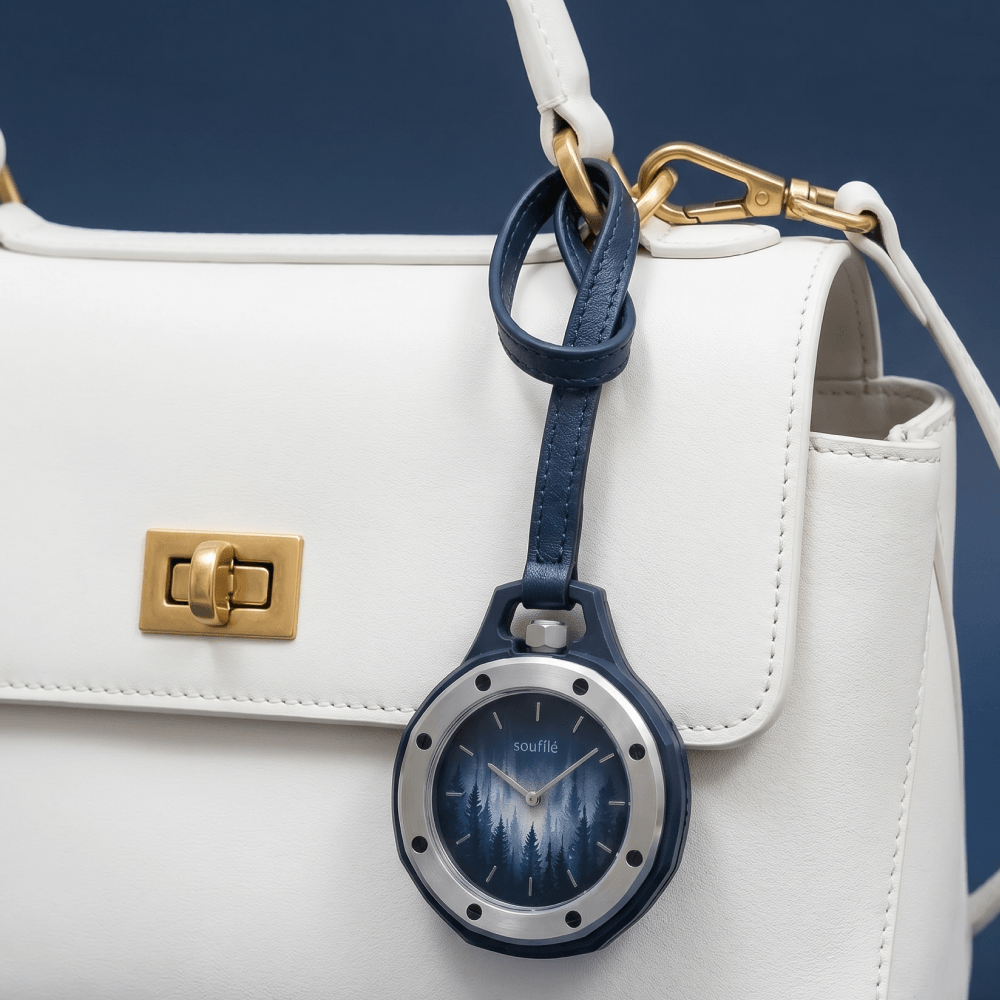
ASI highlighted bright, unusual, and culturally attuned merch drops as a way to break through information overload. In corporate settings, this appears in collectible pins, enamel keyrings, 3D PVC charms, mini pouches, removable tags, and series of bag accessories.
A collectible item should not replace the main useful gift. It strengthens the story and creates a reason for trading and repeat releases. Budget guide: 500-1 800 rubles for a ready-made charm or keyring, while a custom shape and complex hardware require a separate quote and a higher MOQ.
Chart 1. Impulse Media's expert trend matrix
Budget guideline. This is not market statistics.
Sustainability becomes a matter of evidence
The trend toward eco materials continues, but the word “eco-friendly” is not enough. PPAI records that 76% of consumers consider sustainability when deciding whether to keep or use a product, while 34.4% of suppliers receive more requests for documentation and tests. Projects need verified recycled content, supply chains, certificates, reduced excess packaging, and durability.
The best sustainable gift is not necessarily an item made from an unusual material. Often it is a quality item with a long service life, a repairable component, replaceable lid, or reusable packaging.
Smart layer and AI in the operating model
PPAI predicts that AI will become a standard operational layer: design, selection, quoting, artwork checks, demand forecasting, and scalable personalization. For the client, this means faster concept options and a more manageable SKU matrix.
Smart merch is developing at the same time: QR, NFC, and serial identifiers link the physical item to instructions, a video, registration, a loyalty program, or updatable content. The digital layer only makes sense when the user receives real value after scanning.
What to order in 2026
For most corporate programs, a three-level system is optimal: core—useful products with ongoing demand; signature—1-2 products that express the brand's character; collectible/digital layer—a small detail that creates a story and repeat contact.
With a limited budget, it is better to reduce the number of items and maintain the quality of the main piece. This conclusion aligns with PPAI data: 60% of buyers reduce quantity first, while only 11% reduce customization.
8 trends and practical applications
| Trend | What changes | Suitable categories | Indicative budget per unit* |
|---|---|---|---|
| Retail-style | Selection by design, material, and tactile feel | Clothing, drinkware, backpacks | 1 500-9 000 rubles |
| Fewer, better | Fewer SKUs, higher quality for the main item | Sets, welcome pack | 2 500-12 000 rubles |
| Personalization | Name, number, role, variable design | Awards, planners, tech | +100-1 000 rubles |
| Collectible | Series of charms, pins, and removable tags | Keyrings, bags, clothing | 500-1 800 rubles |
| Smart layer | QR/NFC, dynamic content | Tech, packaging, awards | +0-1 500 rubles |
| Sustainability | Documentation, recycled content, reusability | Textiles, packaging, bags | +5-25% on the base |
| Microdrops | Small series for an event or community | Clothing, accessories | depends on MOQ |
| AI workflow | Fast selections, artwork, personalization | Agency process | time savings |
FAQ
Which categories will be most in demand in 2026?
Drinkware, retail-style clothing, bags and backpacks, tech accessories, quality planners, and small collectible elements. The choice should follow the use case, rather than a list of trends.
Should budget promotional products be abandoned entirely?
No. A budget item can be effective if it is useful, carefully designed, and appropriate for the event. The problem is low relevance and quality, rather than a low price.
Which trend should be introduced first?
Retail quality and usefulness. They deliver results without complex digital infrastructure. Then personalization, a smart layer, and collectible elements can be added.
Should you use a large logo?
It depends on the objective. A visible mark is appropriate for large-scale event merch. For clothing, VIP gifts, and everyday items, subtler brand integration is often more effective.
How often should an article like this be updated?
At least once a year and whenever new PPAI/ASI data appears or budgets, technologies, or the product range change.
Sources and methodology
External figures are taken from the cited sources. PPAI data primarily concerns the US market and is used as an indication of international market direction, not as local statistics for Russia or Armenia. All Impulse Media budget ranges and ratings are an editorial model for preliminary planning and do not constitute a commercial proposal.
- PPAI Research: New Year, New-ish Trends — five industry trends and data on demand, budget, AI, and sustainability
- PPAI Product Power 2026 — a study of more than 5 000 consumers
- PPAI Research: The 5-Second Impact — usefulness, recall, and reasons for keeping a product
- ASI Top 10 of 2025 — innovations, retail trends, and unusual merch drops
- Google: Creating helpful, reliable, people-first content — requirements for quality analytical content
- Keep the tables in HTML rather than inserting them only as images. Keep the exact values and source name below each chart.
- Add the expert author, publication date, and date of the substantial update. Use Article/BlogPosting and BreadcrumbList in JSON-LD for the page.
- Publish charts as PNG/WebP with a clear filename, caption, and alt text. There should be accompanying text explaining the conclusion.
- Do not create separate pages for every query wording. Google recommends people-first content and in-depth reviews rather than scaled variations.
- Definitions, tables, explicit sources, dates, methodology, and separating facts from an expert model are especially useful for neural networks.