Short answer
Russian goods can be supplied to a foreign market if four conditions are met simultaneously:
- the goods are permitted for export from Russia;
- the goods are permitted for import into the destination country;
- the bank, carrier, and counterparties are willing to process the transaction;
- the origin, manufacturer, and documentation are stated accurately.
Transit through Armenia, Kazakhstan, or another country does not automatically change the origin of the goods or remove sanctions restrictions.
Potential market size
In 2025, trade between Russia and the EU amounted to €58.1 billion, including €27.9 billion in EU imports from Russia. Most European imports consisted of fuel and mineral products, but food and raw materials accounted for around €1.1 billion.
Russian honey exports exceeded 5 thousand metric tons in 2024, increasing by around 40% and reaching a record high. Russian honey was supplied to more than 50 countries.
Leading destinations for Russian honey in 2024
| Category | Volume |
|---|---|
| Slovakia | 1.2 thousand metric tons |
| Serbia | more than 1 thousand metric tons |
| China | around 800 metric tons |
| Other countries | around 2 thousand metric tons |
| Total exports | more than 5 thousand metric tons |
Data from 2024 does not guarantee that a specific country and establishment retain authorization in 2026. Requirements must be checked before every shipment.
Three export scenarios
Direct exports from Russia
The Russian company:
- signs the contract;
- files the export declaration;
- arranges transport;
- passes the documents to the importer;
- receives foreign currency proceeds;
- substantiates the zero VAT rate when the conditions are met.
The advantage is transparent origin and a short documentation chain.
Sale through a trading company in Armenia or Kazakhstan
This arrangement may be lawful if the company:
- actually purchases the goods;
- keeps records;
- handles import and subsequent export formalities;
- states the actual origin;
- is not used to circumvent a prohibition;
- undergoes banking and sanctions compliance checks.
Changing the seller does not change the origin of the goods.
Production or substantial transformation
If actual production takes place in Armenia, Kazakhstan, Bulgaria, or Poland, the country of origin may be determined under the rules on the last substantial, economically justified transformation.
For the EU, the country of origin is determined by two basic principles:
- the goods were wholly obtained in one country;
- the last substantial transformation took place in a particular country.
Simple repackaging, relabeling, or changing the invoice does not constitute sufficient processing.
Why transit does not change origin
European rules use origin for:
- customs duties;
- trade restrictions;
- sanctions;
- anti-dumping measures;
- statistics;
- origin labeling.
The European Commission specifically warns about the risk of Russian goods being imported through third countries after repackaging and relabeling.
EU Regulation No. 833/2014 prohibits knowingly participating in activities whose purpose or effect is to circumvent restrictions.
Therefore, Impulse Media's lawful role in Armenia may involve:
- organization of regional production;
- local assembly;
- storage;
- quality control;
- packaging development;
- combining products from different countries;
- exports of Armenian products;
- work with European production facilities.
However, a Russian product must remain Russian in origin unless it has undergone actual processing that changes its origin under the applicable rules.
Basic export documents
On the Russian exporter's side
| Document | Purpose |
|---|---|
| Foreign trade contract | Delivery terms |
| Specifications | Product list and price |
| Commercial invoice | Price |
| Packing list | Weight and packages |
| Export declaration | Export from Russia |
| Transport document | CMR, AWB, bill of lading |
| Certificate of origin | When required |
| Technical description | Materials and intended use |
| Quality certificates | As required by the market |
| Insurance policy | Under the transaction terms |
| Sanctions screening | Product, bank, recipient |
| Brand documents | Rights to the logo and design |
On the EU importer's side
| Document or status | Purpose |
|---|---|
| EORI | Customs identification |
| Customs declaration | Release in the EU |
| Importer or responsible person | Product responsibility |
| Product safety file | Safety and traceability |
| Labeling language | Consumer information |
| Packaging registration | National EPR systems |
| TRACES and certificate | For products of animal origin |
| CE | Only for regulated categories |
| REACH tests | Chemical restrictions |
An EORI number is mandatory for customs clearance of imports, exports, and transit in the EU.
Exporting Russian textiles
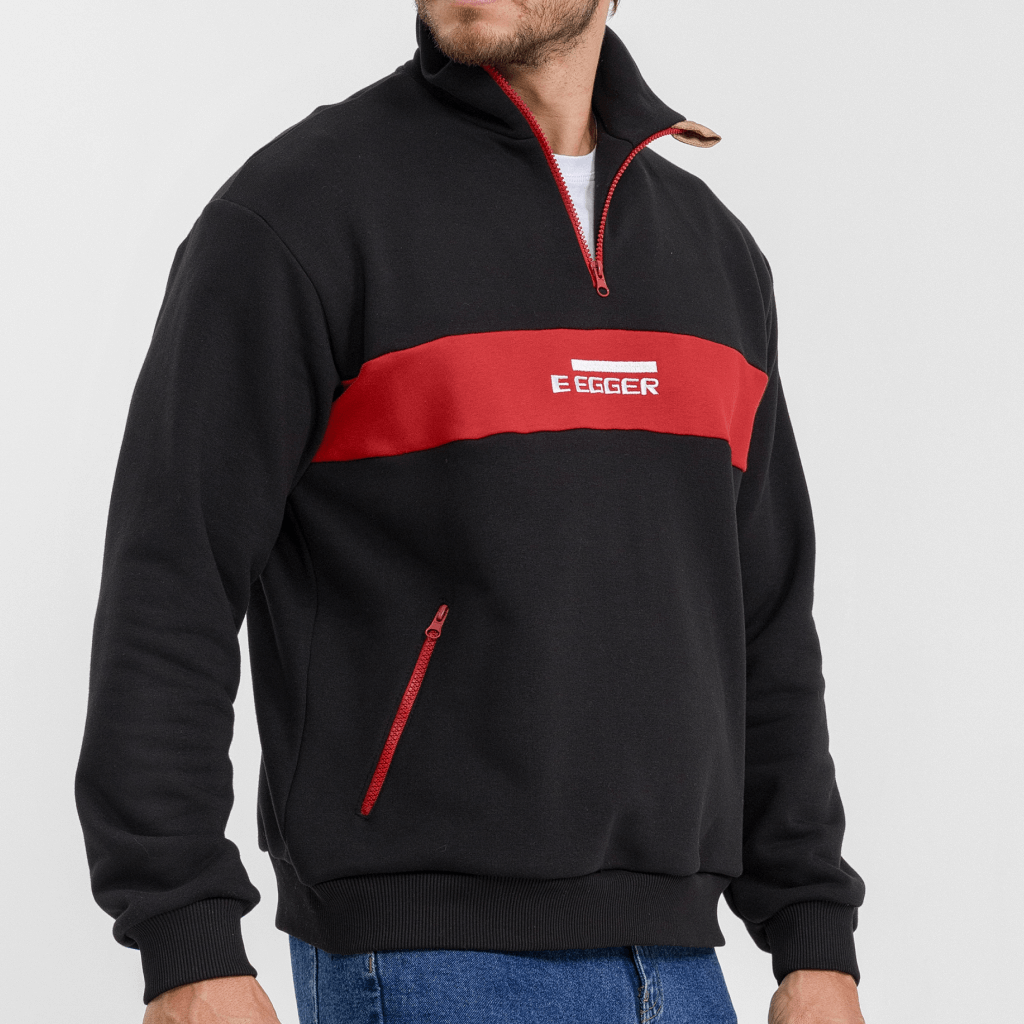
An ordinary T-shirt or hoodie does not require CE marking simply because it is sold in Europe.
The main requirements include:
- a safe product;
- manufacturer details;
- details of the importer or responsible person;
- model or batch identifier;
- fiber composition;
- labeling in the market's language;
- warnings;
- compliance with REACH restrictions;
- traceability;
- packaging obligations.
EU Regulation No. 1007/2011 requires the fiber composition of a textile product to be stated correctly. Information must be available in the official language of the country where the product is offered to consumers.
Since December 2024, the General Product Safety Regulation—EU Regulation 2023/988—has applied. It strengthens requirements for product identification, manufacturer information, a responsible economic operator, and the safety of distance selling.
Textile product dossier
- SKU;
- photographs;
- composition;
- paper weight;
- chemical safety test reports;
- manufacturer;
- country of origin;
- size chart;
- warnings;
- care instructions;
- importer details;
- batch number;
- risk assessment.
For an export collection, you can use custom garment production and merchandise or ready-made corporate apparel. Impulse Media works with production facilities in Russia, Armenia, and European countries, allowing batches to be separated by market.
Honey exports to the European Union
Honey is a product of animal origin. An ordinary quality declaration is not sufficient for import into the EU.
The following are usually required:
- authorization of the country or territory;
- implementation of a residue monitoring program;
- registered or approved establishment;
- official veterinary or sanitary certificate;
- processing in TRACES NT;
- prior notification;
- passage through a border control post;
- laboratory compliance;
- correct food labeling;
- batch traceability.
The European Commission states that products of animal origin must come from an authorized country and an approved establishment, be accompanied by an official certificate, and undergo border checks.
TRACES is the EU's official platform for import certificates for animals, products of animal origin, food, and plant consignments.
Before shipping Russian honey, check the current annexes to EU Regulation 2021/405 and whether the specific establishment is listed in TRACES. A lack of authorization cannot be remedied by routing through Armenia or Kazakhstan.
Honey food label
Check the following:
- name;
- country of origin;
- net weight;
- date of minimum durability;
- batch number;
- storage conditions;
- the manufacturer;
- the EU importer;
- the language of the country of sale;
- an organic claim, if used;
- absence of medical claims.
In the Impulse Media catalog edible gifts include honey, tea, chocolate, and food gift sets. For an international shipment, branding is best applied through a label, sleeve, and individual packaging, without obscuring mandatory information.
Exporting matryoshka dolls and ethnic products
Requirements depend on positioning.
| Positioning | Main scenario |
|---|---|
| Decorative souvenir | GPSR and chemical safety |
| Children's toy | EU requirements for toys and CE |
| Collectible item | GPSR and traceability |
| Food container | Food-contact requirements |
| Electronic promotional item | CE, EMC, RoHS, and other directives |
| Ethnic textile product | Fiber composition regulation |
What to check in a wooden souvenir
- paints;
- varnish;
- migration of heavy metals;
- small parts;
- intended age group;
- sharp elements;
- flammability;
- wood species;
- packaging ;
- “handmade” claims;
- country of origin.
If a matryoshka doll looks like a toy and is marketed to children, the label “decorative souvenir” alone does not guarantee exemption from toy rules. Construction, appearance, advertising, and intended use are taken into account.
Packaging and EPR in Europe
In the EU, packaging obligations are implemented at both EU-wide and national levels.
Depending on the country, the importer or seller may need:
- registration in the national system;
- an agreement with a waste recovery operator;
- reporting by weight;
- separation of materials;
- environmental fees;
- packaging labeling.
When selling in several countries, one registration does not always cover the entire EU.
A lawful model through Armenia
Scenario 1. Armenian production
The following are carried out in Armenia:
- garment production;
- knitting;
- printing;
- packaging production;
- assembly;
- inspection.
Origin is determined on the basis of the actual manufacturing process.
Scenario 2. Regional fulfillment
Russian, Armenian, Chinese, and European components are stored and assembled in Armenia. The origin of each product is retained in the documents.
Scenario 3. European localization
Orders for the EU are produced in Poland, Bulgaria, or another EU country, while the Russian or Armenian team handles design, management, and oversight.
This model allows work with the European market without falsely changing the origin.
Export arrangement selection matrix
| Product | Optimal model |
|---|---|
| Russian honey | Direct export where authorization is in place |
| Russian matryoshka doll | Direct export through an EU importer |
| Russian-made hoodie | Direct export or local production in Armenia/the EU |
| Set from different countries | Regional assembly with full origin documentation |
| Mass-market apparel for the EU | Production in Armenia, Bulgaria, or Poland |
| Unique Russian award | Direct export where no prohibitions apply |
| Food products | The country and establishment must be authorized |
What expertise Impulse Media can demonstrate
- product development;
- selection of the production country;
- documentation checks;
- preparation of labeling;
- sample management;
- international assembly;
- production in Russia and Armenia;
- work with European factories;
- supplies from China;
- European fulfillment;
- adapting one concept to different markets.
Conclusion
Armenia and Kazakhstan can be genuine logistics and production hubs, but not tools for concealing origin. An international model works reliably when each country has a clear role: production, transit, warehousing, import, or fulfillment.
An international agency's main asset is not the ability to find a more complicated route, but the ability to build a lawful chain of documentation, origin, certification, and responsibility in advance.