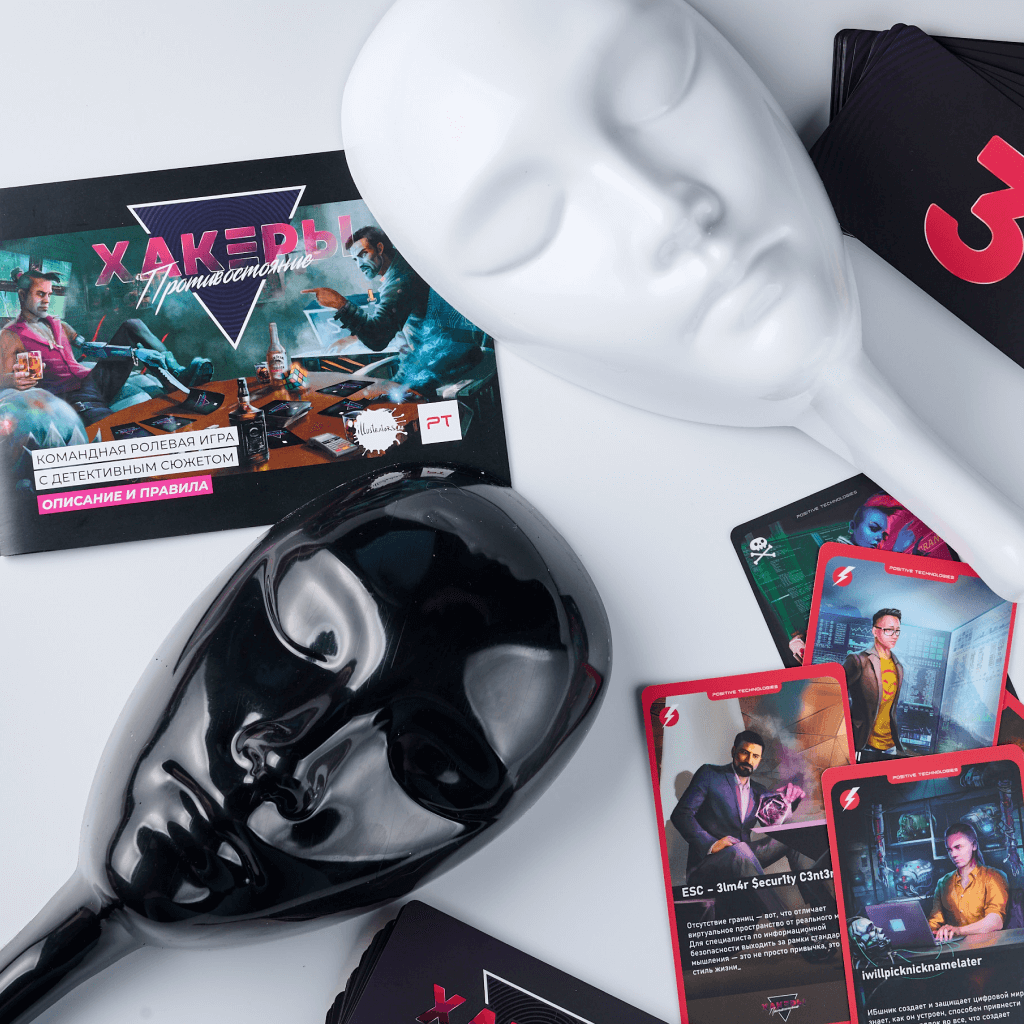
Short answer
Developing a corporate board game does not start with illustrations or the box. First, determine:
- why the company needs the game;
- who will play it;
- how long one game lasts;
- what behavior the mechanics should create;
- which roles or characters will participate;
- whether the game should teach, introduce people, entertain, or simulate a work situation;
- how complex the rules may be;
- whether the game will be used once or regularly.
After that, the core game mechanics are selected, a paper prototype is created, and several tests are conducted; only then does design begin.
The Impulse Media catalog features more than 100 ready-made games and gaming products. For a fully custom project, the service used is custom merchandise, where the structure, graphics, packaging, and set of components can be changed.
Why companies create board games
| Objective | What role the game plays |
|---|---|
| Onboarding | Introduces departments, products, and rules |
| Training | Helps analyze situations and mistakes |
| Corporate culture | Explains values through actions |
| Team building | Creates a shared task |
| Event | Engages participants and helps them get acquainted |
| Product presentation | Demonstrates product features through a scenario |
| Marketing | Creates a memorable physical interaction |
| Gift for partners | Tells the company's story |
| Client work | Simulates a market, sales, or negotiations |
| Employer brand | Turns employees into characters and co-creators |
A corporate game should not try to teach, sell, test knowledge, and entertain all at once. For the first version, it is best to choose one primary and one secondary objective.
Where the brief begins
Basic questions
| Section | Questions for the commissioning client |
|---|---|
| Goal | What participants should understand or feel |
| Audience | Employees, clients, partners, families |
| Number of players | 2-4, 4-8, 8-20 people |
| Game duration | 10, 20, 40, or 90 minutes |
| Frequency | One event or regular use |
| Setting | Office, conference, training, home |
| Language | One language or an international version |
| Complexity | Can the game be explained in 3-5 minutes? |
| Conflict | Competition, cooperation, or hidden roles |
| Content | Products, employees, departments, case studies, values |
| Characters | Real executives, fictional characters, or roles |
| Order quantity | Pilot, 100, 500, or 5 000 copies |
| Budget | Cards only or a complete boxed product |
| Legal | Original mechanics or a licensed foundation |
The key decision is player behavior
The mechanics determine what the participant does during the game.
For example:
- persuades;
- conceals information;
- collects combinations;
- answers questions;
- allocates resources;
- negotiates;
- completes tasks;
- makes a decision under time pressure;
- teams up with other players;
- competes for a shared outcome.
If a company wants to show the value of collaboration but chooses a game in which the winner must eliminate all opponents, the mechanics will contradict the brand message.
Main types of corporate board games
| Type | Core mechanics | Suitable objectives | Development complexity |
|---|---|---|---|
| Card game | Discarding, set collection, trading | Light gift, getting acquainted | Low |
| Hidden-role game | Discussion, suspicion, voting | Team building, event | Medium |
| Quiz | Questions and answers | Training, company history | Low |
| Cooperative game | Shared objective and shared risk | Team culture | Medium |
| Economic strategy | Resources, deals, development | Sales, business simulation | High |
| Negotiation game | Deals, trading, coalitions | Manager training | Medium |
| Storytelling | Stories and associations | Culture, getting acquainted | Low |
| Path-based game | Board, movement, events | Company history, customer journey | Medium |
| Product builder | Collecting features and solutions | Product range presentation | Medium |
| Crisis simulator | Constraints, roles, events | Leadership training | High |
How to use familiar mechanics
To simplify the project, it is best to start with an understandable behavior model.
Instead of the task “invent a completely new game genre,” you can choose:
- social deduction;
- discarding cards by color or symbol;
- set collection;
- associations;
- a quiz;
- cooperatively overcoming a crisis;
- resource management;
- negotiations;
- a route across the game board.
At the same time, the name, design, characters, rules text, card shape, and recognizable elements of a specific commercial game must not be copied without checking the rights.
For example, you can use the general principle of hidden teams and discussion while creating your own roles, victory conditions, story, texts, and graphic system.
You can use the general principle of discarding a card with a matching attribute, but not copy the brand, special card names, design, or original rules text of a well-known game.
Why characters matter more than illustrations
The main characters determine the game's conflict.
A corporate game can use:
- real job roles;
- fictional departments;
- company products;
- clients;
- competing ideas;
- values;
- project stages;
- characters from the corporate story.
Example role set for a game with hidden objectives
| Character | Public function | Hidden objective |
|---|---|---|
| CEO | Sets the priority | Complete the project on time |
| HR director | Manages the team | Maintain motivation |
| Marketer | Promotes the product | Achieve maximum reach |
| CFO | Controls the budget | Prevent overspending |
| IT director | Supports the system | Prevent a failure |
| Sales manager | Attracts clients | Close the key deal |
| Legal counsel | Checks decisions | Stop a risky action |
| Innovator | Suggests ideas | Launch an experiment |
| Auditor | Finds violations | Identify the hidden problem |
| Crisis manager | Responds to events | Save the company |
It is better to turn real senior executives into composite characters rather than caricatures. If an employee's name, portrait, or recognizable biography is used, approval must be obtained from both the company and the person.
Example of a corporate game with hidden roles
Storyline
The company is preparing to launch a new product. The team includes employees who want to complete the project successfully and characters with other hidden objectives.
Possible roles
- project manager;
- financier;
- marketer;
- production specialist;
- client;
- competitor;
- insider;
- crisis manager.
Game flow
- Players receive roles.
- An event card is revealed.
- The team discusses the decision.
- Players secretly choose an action.
- The results affect the budget, deadline, and reputation.
- After several rounds, the objectives are checked.
This scenario uses social deduction without copying a specific commercial game.
Example of a simple card game
Objective
Build an effective project from five components:
- product;
- target audience;
- technology;
- packaging;
- communication.
Card types
| Card type | Example |
|---|---|
| Audience | Employees, clients, VIPs |
| Product | Hoodie, insulated mug, backpack |
| Technique | Embroidery, DTF, engraving |
| Packaging | Box, bag, sleeve |
| Limitation | Short lead time, budget, delivery |
| Bonus | Additional resource |
| Event | Change in quantity or task |
For the physical components, you can use products from the general Impulse Media catalog, and develop packaging and game inserts in the section packaging. The catalog contains a separate group of games, as well as listings for branded wooden puzzles and towers.
Game development map
| Stage | Result |
|---|---|
| 1. Brief | Goal, audience, format |
| 2. Core | One sentence describing the game's essence |
| 3. Mechanics | What the player does |
| 4. Characters | Roles, objectives, and abilities |
| 5. Content matrix | List of cards and events |
| 6. Paper prototype | Game without design |
| 7. First test | Clarity check |
| 8. Balancing | Changing rules and numbers |
| 9. Visual system | Style, characters, icons |
| 10. Production artwork | Print files |
| 11. Preproduction sample | Physical test |
| 12. Order quantity | Production and packaging |
How to test
The first prototype does not have to look good. Its purpose is to prove that the game works.
Minimum test
- 4-8 participants;
- one person explains the rules;
- one person observes;
- participants receive no hints during the game;
- a short interview is conducted after the game.
What to record
| Metric | Good sign |
|---|---|
| Explanation time | Up to 5-7 minutes for a light game |
| First meaningful move | The player understands what to do |
| Length of a game | Matches the brief |
| Waiting time | No long pauses |
| Role of chance | Does not negate decisions |
| Player activity | Everyone participates |
| Understanding victory | The player knows why they are acting |
| Desire to play again | There is interest in a second game |
| Disputed rules | Minimal |
| The brand's role | Built into the action, rather than only the logo |
When to simplify the game
Simplification is needed if:
- the rules take longer than the game itself;
- the player needs to remember more than five new terms;
- it is impossible to make a meaningful decision in the first round;
- there are many exceptions;
- one experienced player completely controls the team;
- participants wait a long time for their turn;
- corporate content gets in the way of the game;
- victory is determined by a single random card.
Project outline
Share of work before design begins: Brief and goal 10% Mechanics and characters 25% Prototyping 20% Playtesting 20% Design 15% Prepress 5% Sample inspection 5%
This is Impulse Media's production model. It shows that design is only one part of the project.
Related articles
- Merch and corporate gift catalog
- Custom merchandise
- Packaging
- Branding elements
- Gift sets
- “Tower” wooden game
Conclusion
Developing a corporate board game starts with player behavior, rather than an image. The main elements of the first version are the goal, mechanics, roles, victory conditions, and a paper prototype.
The simpler the basic action, the more attention can be given to the corporate story, characters, and visual style.